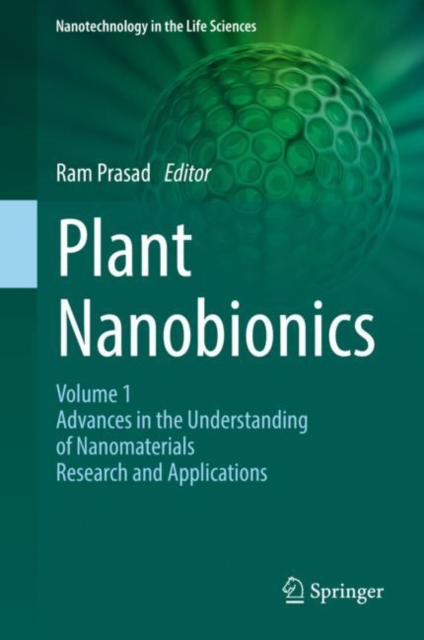
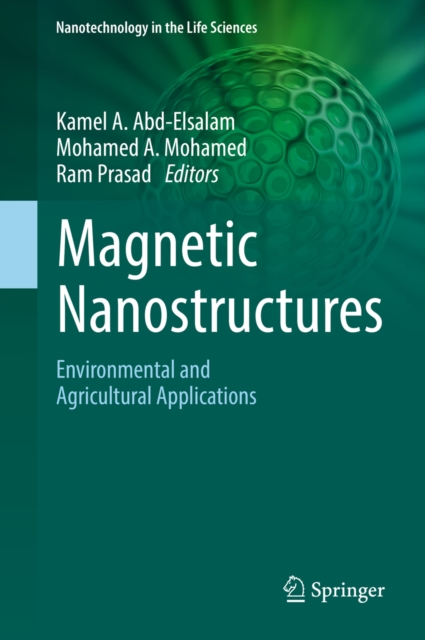
An improved understanding of the interactions between nanoparticles and plant retorts, including their uptake, localization, and activity, could revolutionize crop production through increased disease resistance, nutrient utilization, and crop yield.
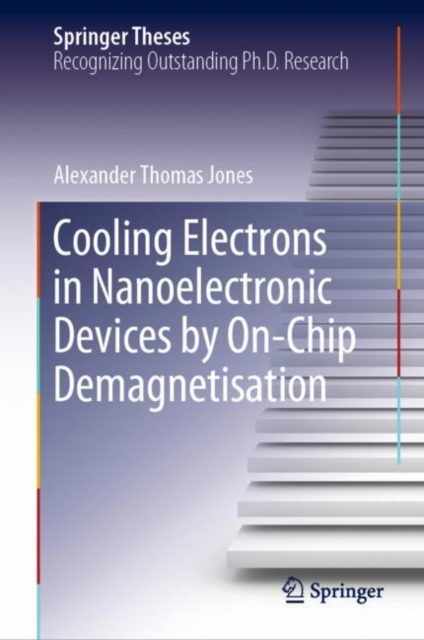
This thesis demonstrates that an ultralow temperature refrigeration technique called "e;demagnetisation refrigeration"e; can be miniaturised and incorporated onto millimeter-sized chips to cool nanoelectronic circuits, devices and materials.
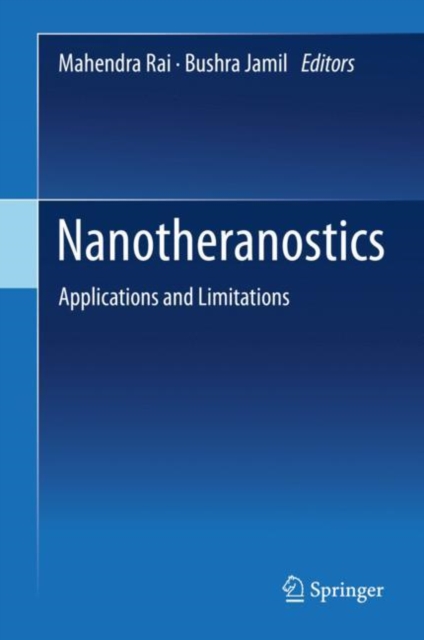
This book is specifically designed to provide information about various nanocarriers currently developed under the emerging field of nanotheranostics for a sustained, controlled, and targeted co-delivery of diagnostic and therapeutic agents.
This book takes a systematic approach to address the gaps relating to nanomedicine and bring together fragmented knowledge on the advances on nanomaterials and their biomedical applicability.
This third volume on environmental nanotechnology includes chapters dealing with topics such nanoremediation, waste water purification, nanosensors, nanomedicine, and nanofiltration.
This book addresses the basic physical phenomenon of small-angle scattering (SAS) of neutrons, x-rays or light from complex hierarchical nano- and micro-structures.
This book discusses the early stages of the development of nanostructures, including synthesis techniques, growth mechanisms, the physics and chemistry of nanostructured materials, various innovative characterization techniques, the need for functionalization and different functionalization methods as well as the various properties of nanostructured materials.
This book presents a wide range of synthesis and characterization techniques to produce ceramic nanomaterials specially developed to be used in environmental applications.
This book presents synthesis techniques for the preparation of low-dimensional nanomaterials including 0D (quantum dots), 1D (nanowires, nanotubes) and 2D (thin films, few layers), as well as their potential applications in nanoelectronic systems.
This review book focuses on the structure-property relationships of polyurethane nanocomposite foams in comparison with those of conventional polyurethane composite foams.
Reviews in Plasmonics is a comprehensive collection of current trends and emerging hot topics in the field of Plasmonics and closely related disciplines.
Micro/nano-mechanical systems are a crucial part of the modern world providing a plethora of sensing and actuation functionalities used in everything from the largest cargo ships to the smallest hand-held electronics; from the most advanced scientific and medical equipment to the simplest household items.
In this book, a global team of experts from academia, research institutes and industry presents their vision on how new nano-chip architectures will enable the performance and energy efficiency needed for AI-driven advancements in autonomous mobility, healthcare, and man-machine cooperation.
Micro/nano-mechanical systems are a crucial part of the modern world providing a plethora of sensing and actuation functionalities used in everything from the largest cargo ships to the smallest hand-held electronics; from the most advanced scientific and medical equipment to the simplest household items.
With the recent shift of chemical fertilizers and pesticides to organic agriculture, the employment of microbes that perform significant beneficial functions for plants has been highlighted.
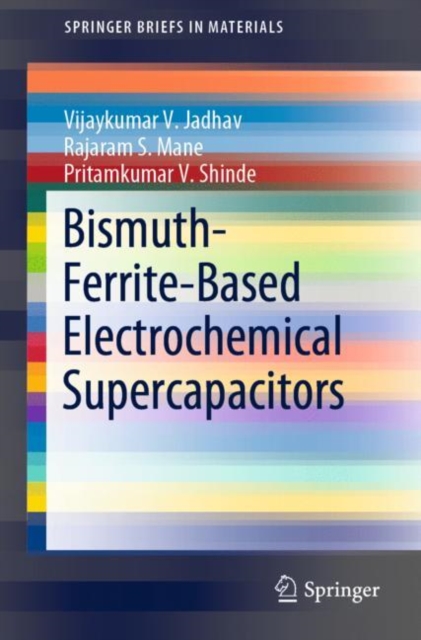
This book provides a much-needed, up-to-date overview of unary, binary and ternary bismuth-ferrite-based systems, with a focus on their properties, synthesis methods and applications as electrochemical supercapacitors.
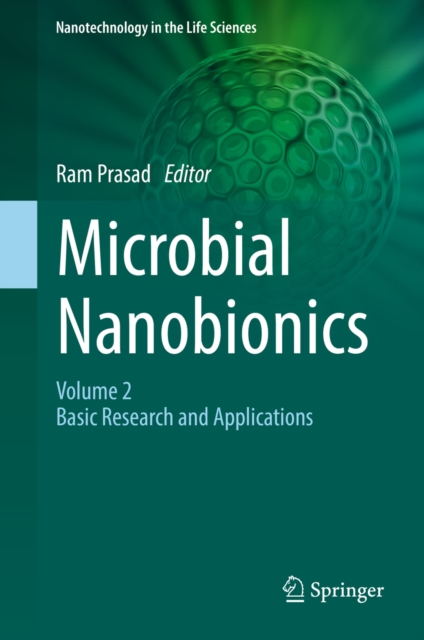
Microbial Nanobionics: Volume 2, Basic Research Applications continues the important discussion of microbial nanoparticle synthesis with a focus on the mechanistic approach of biosynthesis towards nanobionics.
The tremendous impact of electronic devices on our lives is the result of continuous improvements of the billions of nanoelectronic components inside integrated circuits (ICs).
This book expands the debate on the future of science and technology at the Curious2018 - Future Insight Conference, held on the occasion of Merck's 350-year anniversary.
Microbial Nanobionics: Volume 1, State of the Art, discusses a wide range of microbial systems and their utilization in biogenic synthesis of metallic nanoparticles.
This book explains the operating principles of atomic force microscopy with the aim of enabling the reader to operate a scanning probe microscope successfully and understand the data obtained with the microscope.
Nanobiotechnology Applications in Plant Protection: Volume 2 continues the important and timely discussion of nanotechnology applications in plant protection and pathology, filling a gap in the literature for nano applications in crop protection.
The series Topics in Current Chemistry Collections presents critical reviews from the journal Topics in Current Chemistry organized in topical volumes.
An improved understanding of the interactions between nanoparticles and plant retorts, including their uptake, localization, and activity, could revolutionize crop production through increased disease resistance, nutrient utilization, and crop yield.
In this book the recent progress accumulated in studies of the interaction of engineered nanoparticles with cells and cellular constituents is presented.
Nanotechnology is the art, science, and engineering of designing materials, devices, and systems at the nanoscale from bottom-up and/or top-down approaches.
This book offers a comprehensive treatment of nonlocal elasticity theory as applied to the prediction of the mechanical characteristics of various types of biological and non-biological nanoscopic structures with different morphologies and functional behaviour.