This volume contains eighteen selected papers presented at the Second International Conference on Stochastic Structural Dynamics, which are related to new practical applications in the field.
This volume contains eighteen selected papers presented at the Second International Conference on Stochastic Structural Dynamics, which are related to new theoretical developments in the field.
The emergence of civil aviation as a means of mass transportation is primarily due to the large- scale construction of jet airplanes in the past 30 years or so.
This book presents a method which is capable of evaluating the deformation characteristics of thin shell structures A free vibration analysis is chosen as a convenient means of studying the displacement behaviour of the shell, enabling it to deform naturally without imposing any particular loading conditions.
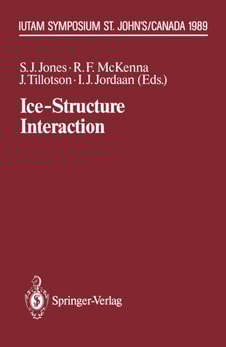
IUTAM-IAHR Symposium on Ice-Structure Interaction Professor Bez Tabarrok, Chairman of the Canadian National Committee (CNC) of the International Union of Theoretical and Applied Mechanics (IUTAM) invited Professor Derek Muggeridge to organize a symposium on ice structure interaction.
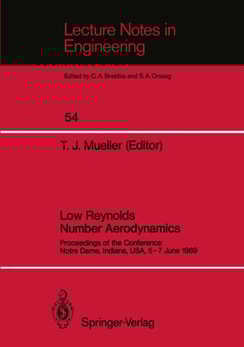
Current interest in a variety of low Reynolds number applications has focused attention on the design and evaluation of efficient airfoil sections at chord Reynolds numbers from about 100,000 to about 1,000,000.
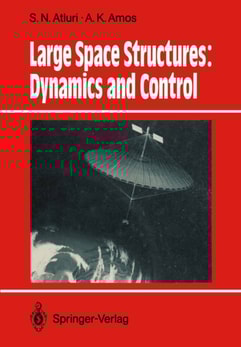
This monograph is intended to provide a snapshot of the status and opportunities for advan- cement in the technologies of dynamics and control oflarge flexible spacecraft structures.
From the Preface: The Proceedings contain papers presented at the 1st Working Conference on "e;Reliability and Optimization of Structural Systems"e;, Aalborg, Denmark, May 6-8, 1987.
Für den Aufbau komplexer Modelle auf dem Gebiet der Produktionssysteme ist es bedeutsam, daß die Komponenten für Fertigung, Montage und Lagerung durch ein sehr leistungsfähiges und dennoch sehr flexibles Transportsystem verbunden werden können.
Continuing the tradition of the IUTAM Symposia TRANSSONICA, this review of the numerical simulation and physical modelling of transonic flows presents new developments in the fields of computational and experimental aerodynamics.
Durch Reibung und Verschleiß entstehen in der Industrie erhebliche Verluste, die mit über 39 Milliarden DM pro Jahr in der Bundesrepublik Deutschland abgeschätzt werden.
The IUTAM Symposium on Boundary-Layer Separation, suggested by the UK National Committee of Theoretical and Applied Mechanics and supported by the International Union of Theoretical and Applied Mechanics, was held at University College London on August 26-28, 1986.
It was on a proposal of the late Professor Maurice Roy, member of the French Academy of Sciences, that in 1982, the General Assembly of the International Union of Theoretical and Applied Mechanics decided to sponsor a symposium on Turbulent Shear-Layer/Shock-Wave Interactions.
The IUTAM Symposium on Macro- and Micro-Mechanics of High Velocity Deformation and Fracture (MMMHVDF) (August 12 - 15, 1985) was held at Science Council of Japan, under the sponsor- ship of IUTAM, Science Council of Japan, Japan Society for the Promotion of Science, The Commemorative Association for the Japan World Exposition (1970), and The Japan Society for Aeronautical and Space Sciences.
This book contains the edited versions of lectures and selected contributed papers presented at the NATO Advanced Research Workshop on Real-Time Integration Methods For Mechanical System Simulation, held in Snowbird, Utah, August 7-11, 1989.
This research monograph presents a systematic treatment of the theory of the propagation of transient electromagnetic fields (such as optical pulses) through dielectric media which exhibit both dispersion a.
Journal bearings, which are used in all kinds of rotating machinery, do not only support static loads, such as the weight of rotors and load caused by transmitted torque of reduction gears, but are, in addition almost the only machine element that is able to suppress various exciting forces acting on the rotating shaft.
The management of vortices and separation behind the bodiesat high angles of attack is important for highmaneuvrability of airplanes and other fluid dynamicapparatus.
Dieser Buchtitel ist Teil des Digitalisierungsprojekts Springer Book Archives mit Publikationen, die seit den Anfängen des Verlags von 1842 erschienen sind.
Dieser Buchtitel ist Teil des Digitalisierungsprojekts Springer Book Archives mit Publikationen, die seit den Anfängen des Verlags von 1842 erschienen sind.
The aim of the present book is the formulation, mathematical study and numerical treatment of static and dynamic problems in mechanics and engineering sciences involving nonconvex and nonsmooth energy functions, or nonmonotone and multivalued stress-strain laws.
Dieser Buchtitel ist Teil des Digitalisierungsprojekts Springer Book Archives mit Publikationen, die seit den Anfängen des Verlags von 1842 erschienen sind.