Engineering Swarms for Cyber-Physical Systems covers the whole design cycle for applying swarm intelligence in Cyber-Physical Systems (CPS) and guides readers through modeling, design, simulation, and final deployment of swarm systems.
Carved out of century-old farmland near Chicago, the Prairie Crossing development is a novel experiment in urban public policy that preserves 69 percent of the land as open space.
SynergiCity: Reinventing the Postindustrial City proposes a new and invigorating vision of urbanism, architectural design, and urban revitalization in twenty-first-century America.
Discover the Future That Awaits with AIStep into a world where technology pushes the boundaries of imagination, fundamentally altering the fabric of our daily lives.
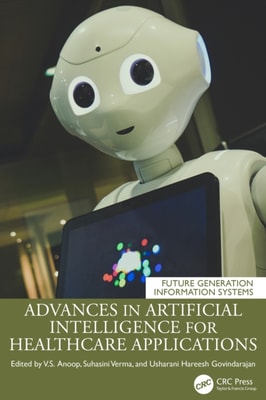
Advances in Artificial Intelligence for Healthcare Applications comprehensively covers the theoretical foundations, applications, and research potential of artificial intelligence in the healthcare domain.
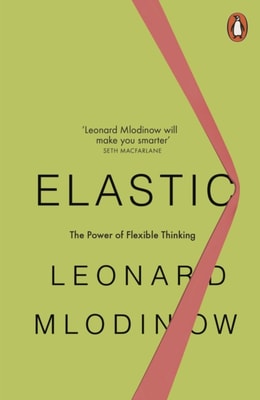
A guide to critical thinking in the 'post-truth' era, from the author of Sunday Times best-seller The Organized Mind We live in a world of information overload.
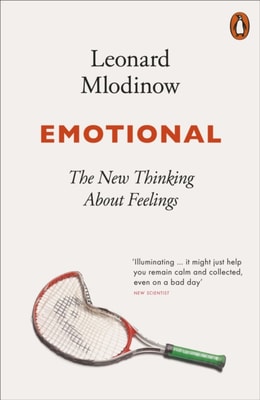
'Both a brilliant scholar and a great writer, Leonard Mlodinow guides us through the fascinating science of what we feel, and why - and what we can do about it.
From one of our leading thinkers, a dazzling philosophical journey through virtual worldsIn the coming decades, the technology that enables virtual and augmented reality will improve beyond recognition.
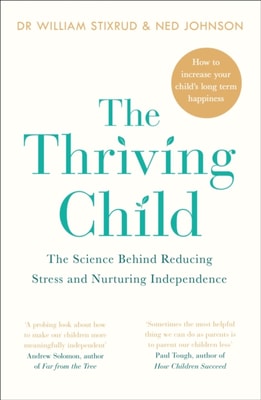
As parents we all want the best for our children, but so often over-manage every aspect of their lives, leaving them overwhelmed, lacking motivation, and at risk of mental health problems as adults.
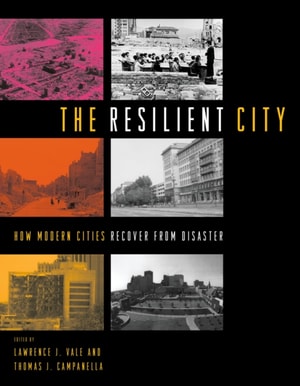
This book examines the practice of urban resilience past and present, drawing on deeper global historical sources and detailed case-studies of contemporary Britain.
Always the focal point in modern times for momentous political, social and cultural upheaval, Berlin has continued, since the fall of the Wall in 1989, to be a city in transition.
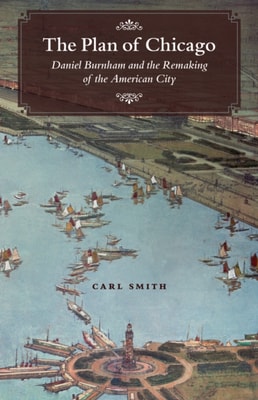
Arguably the most influential document in the history of urban planning, Daniel Burnham's 1909 Plan of Chicago, coauthored by Edward Bennett and produced in collaboration with the Commercial Club of Chicago, proposed many of the city's most distinctive features, including its lakefront parks and roadways, the Magnificent Mile, and Navy Pier.
In the wake of the Great Recession, American cities from Philadelphia to San Diego saw an upsurge in hyperlocal placemaking-small-scale interventions aimed at encouraging greater equity and community engagement in growth and renewal.
From the years 2004 to 2008, Beijing and Shanghai witnessed the construction of an extraordinary number of new buildings, many of which were designed by architectural firms overseas.
We live in a self-proclaimed Urban Age, where we celebrate the city as the source of economic prosperity, a nurturer of social and cultural diversity, and a place primed for democracy.
Now considered a dysfunctional mess, Chicago's public housing projects once had long waiting lists of would-be residents hoping to leave the slums behind.
Architecture for the Poor describes Hassan Fathy's plan for building the village of New Gourna, near Luxor, Egypt, without the use of more modern and expensive materials such as steel and concrete.
An important part of the New Deal, the Modernization Credit Plan helped transform urban business districts and small-town commercial strips across 1930s America, but it has since been almost completely forgotten.
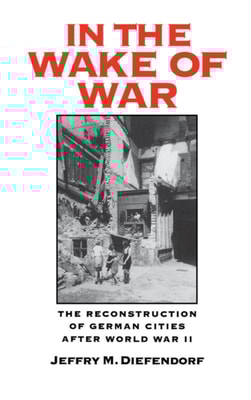
In 1945 Germany's cities lay in ruins, destroyed by Allied bombers `hat left major architectural monuments badly damaged and much of the housing stock reduced to rubble.
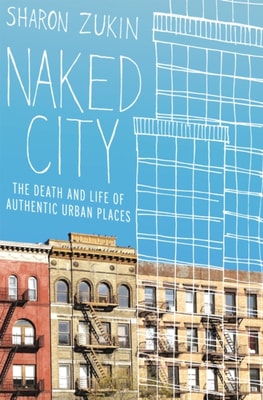
As cities have gentrified, educated urbanites have come to prize what they regard as "e;authentic"e; urban life: aging buildings, art galleries, small boutiques, upscale food markets, neighborhood old-timers, funky ethnic restaurants, and old, family-owned shops.
Hailed as "e;extraordinarily learned"e; (New York Times), "e;blithe in spirit and unerring in vision,"e; (New York Magazine), and the "e;definitive record of New York's architectural heritage"e; (Municipal Art Society), Norval White and Elliot Willensky's book is an essential reference for everyone with an interest in architecture and those who simply want to know more about New York City.
Hailed as "e;extraordinarily learned"e; (New York Times), "e;blithe in spirit and unerring in vision,"e; (New York Magazine), and the "e;definitive record of New York's architectural heritage"e; (Municipal Art Society), Norval White and Elliot Willensky's book is an essential reference for everyone with an interest in architecture and those who simply want to know more about New York City.
As cities have gentrified, educated urbanites have come to prize what they regard as "e;authentic"e; urban life: aging buildings, art galleries, small boutiques, upscale food markets, neighborhood old-timers, funky ethnic restaurants, and old, family-owned shops.
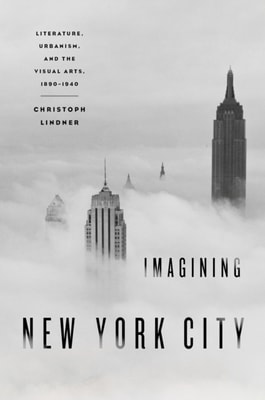
Using examples from architecture, film, literature, and the visual arts, this wide-ranging book examines the significance of New York City in the urban imaginary between 1890 and 1940.
Dynamic Thinking: A Primer on Dynamic Field Theory introduces the reader to a new approach to understanding cognitive and neural dynamics using the concepts of Dynamic Field Theory (DFT).
Dynamic Thinking: A Primer on Dynamic Field Theory introduces the reader to a new approach to understanding cognitive and neural dynamics using the concepts of Dynamic Field Theory (DFT).
The idea that some day robots may have emotions has captured the imagination of many and has been dramatized by robots and androids in such famous movies as 2001 Space Odyssey's HAL or Star Trek's Data.