From Lake Coeur dAlene to its confluence with the Columbia, the Spokane River travels 111 miles of varied and often spectacular terrainrural, urban, in places wild.
Key concepts, definitions, examples, and historical contexts for understanding smart cities, along with discussions of both drawbacks and benefits of this approach to urban problems.
Original, action-oriented humanist practices for interpreting and intervening in the city: a new methodology at the intersection of the humanities, design, and urban studies.
Engaging essays that roam across uncertain territory, in search of sunken forests, unclassifiable islands, inflammable skies, plagiarized tabernacles, and other phenomena missing from architectural history.
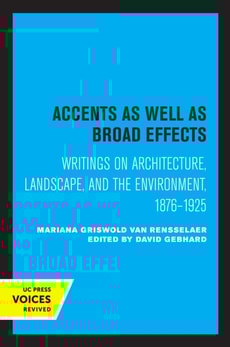
Mariana Griswold Van Rensselaer (1851-1934) is highly regarded among architectural historians for her 1888 biography of the nineteenth-century architect Henry Hobson Richardson.
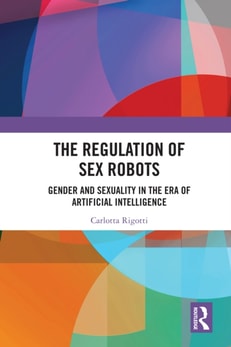
This book proposes a framework for regulating sex robots - human-like machines designed to engage emotionally and sexually with users through customisable, often AI-powered features.
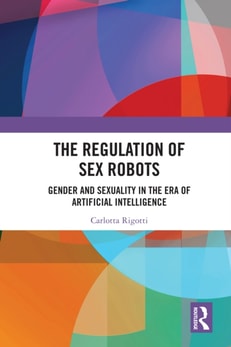
This book proposes a framework for regulating sex robots - human-like machines designed to engage emotionally and sexually with users through customisable, often AI-powered features.
Engineering Swarms for Cyber-Physical Systems covers the whole design cycle for applying swarm intelligence in Cyber-Physical Systems (CPS) and guides readers through modeling, design, simulation, and final deployment of swarm systems.
Carved out of century-old farmland near Chicago, the Prairie Crossing development is a novel experiment in urban public policy that preserves 69 percent of the land as open space.
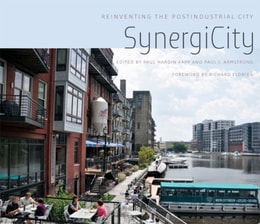
SynergiCity: Reinventing the Postindustrial City proposes a new and invigorating vision of urbanism, architectural design, and urban revitalization in twenty-first-century America.
Discover the Future That Awaits with AIStep into a world where technology pushes the boundaries of imagination, fundamentally altering the fabric of our daily lives.
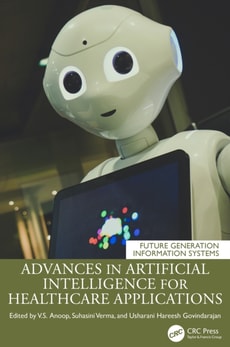
Advances in Artificial Intelligence for Healthcare Applications comprehensively covers the theoretical foundations, applications, and research potential of artificial intelligence in the healthcare domain.
A guide to critical thinking in the 'post-truth' era, from the author of Sunday Times best-seller The Organized Mind We live in a world of information overload.
Liquid Architecture challenges the idea of architecture as a fixed, inert container and reconceptualises it as a body whose boundaries are rather blurred and ever-changing.
'Both a brilliant scholar and a great writer, Leonard Mlodinow guides us through the fascinating science of what we feel, and why - and what we can do about it.
From one of our leading thinkers, a dazzling philosophical journey through virtual worldsIn the coming decades, the technology that enables virtual and augmented reality will improve beyond recognition.
As parents we all want the best for our children, but so often over-manage every aspect of their lives, leaving them overwhelmed, lacking motivation, and at risk of mental health problems as adults.
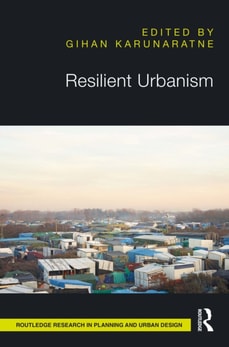
This book examines the practice of urban resilience past and present, drawing on deeper global historical sources and detailed case-studies of contemporary Britain.
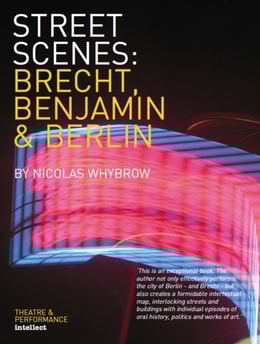
Always the focal point in modern times for momentous political, social and cultural upheaval, Berlin has continued, since the fall of the Wall in 1989, to be a city in transition.
As our world becomes increasingly urbanized, an understanding of the context, mechanisms, and consequences of city and suburban environments becomes more critical.
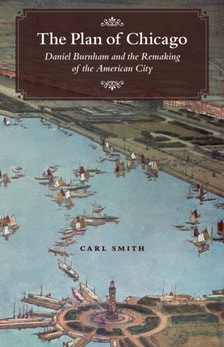
Arguably the most influential document in the history of urban planning, Daniel Burnham's 1909 Plan of Chicago, coauthored by Edward Bennett and produced in collaboration with the Commercial Club of Chicago, proposed many of the city's most distinctive features, including its lakefront parks and roadways, the Magnificent Mile, and Navy Pier.
In the wake of the Great Recession, American cities from Philadelphia to San Diego saw an upsurge in hyperlocal placemaking-small-scale interventions aimed at encouraging greater equity and community engagement in growth and renewal.
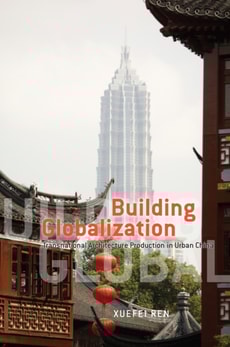
From the years 2004 to 2008, Beijing and Shanghai witnessed the construction of an extraordinary number of new buildings, many of which were designed by architectural firms overseas.