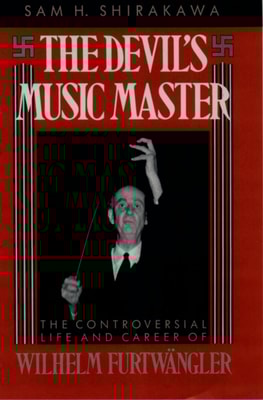
From 1922 until his death in 1954, Wilhelm Furtwangler was the foremost cultural music figure of the German-speaking world, conductor of both the Berlin and Vienna Philharmonic orchestras.
In this wide-ranging set of original essays, musicologist and organist Russell Stinson investigates Johann Sebastian Bach's compositions for the organ, opening up a wealth of perspectives on the stylistic orientation and historical context of these timeless masterpieces.
Without any formal training in music composition, Irving Berlin took a knack for music and turned it into the most successful songwriting career in American history.
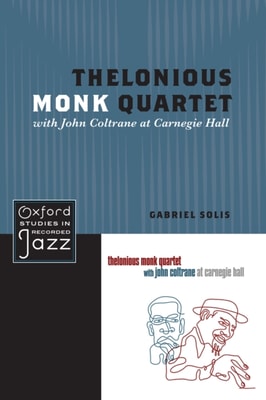
In early 2005, an engineer at the Library of Congress accidentally discovered, in an unmarked box, the recording of Thelonious Monk's and John Coltrane's performance at a 1957 benefit concert at Carnegie Hall.
Recognized as the patriarch of the minimalist movement-Brian Eno once called him "e;the daddy of us all"e;--La Monte Young remains an enigma within the music world, one of the most important and yet most elusive composers of the late twentieth century.
From patriotic "e;God Bless America"e; to wistful "e;White Christmas,"e; Irving Berlin's songs have long accompanied Americans as they fall in love, go to war, and come home for the holidays.
From patriotic "e;God Bless America"e; to wistful "e;White Christmas,"e; Irving Berlin's songs have long accompanied Americans as they fall in love, go to war, and come home for the holidays.
Mendelssohn and the Organ is the first comprehensive historical-critical study in any language to examine the role of the organ in Mendelssohn's personal and professional career.
Mahler's Voices brings together a close reading of the renowned composer's music with wide-ranging cultural and historical interpretation, unique in being a study not of Mahler's works as such but of Mahler's musical style.
Combining musical insight with the most recent research, William Kinderman's Beethoven is both a richly drawn portrait of the man and a guide to his music.
In Meeting Jimmie Rodgers, the first book to explore the deep legacy of "e;The Singing Brakeman"e; from a twenty-first century perspective, Barry Mazor offers a lively look at Rodgers' career, tracing his rise from working-class obscurity to the pinnacle of renown that came with such hits as "e;Blue Yodel"e; and "e;In the Jailhouse Now.
Unfinished Music draws its inspiration from the riddling aphorism by Walter Benjamin that serves as its epigraph: "e;the work is the death mask of its conception.
Setting the stage for a most intriguing journey into the world of minimalism, Robert Carl's Terry Riley's In C argues that the work holds its place in the canon because of the very challenges it presents to "e;classical"e; music.
Perhaps the most highly regarded French filmmaker after Jean Renoir, Robert Bresson created a new kind of cinema through meticulous refinement of the form's grammatical and expressive possibilities.
Show Tunes fully chronicles the shows, songs, and careers of the major composers of the American musical theatre, from Jerome Kern's earliest interpolations to the latest hits on Broadway.
Gioachino Rossini was one of the most influential, as well as one of the most industrious and emotionally complex of the great nineteenth-century composers.
Granddaughter of the philosopher Moses Mendelssohn and sister of the composer Felix Mendelssohn Bartholdy, Fanny Hensel (1805-1847) was an extraordinary musician who left well over four hundred compositions, most of which fell into oblivion until their rediscovery late in the twentieth century.
Bach's cantatas are among the highest achievements of Western musical art, yet studies of the individual cantatas that are both illuminating and detailed are few.
Most scholars since World War Two have assumed that composer Felix Mendelssohn Bartholdy (1809-1847) maintained a strong attachment to Judaism throughout his lifetime.
Written more than a century ago and initially regarded even by their creators as nothing more than light entertainment, the fourteen operas of Gilbert & Sullivan emerged over the course of the twentieth century as the world's most popular body of musical-theater works, ranking second only to Shakespeare in the history of English-language theater.
Recognized as the patriarch of the minimalist movement-Brian Eno once called him "e;the daddy of us all"e;--La Monte Young remains an enigma within the music world, one of the most important and yet most elusive composers of the late twentieth century.
In the 1950s, New York City's Birdland was the center of the world of modern jazz--and a revelation to Bill Crow, a wet-behind-the-ears twenty-two-year-old from Washington State.
Poised to become a classic of jazz literature, Visions of Jazz: The First Century offers seventy-nine chapters illuminating the lives of virtually all the major figures in jazz history.
Winner of the 2015 Music in American Culture Award from the American Musicological SocietyWhen Leonard Bernstein first arrived in New York City, he was an unknown artist working with other brilliant twentysomethings, notably Jerome Robbins, Betty Comden, and Adolph Green.