First published in 1975, Music and the Middle Class made a trail-blazing contribution to the social history of music, bringing together sociological and historical methods that have subsequently become accepted as central to the discipline of musicology.
First published in 1975, Music and the Middle Class made a trail-blazing contribution to the social history of music, bringing together sociological and historical methods that have subsequently become accepted as central to the discipline of musicology.
Isolde Ahlgrimm (1914-1995) was an important pioneer in the revival of Baroque and Classical keyboard instruments in her native city, Vienna, and later, throughout Europe and the United States.
Isolde Ahlgrimm (1914-1995) was an important pioneer in the revival of Baroque and Classical keyboard instruments in her native city, Vienna, and later, throughout Europe and the United States.
Johann Joseph Fux's reputation as a theorist and the long-term influence of his theoretical and pedagogical work have ensured that his name is widely known in music circles in the West.
Johann Joseph Fux's reputation as a theorist and the long-term influence of his theoretical and pedagogical work have ensured that his name is widely known in music circles in the West.
John Wallis (1616-1703), was one of the foremost British mathematicians of the seventeenth century, and is also remembered for his important writings on grammar and logic.
John Wallis (1616-1703), was one of the foremost British mathematicians of the seventeenth century, and is also remembered for his important writings on grammar and logic.
Kaija Saariaho is internationally recognized as a leading figure in contemporary music, enjoying a well-deserved reputation for works that are both creatively original and of considerable appeal.
Kaija Saariaho is internationally recognized as a leading figure in contemporary music, enjoying a well-deserved reputation for works that are both creatively original and of considerable appeal.
,In a word, I shall endeavour to show how our music, having been originally a shell-fish, with its restrictive skeleton on the outside and no soul within, has been developed by the inevitable laws of evolution, through natural selection and the survival of the fittest, into something human, even divine, with the strong, logical skeleton of its science inside, the fair flesh of God-given beauty outside, and the whole, like man himself, animated by a celestial, eternal spirit.
,In a word, I shall endeavour to show how our music, having been originally a shell-fish, with its restrictive skeleton on the outside and no soul within, has been developed by the inevitable laws of evolution, through natural selection and the survival of the fittest, into something human, even divine, with the strong, logical skeleton of its science inside, the fair flesh of God-given beauty outside, and the whole, like man himself, animated by a celestial, eternal spirit.
From 1695 to 1705, rival London theater companies based at Drury Lane and Lincoln's Inn Fields each mounted more than a hundred new productions while reviving stock plays by authors such as Shakespeare and Dryden.
From 1695 to 1705, rival London theater companies based at Drury Lane and Lincoln's Inn Fields each mounted more than a hundred new productions while reviving stock plays by authors such as Shakespeare and Dryden.
Filling a significant gap in current scholarship, the fourteen original essays that make up this volume individually and collectively reflect on the relationship between music and Orientalism in the British Empire over the course of the long nineteenth century.
Filling a significant gap in current scholarship, the fourteen original essays that make up this volume individually and collectively reflect on the relationship between music and Orientalism in the British Empire over the course of the long nineteenth century.
Among the most original and provocative musicological writers of his generation, James Hepokoski has elaborated new paradigms of inquiry for both music history and music theory.
Among the most original and provocative musicological writers of his generation, James Hepokoski has elaborated new paradigms of inquiry for both music history and music theory.
The north-east of England in the eighteenth century was a region where many different kinds of musical activity thrived and where a wide range of documentation survives.
The north-east of England in the eighteenth century was a region where many different kinds of musical activity thrived and where a wide range of documentation survives.
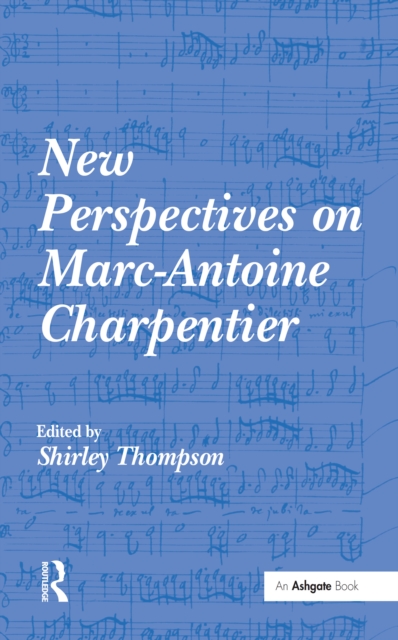
The tercentenary of Marc-Antoine Charpentier's death in 2004 stimulated a surge of activity on the part of performers and scholars, confirming the modern assessment of Charpentier (1643-1704) as one of the most important and inventive composers of the French Baroque.
The tercentenary of Marc-Antoine Charpentier's death in 2004 stimulated a surge of activity on the part of performers and scholars, confirming the modern assessment of Charpentier (1643-1704) as one of the most important and inventive composers of the French Baroque.
Nicholas Medtner (1880-1951) has always been a neglected figure in the history of Russian music, and yet his friend Rachmaninoff considered him the greatest of contemporary composers.
Nicholas Medtner (1880-1951) has always been a neglected figure in the history of Russian music, and yet his friend Rachmaninoff considered him the greatest of contemporary composers.
Selected from papers given at the third biennial conference on Music in Nineteenth-Century Britain, this volume, in common with its two predecessors, reflects the interdisciplinary character of the topic.