This book of parent-to-parent advice aims to encourage, support, and bolster the morale of one of music's most important back-up sections: music parents.
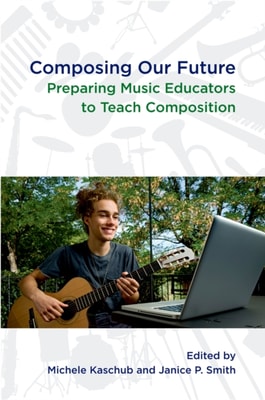
In order to prepare pre-service teachers and meet the needs of practitioners in the field, music teacher educators need resources to guide the development of curriculum, specific courses, professional development workshops, and other environments where composition education can begin, grow, and flourish.
Today's music teachers are caught in a conundrum about technology - while all are interested in it and told to utilize it in music instruction, a lack of equipment and funding act as enormous barriers to technology access.
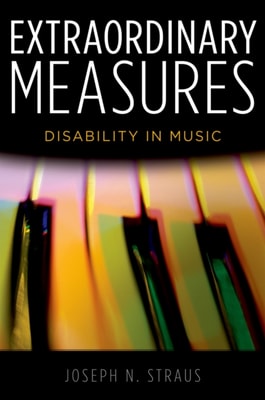
Approaching disability as a cultural construction rather than a medical pathology, this book studies the impact of disability and concepts of disability on composers, performers, and listeners with disabilities, as well as on discourse about music and works of music themselves.
During the last few decades, most cultural critics have come to agree that the division between "e;high"e; and "e;low"e; art is an artificial one, that Beethoven's Ninth and "e;Blue Suede Shoes"e; are equally valuable as cultural texts.
Approaching disability as a cultural construction rather than a medical pathology, this book studies the impact of disability and concepts of disability on composers, performers, and listeners with disabilities, as well as on discourse about music and works of music themselves.
The MENC Handbook of Research on Music Learning, Volume 2: Applications brings together the best and most current research on best practice for music learning, focusing squarely on the profession's empirical and conceptual knowledge of how students gain competence in music at various ages and in different contexts.
Based on educational theory and on recognized music teaching methods, Theory and Practice of Technology-Based Music Instruction develops a framework for examining music teaching that uses technology to introduce, reinforce, and assess skills and concepts.
Most modern performers, trained on the performance practices of the Classical and Romantic periods, come to the music of the Renaissance with well-honed but anachronistic ideas.
Audio recordings are the calling card with which musicians share and promote their work so a knowledge of recording techniques and technologies is essential to the 21st century musician.
Most modern performers, trained on the performance practices of the Classical and Romantic periods, come to the music of the Renaissance with well-honed but anachronistic ideas.
Audio recordings are the calling card with which musicians share and promote their work so a knowledge of recording techniques and technologies is essential to the 21st century musician.
The prevailing discourse surrounding urban music education suggests the deficit-laden notion that urban school settings are "e;less than,"e; rather than "e;different than,"e; their counterparts.
Community musicians move in many diverse settings, and facilitate local music activities in a wide array of community contexts including schools, hospitals, places of worship, music festivals, and prisons.
Drawing generously from four centuries of Italian, German and French art song, Exploring Art Song Lyrics embraces the finest of the literature and presents the repertoire with unprecedented clarity and detail.
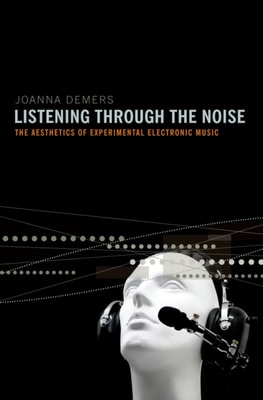
Contemporary electronic music has splintered into numerous genres and subgenres, all of which share a concern with whether sound, in itself, bears meaning.
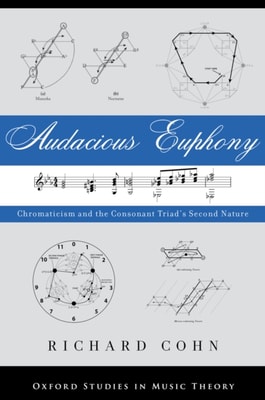
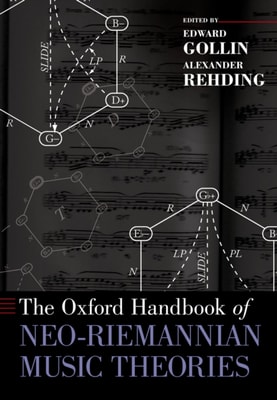
Music theorists have long believed that 19th-century triadic progressions idiomatically extend the diatonic syntax of 18th-century classical tonality, and have accordingly unified the two repertories under a single mode of representation.
Featuring chapters by the world's foremost scholars in music education and cognition, this handbook is a convenient collection of current research on music teaching and learning.
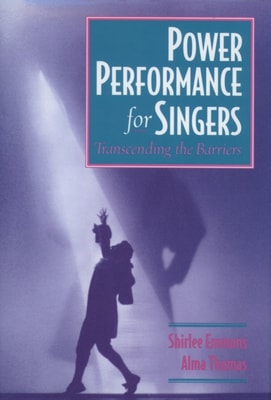
To perform well in today's highly competitive world where technical skills have been advanced to an unprecedented degree, a singer must be able to handle incredible pressure within the performing arena; his or her ability to deal with this stress will often determine whether he or she will succeed.
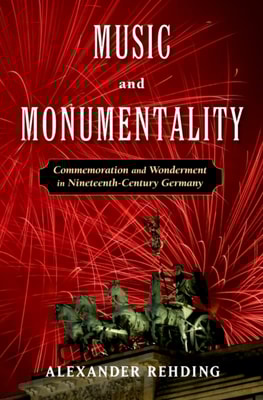
This critical study locates musical monumentality, a central property of the nineteenth-century German repertoire, at the intersections of aesthetics and memory.
Distinguished music theorist and composer David Lewin (1933-2003) applies the conceptual framework he developed in his earlier, innovative Generalized Musical Intervals and Transformations to the varied repertoire of the twentieth century in this stimulating and illustrative book.
Combining key selections from the classic MENC Handbook of Research on Music Teaching and Learning (Schirmer, 1992) and the widely acclaimed New Handbook of Research on Music Teaching and Learning (Oxford, 2002), the MENC Handbook of Research Methodologies presents comprehensive coverage of the most important issues in music education research in a handy and accessible format.
David Lewin's Generalized Musical Intervals and Transformations is recognized as the seminal work paving the way for current studies in mathematical and systematic approaches to music analysis.
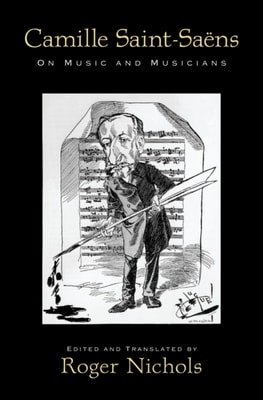
Camille Saint-Saens is a memorable figure not only for his successes as a composer of choral and orchestral works, and the eternally popular opera Samson et Dalila, but also because he was a keen observer of the musical culture in which he lived.
Wind Talk for Woodwinds provides instrumental music teachers, practitioners, and students with a handy, easy-to-use pedagogical resource for woodwind instruments found in school instrumental programs.
Inspired by Dalcroze-eurhythmics, this book is a practical guide for teachers and students interested in integrating the moving body into the aural skills classroom.
In The Musician's Way, veteran performer and educator Gerald Klickstein combines the latest research with his 30 years of professional experience to provide aspiring musicians with a roadmap to artistic excellence.
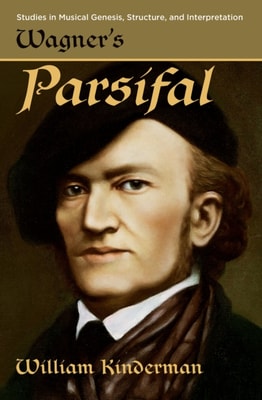
William Kinderman's detailed study of Parsifal, described by the composer as his "e;last card,"e; explores the evolution of the text and music of this inexhaustible yet highly controversial music drama across Wagner's entire career, and offers a reassessment of the ideological and political history of Parsifal, shedding new light on the connection of Wagner's legacy to the rise of National Socialism in Germany.