Arguably one of the most influential and revered figures in contemporary music theory, David Lewin (1933-2003) revolutionized the field through his work on transformational theory and theoretical methodology.
Hollywood's conversion from silent to synchronized sound film production not only instigated the convergence of the film and music industries but also gave rise to an extraordinary period of songs in American cinema.
Teaching Music through Composition offers a practical, fully multimedia curriculum designed to teach basic musical concepts through the creative process of music composition.
A world-renowned conductor and composer who has lead most of the major orchestras in North America and Europe, a talented musician who has played under the batons of such luminaries as Toscanini and Walter, and an esteemed arranger, scholar, author, and educator, Gunther Schuller is without doubt a major figure in the music world.
In Chances and Choices, Stephanie Pitts surveys the aims and impact of formative musical experiences, evaluating the extent to which music education of various kinds provides a foundation for lifelong involvement and interest in music.
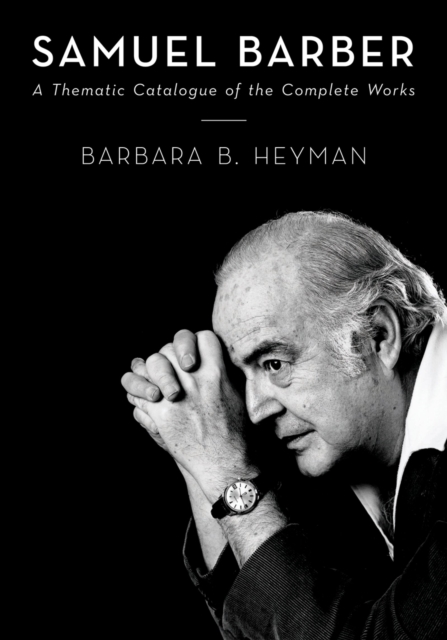
Samuel Barber: A Thematic Catalogue of the Complete Works is the first publication to list the entire musical output of Samuel Barber, one of the most beloved and frequently performed American composers.
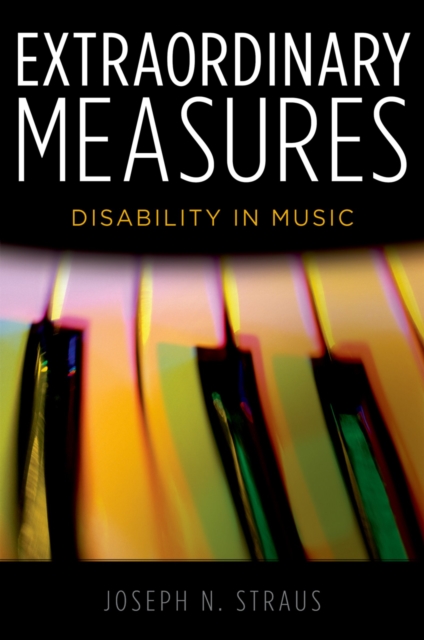
Approaching disability as a cultural construction rather than a medical pathology, this book studies the impact of disability and concepts of disability on composers, performers, and listeners with disabilities, as well as on discourse about music and works of music themselves.
During the last few decades, most cultural critics have come to agree that the division between "e;high"e; and "e;low"e; art is an artificial one, that Beethoven's Ninth and "e;Blue Suede Shoes"e; are equally valuable as cultural texts.
Approaching disability as a cultural construction rather than a medical pathology, this book studies the impact of disability and concepts of disability on composers, performers, and listeners with disabilities, as well as on discourse about music and works of music themselves.
The MENC Handbook of Research on Music Learning, Volume 2: Applications brings together the best and most current research on best practice for music learning, focusing squarely on the profession's empirical and conceptual knowledge of how students gain competence in music at various ages and in different contexts.
The Sounds of the Silents in Britain explores the sonic dimension of film exhibition in Britain from the emergence of cinema to the introduction of synchronized sound.
As audiences are increasingly no longer solely listeners but also active producer-consumers, and as video games and other interactive systems increasingly permeate our daily lives, understanding interactivity and its impact on the audience has never been more important.
Based on educational theory and on recognized music teaching methods, Theory and Practice of Technology-Based Music Instruction develops a framework for examining music teaching that uses technology to introduce, reinforce, and assess skills and concepts.
Ethnomusicologists believe that all humans, not just those we call musicians, are musical, and that musicality is one of the essential touchstones of the human experience.
Over three decades, Paul Griffiths's survey has remained the definitive study of music since the Second World War; this fully revised and updated edition re-establishes Modern Music and After as the preeminent introduction to the music of our time.
Over three decades, Paul Griffiths's survey has remained the definitive study of music since the Second World War; this fully revised and updated edition re-establishes Modern Music and After as the preeminent introduction to the music of our time.
This book is an invaluable chronicle of an exuberant time of artistic exploration and experimentation populated by now legendary figures such as John Cage, Morton Feldman, Cornelius Cardew, Terry Riley, Julius Eastman, David Tudor, and many others who were part of this under-known chapter of late 20th century music history.
This book is an invaluable chronicle of an exuberant time of artistic exploration and experimentation populated by now legendary figures such as John Cage, Morton Feldman, Cornelius Cardew, Terry Riley, Julius Eastman, David Tudor, and many others who were part of this under-known chapter of late 20th century music history.
Community musicians move in many diverse settings, and facilitate local music activities in a wide array of community contexts including schools, hospitals, places of worship, music festivals, and prisons.
Drawing generously from four centuries of Italian, German and French art song, Exploring Art Song Lyrics embraces the finest of the literature and presents the repertoire with unprecedented clarity and detail.
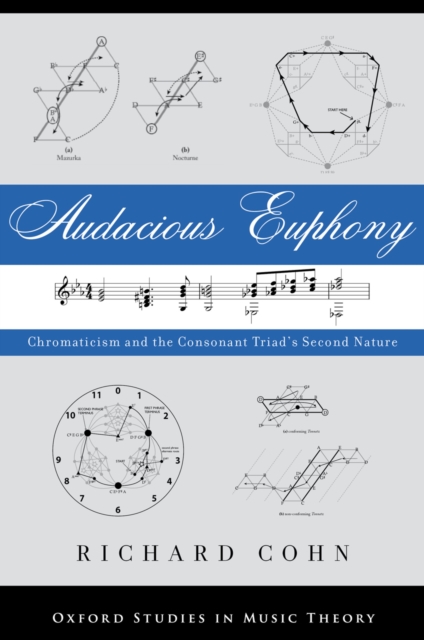
Music theorists have long believed that 19th-century triadic progressions idiomatically extend the diatonic syntax of 18th-century classical tonality, and have accordingly unified the two repertories under a single mode of representation.
This critical study locates musical monumentality, a central property of the nineteenth-century German repertoire, at the intersections of aesthetics and memory.
Distinguished music theorist and composer David Lewin (1933-2003) applies the conceptual framework he developed in his earlier, innovative Generalized Musical Intervals and Transformations to the varied repertoire of the twentieth century in this stimulating and illustrative book.
The Critical Nexus confronts an important and vexing enigma of early writings on music: why chant, which was understood to be divinely inspired, needed to be altered in order to work within the then-operative modal system.
In the last decade of the twentieth century and on into the twenty-first, Israelis and Palestinians saw the signing of the Oslo Peace Accords, the establishment of the Palestinian Authority, the assassination of Israeli Prime Minister Yitzhak Rabin, and the escalation of suicide bombings and retaliations in the region.
Jewish Music and Modernity demonstrates how borders between repertories are crossed and the sound of modernity is enriched by the movement of music and musicians from the peripheries to the center of modern culture.
David Lewin's Generalized Musical Intervals and Transformations is recognized as the seminal work paving the way for current studies in mathematical and systematic approaches to music analysis.
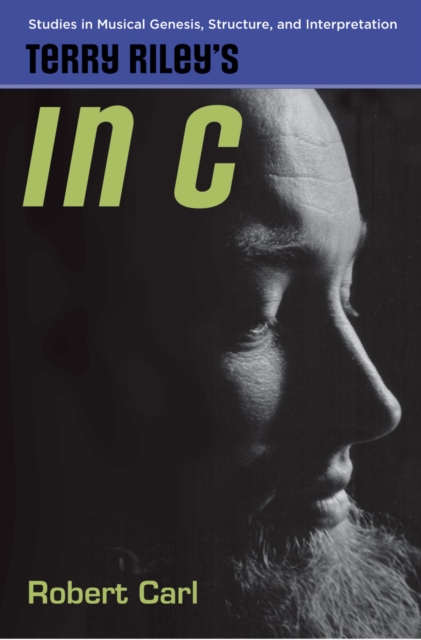
Setting the stage for a most intriguing journey into the world of minimalism, Robert Carl's Terry Riley's In C argues that the work holds its place in the canon because of the very challenges it presents to "e;classical"e; music.
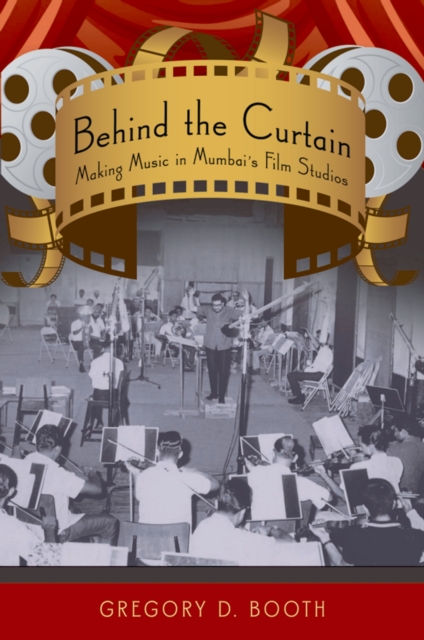
Beginning in the 1930s, men and a handful of women came from India's many communities-Marathi, Parsi, Goan, North Indian, and many others--to Mumbai to work in an industry that constituted in the words of some, "e;the original fusion music.