Essays here explore the relationship between politics and explicitly political feature films from the beginning of the movie industry to World War I, and for each decade through to the 1980's.
Collecting together some of the best thinking about the relationship between movies and politics, this book, originally published in 1993, encourages an awareness of the political dimension of film, both for film scholars and those entering the film industry.
Collecting together some of the best thinking about the relationship between movies and politics, this book, originally published in 1993, encourages an awareness of the political dimension of film, both for film scholars and those entering the film industry.
Given Herzog's own pronouncement that 'film is not the art of scholars, but of illiterates,' it is not surprising that his work has aroused ambivalent and contradictory responses.
Given Herzog's own pronouncement that 'film is not the art of scholars, but of illiterates,' it is not surprising that his work has aroused ambivalent and contradictory responses.
This charming classic of film literature was originally published in 1914 and hence represents an early attempt to catalogue the allure of cinema and how the motion picture industry began.
This charming classic of film literature was originally published in 1914 and hence represents an early attempt to catalogue the allure of cinema and how the motion picture industry began.
In this book the author takes a fresh look at horror film series as series and presents an understanding of how the genre thrived in this format for a large portion of its history.
In this book the author takes a fresh look at horror film series as series and presents an understanding of how the genre thrived in this format for a large portion of its history.
Providing textual analysis of 12 feature films written and directed by filmmakers who explore aspects of the Chicano cultural movement, this book discusses films including Cheech and Chong's Still Smokin' (1983), El Norte (1985), and Break of Dawn (1988).
Providing textual analysis of 12 feature films written and directed by filmmakers who explore aspects of the Chicano cultural movement, this book discusses films including Cheech and Chong's Still Smokin' (1983), El Norte (1985), and Break of Dawn (1988).
This was the first comprehensive study of film production in Ireland from the silent period to the present day, and of representations of Ireland and 'Irishness' in native, British, and American films.
This was the first comprehensive study of film production in Ireland from the silent period to the present day, and of representations of Ireland and 'Irishness' in native, British, and American films.
A historian's view of the relationship between American history and the American film industry, this book is a witty and perceptive account of Hollywood and its films in the years from the outbreak of the Second World War in Europe to the end of the war in Korea, It describes how film makers and their industry were shaped by and responded to the strong political and social stimuli of wartime America.
A historian's view of the relationship between American history and the American film industry, this book is a witty and perceptive account of Hollywood and its films in the years from the outbreak of the Second World War in Europe to the end of the war in Korea, It describes how film makers and their industry were shaped by and responded to the strong political and social stimuli of wartime America.
Taking the subject chronologically from the 1890s to when the book was initially published in 1989, this book analyses those films specifically concerned with working-class conditions and struggle, and discusses them within the context of the debate on the social significance of the feature film.
Taking the subject chronologically from the 1890s to when the book was initially published in 1989, this book analyses those films specifically concerned with working-class conditions and struggle, and discusses them within the context of the debate on the social significance of the feature film.
This book examines the development of cinematic form and culture in Russia, from its late nineteenth-century beginnings as a fairground attraction to the early post-Revolutionary years.
This book examines the development of cinematic form and culture in Russia, from its late nineteenth-century beginnings as a fairground attraction to the early post-Revolutionary years.
A polemical introduction to the avant-garde and experimental in film (including making and viewing), Materialist Film is a highly original, thought-provoking book.
A polemical introduction to the avant-garde and experimental in film (including making and viewing), Materialist Film is a highly original, thought-provoking book.
During the interwar period cinema and literature seemed to be at odds with each other, part of the continuing struggle between mass and elite culture which so worried writers such as Aldous Huxley, T.
During the interwar period cinema and literature seemed to be at odds with each other, part of the continuing struggle between mass and elite culture which so worried writers such as Aldous Huxley, T.
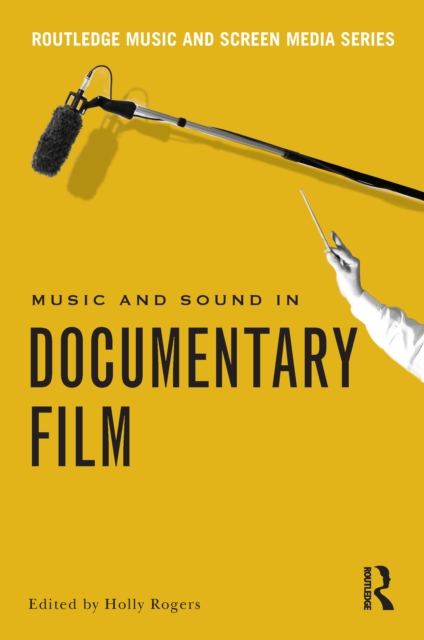
This collection of fourteen essays provides a rich and detailed history of the relationship between and music and image in documentary films, exploring the often overlooked role of music in the genre and its subsequent impact on an audience's perception of reality and fiction.
This collection of fourteen essays provides a rich and detailed history of the relationship between and music and image in documentary films, exploring the often overlooked role of music in the genre and its subsequent impact on an audience's perception of reality and fiction.
In 2007, Ang Lee made an espionage thriller based on the short story "e;Lust, Caution"e; by Eileen Chang, China's most famous female author of the twentieth century.
In 2007, Ang Lee made an espionage thriller based on the short story "e;Lust, Caution"e; by Eileen Chang, China's most famous female author of the twentieth century.