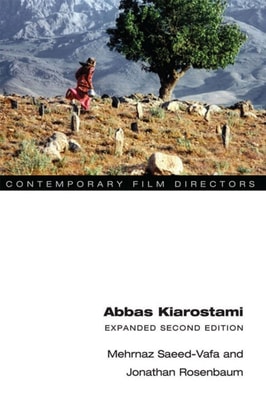
Before his death in 2016, Abbas Kiarostami wrote or directed more than thirty films in a career that mirrored Iranian cinema's rise as an international force.
One of Europe's most mythologized Marxist intellectuals of the 20th century, Pier Paolo Pasolini was not only a poet, filmmaker, novelist, and political martyr.
Celebrate movie history and the world of Disney, from the animations and live action movies to the magical Disney parks and attractions, with The Disney Book.
With 2005's acclaimed and controversial The New World, one of cinema's most enigmatic filmmakers returned to the screen with only his fourth feature film in a career spanning thirty years.
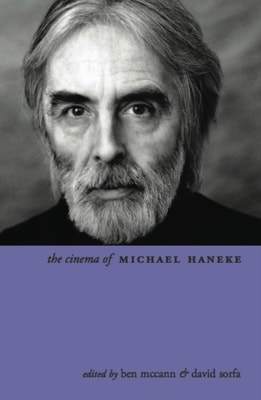
Michael Haneke is one of the most important directors working in Europe today, with films such as Funny Games (1997), Code Unknown (2000), and Hidden (2005) interrogating modern ethical dilemmas with forensic clarity and merciless insight.
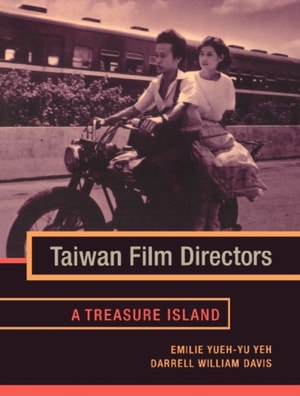
Focusing on the work of four contemporary filmmakers-Ang Lee, Edward Yang, Hou Hsiao-hsien, and Tsai Ming-liang-the authors explore how these filmmakers broke from tradition, creating a cinema that is both personal and insistent on examining Taiwan's complex history.
East Asian cinema has become a worldwide phenonemon, and directors such as Park Chan-wook, Wong Kar Wai, and Takashi Miike have become household names.
The Desiring-Image yields new models of queer cinema produced since the late 1980s, based on close formal analysis of diverse films as well as innovative contributions to current film theory.
The Desiring-Image yields new models of queer cinema produced since the late 1980s, based on close formal analysis of diverse films as well as innovative contributions to current film theory.
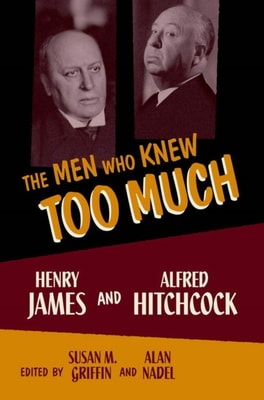
Alfred Hitchcock's American films are not only among the most admired works in world cinema, they also offer some of our most acute responses to the changing shape of American society in the 1940s, 50s, and 60s.
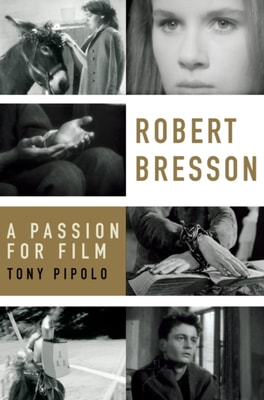
Perhaps the most highly regarded French filmmaker after Jean Renoir, Robert Bresson created a new kind of cinema through meticulous refinement of the form's grammatical and expressive possibilities.
Perhaps the most highly regarded French filmmaker after Jean Renoir, Robert Bresson created a new kind of cinema through meticulous refinement of the form's grammatical and expressive possibilities.
Sitney analyzes in detail the work of eleven American avant-garde filmmakers as heirs to the aesthetics of exhilaration and innovative vision articulated by Ralph Waldo Emerson and explored by John Cage, Charles Olson and Gertrude Stein.
Documentary's Expanded Fields: New Media and the Twenty-First-Century Documentary offers a theoretical mapping of contemporary non-standard documentary practices enabled by the proliferation of new digital imaging, lightweight and non-operator digital cameras, multiscreen and interactive interfaces, and web 2.
Documentary's Expanded Fields: New Media and the Twenty-First-Century Documentary offers a theoretical mapping of contemporary non-standard documentary practices enabled by the proliferation of new digital imaging, lightweight and non-operator digital cameras, multiscreen and interactive interfaces, and web 2.
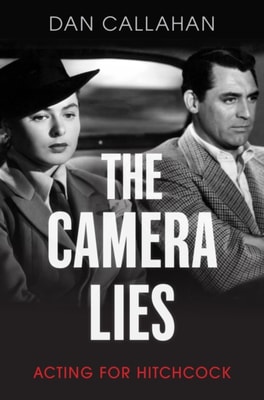
The first book on Hitchcock that focuses exclusively on his work with actorsAlfred Hitchcock is said to have once remarked, "e;Actors are cattle,"e; a line that has stuck in the public consciousness ever since.
The first book on Hitchcock that focuses exclusively on his work with actorsAlfred Hitchcock is said to have once remarked, "e;Actors are cattle,"e; a line that has stuck in the public consciousness ever since.
Alfred Hitchcock's American films are not only among the most admired works in world cinema, they also offer some of our most acute responses to the changing shape of American society in the 1940s, 50s, and 60s.
Expanded cinema: avant-garde moving image works that claim new territory for the cinematic, beyond the bounds of familiar filmmaking practices and the traditional theatrical exhibition space.
Expanded cinema: avant-garde moving image works that claim new territory for the cinematic, beyond the bounds of familiar filmmaking practices and the traditional theatrical exhibition space.
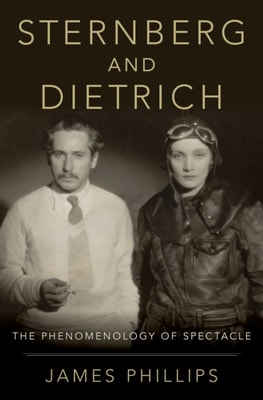
James Phillips's Sternberg and Dietrich: The Phenomenology of Spectacle reappraises the cinematic collaboration between the Austrian-American filmmaker Josef von Sternberg (1894-1969) and the German-American actor Marlene Dietrich (1901-92).
James Phillips's Sternberg and Dietrich: The Phenomenology of Spectacle reappraises the cinematic collaboration between the Austrian-American filmmaker Josef von Sternberg (1894-1969) and the German-American actor Marlene Dietrich (1901-92).