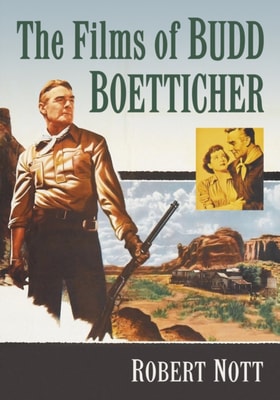
Budd Boetticher (1916-2001) was a bullfighter, a pleasant madman and a talented journeyman filmmaker who could--with the right material and drive--create a minor Western film classic as easily as he could kill a bull.
Often considered the lowest depth to which cinema can plummet, the rape-revenge film is broadly dismissed as fundamentally exploitative and sensational, catering only to a demented, regressive demographic.
This richly illustrated guide to dozens of California filming locations covers five decades of science fiction, fantasy and horror movies, documenting such familiar places as the house used in Psycho and the Bronson Caves of Robot Monster, along with less well known sites from films like Lost Horizon and Them!
In January 1966, Alan Napier became a household name on ABC's hit series Batman (1966-1968) as Alfred Pennyworth, loyal butler to the show's title character.
As business interests have commercialized the American West and publishers and studios have created compelling imagery, the expectations of readers and moviegoers have influenced perceptions of the cowboy as a hero.
The changes Cuba experienced following the collapse of the Soviet Union compelled Cuban filmmakers to rethink the values developed after the 1959 Castro revolution.
Horror and exploitation films have played a pioneering role in both American and world cinema, with a number of controversial and surreal movies produced by renegade filmmakers.
An indispensable resource for students and researchers of paranormal myth and media, this book explores the undead and unholy in literature, film, television, and popular culture.
The concepts and theories surrounding the aesthetic category of the grotesque are explored in this book by pursuing their employment in the films of American auteurs Tim Burton, Terry Gilliam, the Coen Brothers and David Lynch.
For thirty years, the twin towers of the World Trade Center soared above the New York City skyline, eventually becoming one of the most conspicuous symbolic structures in the world.
Although Americans are no longer compelled to learn Greek and Latin, classical ideals remain embedded in American law and politics, philosophy, oratory, history and especially popular culture.
Doris Day, once called an Actors Studio unto herself, was one of the twentieth century's greatest entertainers, with a career spanning 39 films, more than 150 television shows, and more than 500 recordings.
Anita Page (1910-2008) first captured attention near the end of the silent film era in such classics as While the City Sleeps (1928) with Lon Chaney, The Flying Fleet (1929) with Ramon Novarro, and her own favorite, Our Dancing Daughters (1928) with Joan Crawford.
An auteur and the creator of multiple cinematic universes, James Wan has become one of the most successful directors in history, his films breaking box office records worldwide.
The first of its kind, this study examines the exemplars of hardcore horror--Fred Vogel's August Underground trilogy, Shane Ryan's Amateur Porn Star Killer series and Lucifer Valentine's "e;vomit gore"e; films.
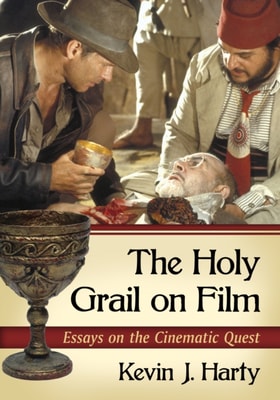
This collection of new essays is the first to study film depictions of the quest for the Holy Grail--the holy Christian relic of legend supposedly used by Jesus at the Last Supper.
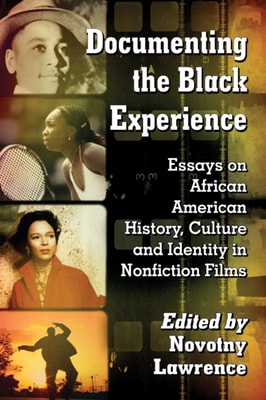
History taught at the elementary, middle, high school and even college levels often excludes significant events from African American history, such as the murder of Emmett Till or the murder of four black girls by the Ku Klux Klan in the Sixteenth Street Baptist Church bombing in Birmingham.
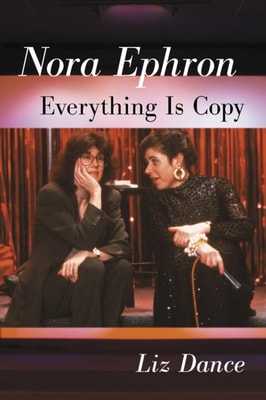
Nora Ephron famously claimed that she wrote about every thought that ever crossed her mind, from her divorce from Carl Bernstein (Heartburn) to the size of her breasts ("e;A Few Words About Breasts"e;).
A couple of generations ago, the movie industry ran on gut instinct--film schools, audience research departments and seminars on screenwriting were not yet de rigueur.
In 2016, Netflix--with an already enormous footprint in the United States--expanded its online streaming video service to 130 new countries, adding more than 12 million subscribers in nine months and bringing its total to 87 million.
Breaking box office records, the Marvel Cinematic Universe has achieved an unparalleled level of success with fans across the world, raising the films to a higher level of narrative: myth.
Upon its original publication in 1962, Edward Wagenknecht's The Movies in the Age of Innocence immediately earned recognition as a classic in the history of early cinema.
The Lone Ranger has endured as an iconic figure in American popular culture, from his 1933 premier as a radio serial hero through a highly-rated television series (1949-1957) to a 2013 feature film.
The book covers unusual and often surprising areas of horror film history: (1) The harrowingly tragic life of Dracula's leading lady, Helen Chandler, as intimately remembered by her sister-in-law.
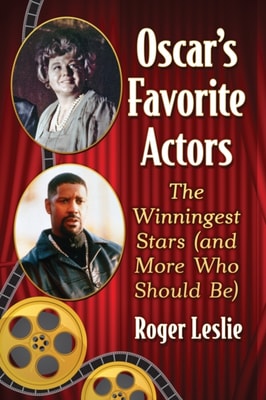
Just as the Academy Awards have an impact upon stars and their careers, their filmic achievements influence the Academy and contribute to the rich history of the Oscars.
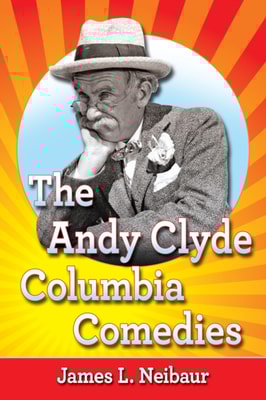
Andy Clyde starred in the second-longest series of shorts at Columbia Pictures (after the Three Stooges), with nearly 80 productions from 1934 to 1956.
"e;In Pier Angeli, a nineteen-year-old Italian girl, Hollywood has found an actress who eludes the town's traditional classifications and whose unvarnished beauty and instinctive talent have already caused her to be called 'Little Garbo'"e;--Theodore Strauss in Collier's, April 1952.