At the heart of this volume is the assertion that Sartrean existentialism, most prominent in the 1940s, particularly in France, is still relevant as a way of interpreting the world today.
During World War II Poland lost more than six million people, including about three million Polish Jews who perished in the ghettos and extermination camps built by Nazi Germany in occupied Polish territories.
The demise of the New German Cinema and the return of popular cinema since the 1990s have led to a renewed interest in the postwar years and the complicated relationship between East and West German cinema in particular.
The interconnections between histories and memories of the Holocaust, colonialism and extreme violence in post-war French and Francophone fiction and film provide the central focus of this book.
Out of a film culture originally starved of funds have emerged rich and eclectic works by film-makers that are now achieving the international recognition that they deserve: Barbara Albert, Michael Haneke, Ulrich Seidl, and Stefan Ruzowitzky, to give four examples.
In the last five years of the twentieth century, films by the second and third generation of the so-called German guest workers exploded onto the German film landscape.
The work of Andrzej Wajda, one of the world s most important filmmakers, shows remarkable cohesion in spite of the wide ranging scope of his films, as this study of his complete output of feature films shows.
Simone de Beauvoir s work has not often been associated with film studies, which appears paradoxical when it is recognized that she was the first feminist thinker to inaugurate the concept of the gendered othering gaze.
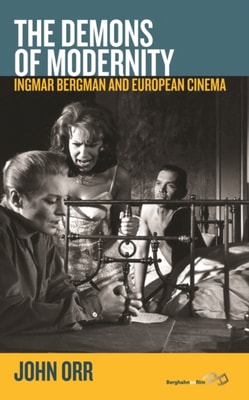
Ingmar Bergman s films had a very broad and rich relationship with the rest of European cinema, contrary to the myth that Bergman was a peripheral figure, culturally and aesthetically isolated from the rest of Europe.
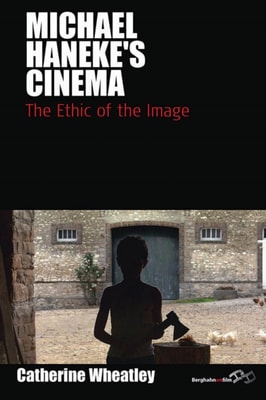
Existing critical traditions fail to fully account for the impact of Austrian director, and 2009 Cannes Palm d'Or winner, Michael Haneke s films, situated as they are between intellectual projects and popular entertainments.
The cultural liberalization of communist Czechoslovakia in the 1960s produced many artistic accomplishments, not least the celebrated films of the Czech New Wave.
This study of Dylan's mission-driven music reveals a functional approach to art that not only sustained his 60-year career but forever changed an art form.
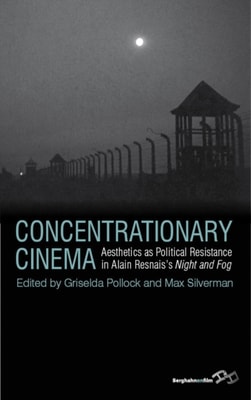
Since its completion in 1955, Alain Resnais s Night and Fog (Nuit et Brouillard) has been considered one of the most important films to confront the catastrophe and atrocities of the Nazi era.
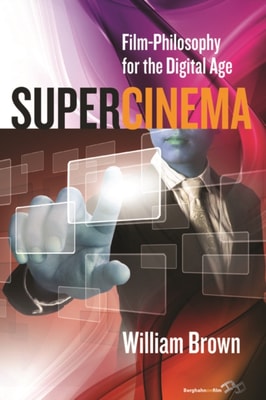
Drawing on a variety of popular films, including Avatar, Enter the Void, Fight Club, The Matrix, Speed Racer, X-Men and War of the Worlds, Supercinema studies the ways in which digital special effects and editing techniques require a new theoretical framework in order to be properly understood.
Part of the Pop Goes the Decade series, this book looks at one of the most memorable decades of the 20th century, highlighting pop culture areas such as film, television, sports, technology, advertising, fashion, and art.
Analyzing complex social and political issues through their manifestations in popular culture, this book provides readers a strong foundational knowledge of the 1960s as a decade.
This compilation of essential information on 100 superheroes from comic book issues, various print and online references, and scholarly analyses provides readers all of the relevant material on superheroes in one place.
This volume summarizes the evolution of news and information in the United States as it has been shaped by technology (penny press, radio, TV, cable, the internet) and form development (investigative journalism, tabloid TV, talk radio, social media).
Through his influential work on cultural capital and social mobility, the French sociologist Pierre Bourdieu has provided critical insights into the complex interactions of power, class, and culture in the modern era.
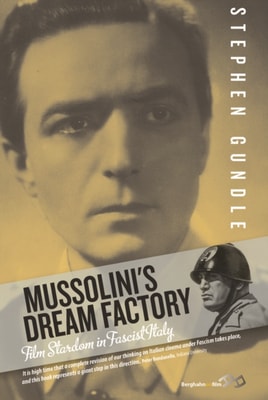
The intersection between film stardom and politics is an understudied phenomenon of Fascist Italy, despite the fact that the Mussolini regime deemed stardom important enough to warrant sustained attention and interference.
There has been a recent revival of interest in the work of Polish film director Walerian Borowczyk, a label-defying auteur and escape artist if there ever was one.
From melodramas to experimental documentaries to anime, mass media in Japan constitute a key site in which the nation s social memory is articulated, disseminated, and contested.
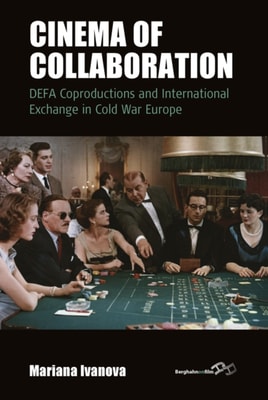
By the time the Berlin Wall collapsed, the cinema of the German Democratic Republic to the extent it was considered at all was widely regarded as a footnote to European film history, with little of enduring value.