Like many Eastern European countries, Poland has seen a succession of divergent economic and political regimes over the last century, from prewar embedded liberalism, through the state socialism of the Soviet era, to the present neoliberal moment.
Established in 1955, the Leipzig International Documentary Film Festival became a central arena for staging the cultural politics of the German Democratic Republic, both domestically and in relation to West Germany and the rest of the world.
For over five decades, the Newcastle-based Amber Film and Photography Collective has been a critical (if often unheralded) force within British documentary filmmaking, producing a variety of innovative works focused on working-class society.
The history of postwar German cinema has most often been told as a story of failure, a failure paradoxically epitomized by the remarkable popularity of film throughout the late 1940s and 1950s.
Contrary to the assumption that Western and Eastern European economies and cinemas were very different from each other, they actually had much in common.
Until his early retirement at age 50, Hasse Ekman was one of the leading lights of Swedish cinema, an actor, writer, and director of prodigious talents.
Unlike previous studies of the Soviet avant-garde during the silent era, which have regarded the works of the period as manifestations of directorial vision, this study emphasizes the collaborative principle at the heart of avant-garde filmmaking units and draws attention to the crucial role of camera operators in creating the visual style of the films, especially on the poetics of composition and lighting.
Though unjustly neglected by English-language audiences, Spanish film and television not only represent a remarkably influential and vibrant cultural industry; they are also a fertile site of innovation in the production of transmedia works that bridge narrative forms.
Long overlooked by scholars and critics, the history and aesthetics of German television have only recently begun to attract serious, sustained attention, and then largely within Germany.
With internationalist aspirations and wide-ranging historical perspectives, East German films about artists and their work became hotly contested spaces in which filmmakers could look beyond the GDR and debate the impact of contemporary cultural policy on the reception of their pre-war cultural heritage.
The last two decades have been transformational, often discordant ones for German feminism, as a new cohort of activists has come of age and challenged many of the movement s strategic and philosophical orthodoxies.
The organic is by now a venerable concept within aesthetics, architecture, and art history, but what might such a term mean within the spatialities and temporalities of film?
First published in 2002, Marek Haltof s seminal volume was the first comprehensive English-language study of Polish cinema, providing a much-needed survey of one of Europe s most distinguished yet unjustly neglected film cultures.
The on-going constitutionalization of Europe has led to various changes in media and communications, opening up areas of debate regarding the role of traditional and new media in developing a specific European public sphere as part of the wider European Project.
"e;In this fascinating in-depth study of the impact of nostalgia on contemporary American cinema, Christine Sprengler unpicks the history of the concept and explores its significance in theory and practice.
Now updated in a second edition, this highly accessible and practical guide to media writing brings together a range of different professional contexts, enabling students to develop a solid understanding of the practices that will enable them to excel in any media writing field today.
This multi-authored survey offers an innovative and accessible account of the richness and diversity of French film history from the 1890s to the 2010s.
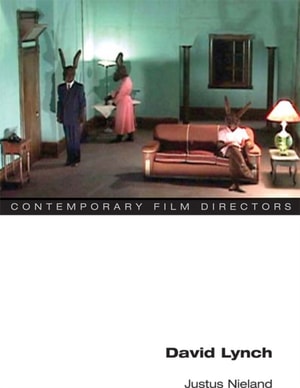
A key figure in the ongoing legacy of modern cinema, David Lynch designs environments for spectators, transporting them to inner worlds built by mood, texture, and uneasy artifice.
American director Philip Kaufman is hard to pin down: a visual stylist who is truly literate, a San Franciscan who often makes European films, he is an accessible storyteller with a sophisticated touch.
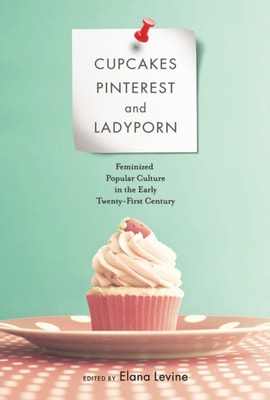
Media expansion into the digital realm and the continuing segregation of users into niches has led to a proliferation of cultural products targeted to and consumed by women.
The first major English-language study of Jarmusch At a time when gimmicky, action-driven blockbusters ruled Hollywood, Jim Jarmusch spearheaded a boom in independent cinema by making now-classic low-budget films like Stranger than Paradise, Down by Law, and Mystery Train.
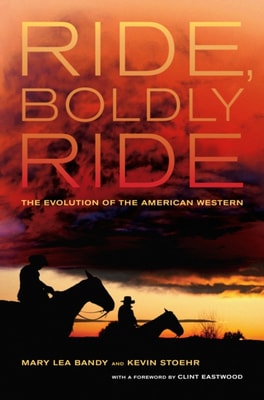
This comprehensive study of the Western covers its history from the early silent era to recent spins on the genre in films such as No Country for Old Men, There Will Be Blood, True Grit, and Cowboys & Aliens.
With Late Godard and the Possibilities of Cinema, Daniel Morgan makes a significant contribution to scholarship on Jean-Luc Godard, especially his films and videos since the late 1980s, some of the most notoriously difficult works in contemporary cinema.
Film Manifestos and Global Cinema Cultures is the first book to collect manifestoes from the global history of cinema, providing the first historical and theoretical account of the role played by film manifestos in filmmaking and film culture.
For well over a decade, Jean-Pierre and Luc Dardenne have produced highly original and ethically charged films that immerse their audiences in an intense and embodied viewing experience.
Forced to contend with unprecedented levels of psychological trauma during World War II, the United States military began sponsoring a series of nontheatrical films designed to educate and even rehabilitate soldiers and civilians alike.
Film Criticism, the Cold War, and the Blacklist examines the long-term reception of several key American films released during the postwar period, focusing on the two main critical lenses used in the interpretation of these films: propaganda and allegory.
This invaluable resource by one of the world's leading experts in French cinema presents a coherent overview of French cinema in the 20th century and its place and function in French society.
The "e;ancient quarrel"e; between philosophy and literature seems to have been resolved once and for all with the recognition that philosophy and the arts may be allies instead of enemies.
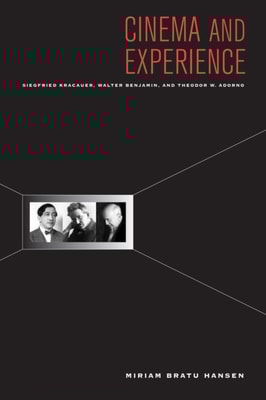
Siegfried Kracauer (1889-1966), friend and colleague of Walter Benjamin and Theodor Adorno, was one of the most influential film critics of the mid-twentieth century.
The landmark 2008 presidential and vice presidential campaigns of Hillary Clinton and Sarah Palin brought the role of women in American leadership into sharper focus than ever before.
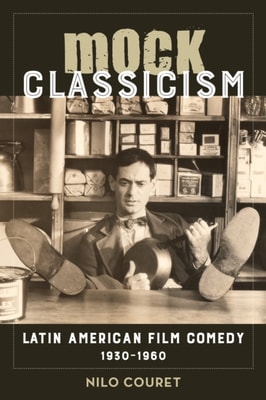
In Mock Classicism Nilo Couret presents an alternate history of Latin American cinema that traces the popularity and cultural significance of film comedies as responses to modernization and the forerunners to a more explicitly political New Latin American Cinema of the 1960s.
First Cut 2: More Conversations with Film Editors presents a new collection of twelve interviews with award-winning film editors who discuss the art and craft of editing in the twenty-first century.