Can postmodern accounts of the gaze - deriving from the psychoanalytic theories of Freud, Lacan, Fanon, and Riviere - tell us anything about those structures of vision prior to, and repressed by, modernity?
This book brings together theatre historians to identify and exemplify a variety of productive new approaches to the investigation of plays, players, playwrights, playhouses and other aspects of theatre in the long eighteenth century.
In this highly entertaining study, De Sousa argues that Shakespeare reinterprets, refashions and reinscribes his alien characters - Jews, Moors, Amazons and gypsies.
Contesting Performance is a collection of essays by international scholars that addresses the global development of performance research in the late twentieth and early twenty-first centuries.
Each chapter of this book presents a different marginalized community and explores how it appropriates theatre for its own needs, which are often at odds with those of the powerful sponsoring organisations.
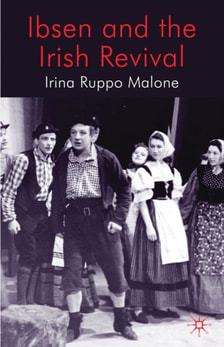
Ibsen and the Irish Revival examines Henrik Ibsen's influence on the Irish Revival and the reception of his plays in turn-of-the-twentieth-century Dublin.
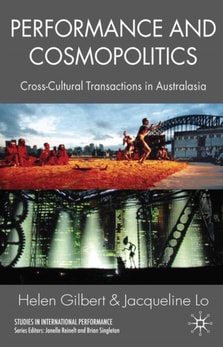
This ground-breaking study of cross-cultural theatre in the Australasian region focuses on theatrical events and practices in avant-garde and mainstream contexts.
The Dramaturgy of the Real brings together an incredible range of international theatre thinking, plays and performance texts, many published here for the first time, that ask questions about how we have come to understand reality and truth in the twenty-first century and analyze the presentation of non-fiction on the international stage.
The first study of the depictions of the Ancient World on the Victorian and Edwardian stage, this book analyzes plays set in and dramatising the histories of Greece, Rome, Egypt, Babylon and the Holy Land.
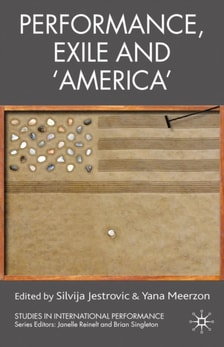
This collection investigates dramatic and performative renderings of 'America' as an exilic place particularly focusing on issues of language, space and identity.
This innovative collection features essays by a range of internationally renowned scholars and reconsiders textual practices in contemporary performance, specifically focusing on the exciting exchange between text, body and technology.
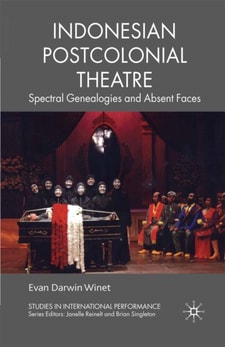
Indonesian Postcolonial Theatre explores modern theatrical practices in Indonesia from a performance of Hamlet in the warehouses of Dutch Batavia to Ratna Sarumpaet's feminist Muslim Antigones.
Reading a range of work from the US and UK over the last two decades, this is an innovative study of theatre's growing obsession with technologies and effects of naming.
An account of language and drama between 1945 and 2005, synthesizing linguistic and dramatic knowledge in order to illuminate the ways in which anxieties and attitudes toward language manifest themselves in discourses on and around English theatre of the time, and how these anxieties and attitudes reflect back through the theatre of this period.
Although the sciences have long understood the value of practice-based research, the arts and humanities have tended to structure a gap between practice and analysis.
Performance Affects explores performance projects in disaster and war zones to argue that joy, beauty and celebration should be the inspiration for the politics of community-based or participatory performance practice, seeking to realign the field of Applied Theatre away from effects towards an affective role, connected to sensations of pleasure.
This exploration of the wide variety of censorship that has shaped theatrical performance in twentieth and twenty-first century Britain examines the unpredictable outcomes of censorship, deep-seated anxieties about the performative influence of the stage, and the complex questions raised by acts of theatrical censorship.
Over the past two decades, theatre practitioners across the West have turned to documentary modes of performance-making to confront new socio-political realities.
This collection of essays sets out to challenge the dominant narrative about Victorian theatre by placing the practices and products of the Victorian theatre in relation to Victorian visual culture, through the lens of the concept of 'Ruskinian theatre', an approach to theatre which values its educative purpose as well as its aesthetic expression.
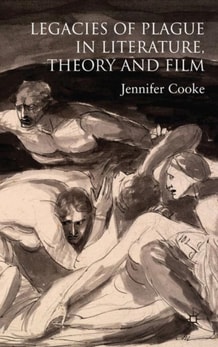
This book is an account of the history and continuation of plague as a potent metaphor since the disease ceased to be an epidemic threat in Western Europe, engaging with twentieth-century critiques of fascism, anti-Semitic rhetoric, the Oedipal legacy of psychoanalysis and its reception, and film spectatorship and the zombie genre.
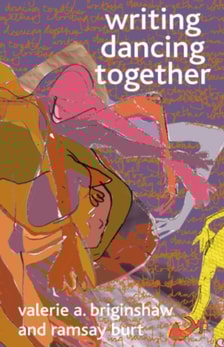
With a political agenda foregrounding collaborative practice to promote ethical relations, these individually and joint written essays and interviews discuss dances often with visual art, theatre, film and music, drawing on continental philosophy to explore notions of space, time, identity, sensation, memory and ethics.
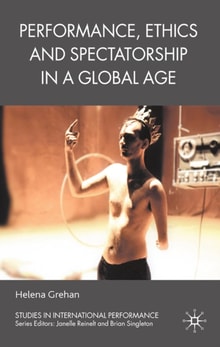
This book takes performance studies in exciting new directions, exploring the ways in which ethics can be used to understand the complex questions facing contemporary spectators.
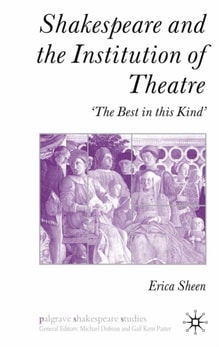
This innovative book offers an interdisciplinary analysis of Shakespearean theatre, presented in a series of imaginative readings of plays from every period of the playwright's career, from Two Gentlemen of Verona and The Taming of the Shrew to King Lear and The Tempest , mapping a new approach to ideas of the theatre as an institution.
In recent years, the 'Popular Shakespeare' phenomenon has become ever more pervasive: in fringe productions, mainstream theatre, or the mass media, Shakespeare is increasingly constructed as an authentic part of popular culture.
This exciting book uniquely combines interviews with scholars and practitioners in theatre studies to look at what most people feel is a pivotal moment of British theatre - the 1990s.
A useful compendium of 'survival' advice for the faculty newcomer on a variety of subjects: practical tips on classroom teaching, student performance evaluation, detailed advice on grant-writing, student advising, professional service, and publishing.
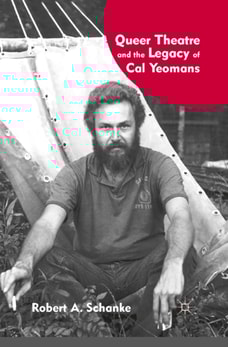
A forgotten yet award-winning playwright, Cal Yeomans was one of the founders of gay theater whose work was fueled by gay liberation and extinguished by the AIDS epidemic.
Identifying an apprehension about the nature and constitution of urbanism in North American plays, Westgate examines how cities like New York City and Los Angeles became focal points for identity politics and social justice at the end of the twentieth century, and how urban crises inform the dramaturgy of contemporary playwrights.
Fifty years after the publication of Martin Esslin's The Theatre of the Absurd , which suggests that 'absurd' plays purport the meaninglessness of life, this book uses the works of five major playwrights of the 1950s to provide a timely reassessment of one of the most important theatre 'movements' of the 20th century.
This book is concerned with language, genre, drama, and literary and historical narrative and examines the comedy of Shakespeare in the context of comedies from Italy, Spain, and France in the sixteenth and seventeenth centuries.
This book seeks to fill a major gap in the literature about fictional representations of presidents by studying more than 40 plays, written since 1900, which have had prominent productions on or off-Broadway or in another major city.
Using Shakespeare's Hamlet as a test subject and cognitive linguistic theory of conceptual blending as a tool, Cook unravels the 'mirror held up to nature' at the center of Shakespeare's play and provides a methodology for applying cognitive science to the study of drama.
This text analyzes the cultural work of spectacular suffering in contemporary discourse and late-medieval France, reading recent dramatizations of torture and performances of self-mutilating conceptual art against late-medieval saint plays.
In Performance, Cognitive Theory, and Devotional Culture, Jill Stevenson uses cognitive theory to explore the layperson s physical encounter with live religious performances, and to argue that laypeople s interactions with other devotional media - such as books and art objects - may also have functioned like performance events.
From oral culture, through the advent of literacy, to the introduction of printing, to the development of electronic media, communication structures have radically altered culture in profound ways.
Successfully launching an academic career in the challenging environment of higher education today is apt to require more explicit preparation than the informal socialization typically afforded in graduate school.
This book considers popular culture's confrontations with the history, thought, and major figures of the English Renaissance through an analysis of 'period films,' television productions, popular literature, and punk music.