The Routledge Companion to Performance Philosophy is a volume of especially commissioned critical essays, conversations, collaborative, creative and performative writing mapping the key contexts, debates, methods, discourses and practices in this developing field.
The Routledge Companion to Performance Philosophy is a volume of especially commissioned critical essays, conversations, collaborative, creative and performative writing mapping the key contexts, debates, methods, discourses and practices in this developing field.
The Dark Theatre is an indispensable text for activist communities wondering what theatre might have to do with their futures, students and scholars across Theatre and Performance Studies, Urban Studies, Cultural Studies, Political Economy and Social Ecology.
The Dark Theatre is an indispensable text for activist communities wondering what theatre might have to do with their futures, students and scholars across Theatre and Performance Studies, Urban Studies, Cultural Studies, Political Economy and Social Ecology.
Shakespeare Company: When Action is Eloquence is the first comprehensive insight into this internationally acclaimed company founded in 1978 in Lenox, Massachusetts, by actor-director Tina Packer and voice pioneer Kristin Linklater, with the transformative power of Shakespeare's language at its heart.
Shakespeare Company: When Action is Eloquence is the first comprehensive insight into this internationally acclaimed company founded in 1978 in Lenox, Massachusetts, by actor-director Tina Packer and voice pioneer Kristin Linklater, with the transformative power of Shakespeare's language at its heart.
Teaching Critical Performance Theory offers teaching strategies for professors and artist-scholars across performance, design and technology, and theatre studies disciplines.
Teaching Critical Performance Theory offers teaching strategies for professors and artist-scholars across performance, design and technology, and theatre studies disciplines.
Theatrical Speech Acts: Performing Language explores the significance and impact of words in performance, probing how language functions in theatrical scenarios, what it can achieve under particular conditions, and what kinds of problems may arise as a result.
Theatrical Speech Acts: Performing Language explores the significance and impact of words in performance, probing how language functions in theatrical scenarios, what it can achieve under particular conditions, and what kinds of problems may arise as a result.
Peter Harrop offers a reappraisal of mummers' plays, which have long been regarded as a form of 'folk' or 'traditional' drama, somehow separate from the mainstream of British theatre.
Peter Harrop offers a reappraisal of mummers' plays, which have long been regarded as a form of 'folk' or 'traditional' drama, somehow separate from the mainstream of British theatre.
In How and Why We Teach Shakespeare, 19 distinguished college teachers and directors draw from their personal experiences and share their methods and the reasons why they teach Shakespeare.
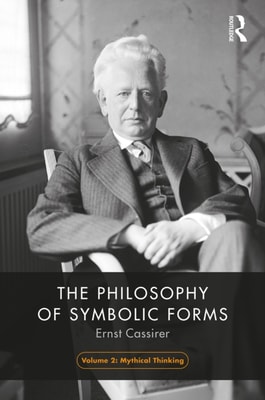
"e;In his Phenomenology of Cognition, Cassirer provides a comprehensive and systematic account of the dynamic process involved in the whole of human culture as it progresses from the world of myth and its feeling of social belonging to the highest abstractions of mathematics, logic and theoretical physics.
"e;In his Phenomenology of Cognition, Cassirer provides a comprehensive and systematic account of the dynamic process involved in the whole of human culture as it progresses from the world of myth and its feeling of social belonging to the highest abstractions of mathematics, logic and theoretical physics.
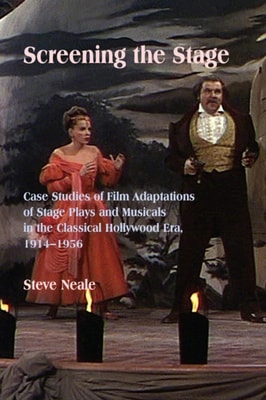
Introduced by a comprehensive account of the factors governing the adaptation of stage plays and musicals in Hollywood from the early 1910s to the mid-to-late 1950s, Screening the Stage consists of a series of chapter-length studies of feature-length films, the plays and musicals on which they were based, and their remakes where pertinent.
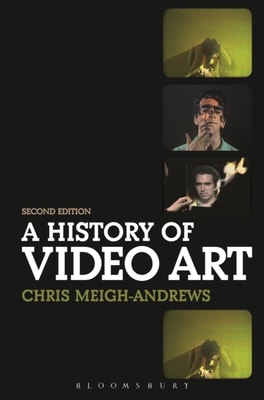
A History of Video Art is a revised and expanded edition of the 2006 original, which extends the scope of the first edition, incorporating a wider range of artists and works from across the globe and explores and examines developments in the genre of artists' video from the mid 1990s up to the present day.
Being Gorgeous explores the ways in which extravagance, flamboyance and dressing up can open up possibilities for women to play around anarchically with familiar stereotypical tropes of femininity.
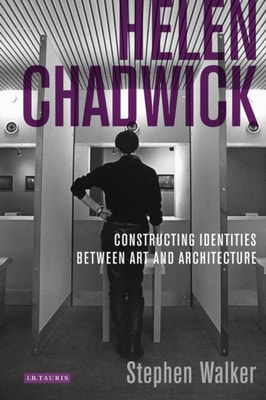
Highly respected by her peers and hugely influential on the subsequent generation of artists, the British artist Helen Chadwick produced a wideranging body of work in a variety of media, which shifted from early institutional and architectural critique to operatic installations, and to photographic projects and sculptures.
At the heart of this volume is the assertion that Sartrean existentialism, most prominent in the 1940s, particularly in France, is still relevant as a way of interpreting the world today.
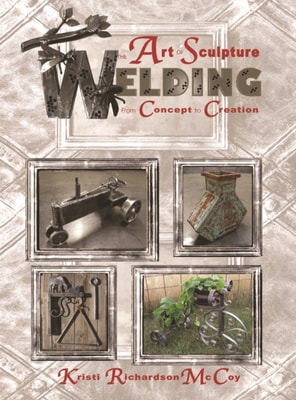
This extraordinary seven-part book covers the processes of creating 13 projects -- from pencils to vases to bicycles -- for all personalities, skill levels and interests.
This extraordinary seven-part book covers the processes of creating 13 projects -- from pencils to vases to bicycles -- for all personalities, skill levels and interests.
Music and the Performing Arts in the Anthropocene offers a series of thought-provoking chapters about music and the performing arts viewed from current Anthropocene-aware perspectives.
In So Much Wasted, Patrick Anderson analyzes self-starvation as a significant mode of staging political arguments across the institutional domains of the clinic, the gallery, and the prison.
Child of the Fire is the first book-length examination of the career of the nineteenth-century artist Mary Edmonia Lewis, best known for her sculptures inspired by historical and biblical themes.
Creator of such acclaimed works as the performance Meat Joy and the film Fuses, for decades the artist Carolee Schneemann has saved the letters she has written and received.
In Virtual Memory, Homay King traces the concept of the virtual through the philosophical works of Henri Bergson, Gilles Deleuze, and Giorgio Agamben to offer a new framework for thinking about film, video, and time-based contemporary art.