Dietary Reference Intakesfor Water, Potassium, Sodium, Chloride, and SulfateThe Dietary Reference Intakes (DRIs) are quantitative estimates of nutrientintakes to be used for planning and assessing diets for healthy people.
This report reviews the methods used to estimate the national number of people eligible to participate in the Special Supplemental Nutrition Program for Women, Infants, and Children (WIC) under full funding of the program.
Since 1941, Recommended Dietary Allowances (RDAs) has been recognized as the most authoritative source of information on nutrient levels for healthy people.
The Committee on Examination of the Evolving Science for Dietary Supplements of the Institute of Medicine's Food and Nutrition Board was directed to review, retrospectively, selected case studies of diet and health relationships that were relevant to dietary supplements and identified as important in the National Research Council report, Diet and Health: Implications for Chronic Disease Risk (DH) (NRC, 1989).
Dietary Risk Assessment in the WIC Program reviews methods used to determine dietary risk based on failure to meet Dietary Guidelines for applicants to the Special Supplemental Nutrition Program for Women, Infants, and Children (WIC).
Food safety regulators face a daunting task: crafting food safety performance standards and systems that continue in the tradition of using the best available science to protect the health of the American public, while working within an increasingly antiquated and fragmented regulatory framework.
Since 1994 the Institute of Medicine's Food and Nutrition Board has been involved in developing an expanded approach to developing dietary reference standards.
Even as malnutrition in the form of hunger and obesity affect the health and well-being of millions of people worldwide, a significant amount of food is lost or wasted every day, in every country, and at every stage in the supply chain from the farm to the household.
On August 1 and 2, 2018, the National Academies of Sciences, Engineering, and Medicine hosted a public workshop in Washington, DC, on sustainable diets, food, and nutrition.
On August 7-8, 2019, the National Academies of Sciences, Engineering, and Medicine hosted a public workshop in Washington, DC, to review the status of current and emerging knowledge about innovations for modern food systems and strategies for meeting future needs.
On September 16, 2019, the Roundtable on Obesity Solutions of the Health and Medicine Division of the National Academies of Sciences, Engineering, and Medicine, held a public workshop, Advancing Effective Obesity Communications, in Washington, DC.
The amount of nutrients required by an individual is determined by a number of physiological processes, including absorption, metabolism, stability, and bio-activation.
On December 5, 2017, the National Academies of Sciences, Engineering, and Medicine hosted a public workshop titled Nutrigenomics and the Future of Nutrition in Washington, DC, to review current knowledge in the field of nutrigenomics as it relates to nutrition.
Obesity and overweight pose significant challenges to the armed forces in the United States, affecting service members (including active duty, guard, and reserve components), veterans, retirees, and their families and communities.
The built environmentthe physical world made up of the homes, buildings, streets, and infrastructure within which people live, work, and playunderwent changes during the 20th and 21st centuries that contributed to a sharp decline in physical activity and affected access to healthy foods.
The National Academies of Sciences, Engineering, and Medicine convened a public workshop in September 2017 to explore the evidence for achieving global harmonization of methodological approaches to establishing nutrient intake recommendations.
On June 21-22, 2017, the National Academies of Sciences, Engineering, and Medicine's Food and Nutrition Board convened a workshop in Washington, DC, to explore the range of policies and programs that exist at the federal, state, tribal, and local levels to limit sugar-sweetened beverage consumption in children birth to 5 years of age.
The Roundtable on Obesity Solutions of the National Academies of Sciences, Engineering, and Medicine held a workshop in Washington, DC, on April 6, 2017, titled The Challenge of Treating Obesity and Overweight: A Workshop.
Federal guidance on nutrition and diet is intended to reflect the state of the science and deliver the most reliable recommendations possible according to the best available evidence.
The Special Supplemental Nutrition Program for Women, Infants, and Children (WIC) began 40 years ago as a pilot program and has since grown to serve over 8 million pregnant women, and mothers of and their infants and young children.
In September 2016, the National Academies of Sciences, Engineering, and Medicine convened a workshop to examine trends and patterns in aging and factors related to healthy aging in the United States, with a focus on nutrition, and how nutrition can sustain and promote healthy aging, not just in late adulthood, but beginning in pregnancy and early childhood and extending throughout the lifespan.
Older adults are a growing demographic group in the United States, and a range of physical, social, financial, and cultural factors affect their nutritional status.
Among the many troubling aspects of the rising prevalence of obesity in the United States and elsewhere in recent years, the growth of early childhood overweight and obesity stands out.
In September 2015, the National Academies of Sciences, Engineering, and Medicine's Food and Nutrition Board convened a workshop in Washington, DC, to discuss how communications and marketing impact consumer knowledge, skills, and behavior around food, nutrition, and healthy eating.
The Special Supplemental Nutrition Program for Women, Infants, and Children (WIC) began 40 years ago as a pilot program and has since grown to serve over 8 million pregnant women, and mothers of and their infants and young children.
Review of WIC Food Packages: An Evaluation of White Potatoes in the Cash Value Voucher assesses the impact of 2009 regulation to allow the purchase of vegetables and fruits, excluding white potatoes, with a cash value voucher on food and nutrient intakes of the Special Supplemental Nutrition Program for Women, Infants, and Children (WIC) population and to consider whether white potatoes should be permitted for purchase with the voucher.
The United States Department of Agriculture's (USDA's) Economic Research Service's (ERS) Food Availability Data System includes three distinct but related data series on food and nutrient availability for consumption.
The United States embarked on bold polices to enhance its food and agricultural system during the last half of the 19th century, investing first in the education of people and soon thereafter in research and discovery programs aimed at acquiring new knowledge needed to address the complex challenges of feeding a growing and hungry nation.
Caffeine in Food and Dietary Supplements is the summary of a workshop convened by the Institute of Medicine in August 2013 to review the available science on safe levels of caffeine consumption in foods, beverages, and dietary supplements and to identify data gaps.
Creating Equal Opportunities for a Healthy Weight is the summary of a workshop convened by the Institute of Medicine's Standing Committee on Childhood Obesity Prevention in June 2013 to examine income, race, and ethnicity, and how these factors intersect with childhood obesity and its prevention.
Despite efforts over the past several decades to reduce sodium intake in the United States, adults still consume an average of 3,400 mg of sodium every day.
The National Academies of Sciences, Engineering, and Medicine's Roundtable on Obesity Solutions convened a three-part workshop series that explored how structural racism, weight bias and stigma, and health communication intersect with obesity, gaps in the evidence base, and challenges and opportunities for long-term, systems-wide strategies needed to reduce the incidence and prevalence of obesity.
The Food Forum convened a public workshop on February 22-23, 2012, to explore current and emerging knowledge of the human microbiome, its role in human health, its interaction with the diet, and the translation of new research findings into tools and products that improve the nutritional quality of the food supply.
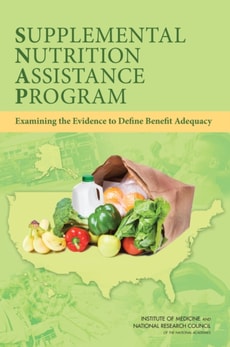
For many Americans who live at or below the poverty threshold, access to healthy foods at a reasonable price is a challenge that often places a strain on already limited resources and may compel them to make food choices that are contrary to current nutritional guidance.
During the past century the major causes of morbidity and mortality in the United States have shifted from those related to communicable diseases to those due to chronic diseases.
The leading challenges in public healthranging from rising obesity rates to the fast-growing population of older adultsare complex and cannot be solved effectively by any one silver bullet or any one sector in isolation.