This book explores how William Blake conceived the act of reading as an imaginative activation of Jesus the Word, the anonymous, unsayable potency of language that underlies speech.
This book examines William Blake as a ‘mystic’ and the movements and authors that contributed to this definition during and after his lifetime, with a particular focus on his influence on late nineteenth- and early twentieth-century Celtic Modernist writers.
This book examines William Blake as a ‘mystic’ and the movements and authors that contributed to this definition during and after his lifetime, with a particular focus on his influence on late nineteenth- and early twentieth-century Celtic Modernist writers.
Die komplexen und meist konfliktreichen Relationen von Zirkulation und Kontrolle sind uns heute allgegenwärtig: Menschen, Daten, Ideen, Geld, Viren oder Güter zirkulieren und produzieren prekäre Situationen wie Migration, WikiLeaks, Bankenkrisen, Waffenhandel, alternative Währungen oder Krankheiten.
Die deutschsprachige Gegenwartslyrik zeichnet sich durch eine intensive Rezeption und Aktualisierung des Barocks aus, deren historische Verbindungslinien die Beiträge in ihren Kontinuitäten und Diskontinuitäten, Diachronien und Anachronien nachzeichnen.
Die deutschsprachige Gegenwartslyrik zeichnet sich durch eine intensive Rezeption und Aktualisierung des Barocks aus, deren historische Verbindungslinien die Beiträge in ihren Kontinuitäten und Diskontinuitäten, Diachronien und Anachronien nachzeichnen.
An unprecedented cultural history of reproductions of medieval manuscriptsFacsimiles are, or claim to be, exact copies of objects, and medieval manuscripts have long been a focus for this kind of reproduction.
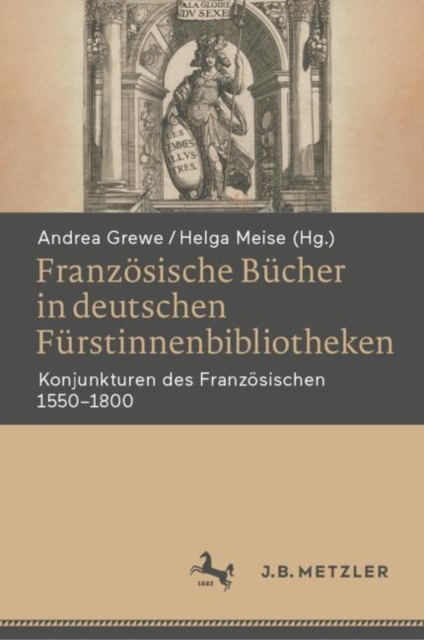
Die Beiträge des Bandes verbinden auf innovative Weise genderwissenschaftliche Perspektiven mit bibliotheks- und literaturwissenschaftlichen Fragestellungen und liefern neue Einsichten in die Bedingungen des deutsch-französischen Kulturtransfers zwischen dem 16.
Bei einem Blick auf virtuelle Realitäten im frühneuzeitlichen Theater gilt es, unsere vom digitalen Zeitalter geprägten Konzepte der Virtualität und Präsenz zu revidieren.
Bei einem Blick auf virtuelle Realitäten im frühneuzeitlichen Theater gilt es, unsere vom digitalen Zeitalter geprägten Konzepte der Virtualität und Präsenz zu revidieren.
Die Beiträge des Bandes verbinden auf innovative Weise genderwissenschaftliche Perspektiven mit bibliotheks- und literaturwissenschaftlichen Fragestellungen und liefern neue Einsichten in die Bedingungen des deutsch-französischen Kulturtransfers zwischen dem 16.
While British drama of the long eighteenth century remains largely unexamined as registering ecological fears, its visual spectacle and settings allow the audience to grasp threats to environments across the globe.
While British drama of the long eighteenth century remains largely unexamined as registering ecological fears, its visual spectacle and settings allow the audience to grasp threats to environments across the globe.
This book considers Samuel Taylor Coleridge's engagement with 'Whig poetry': a tradition of verse from the eighteenth century which celebrated the political and constitutional arrangements of Britain as guaranteeing liberty.
This book considers Samuel Taylor Coleridge's engagement with 'Whig poetry': a tradition of verse from the eighteenth century which celebrated the political and constitutional arrangements of Britain as guaranteeing liberty.
The latter half of the seventeenth century was a time of great social and political upheaval, reflected in the literature of the period in a way which is often bewildering to the modern reader.
The latter half of the seventeenth century was a time of great social and political upheaval, reflected in the literature of the period in a way which is often bewildering to the modern reader.
To understand the cultural history of England during the Restoration, one need look no further than the theater, which was attended by the gentry as well as by members of the middle and lower classes.
These eleven original essays by well-known eighteenth-century scholars, five of them editors of James Boswell's journal or letters, commemorate the bicentenary of Boswell's death on May 19, 1795.