A critical study which discusses passion and community as the central structures of feeling in tragic realism, tracing their origins in Stendhal, Tolstoy and Dostoevsky and explaining their contemporary eclipse in Western society.
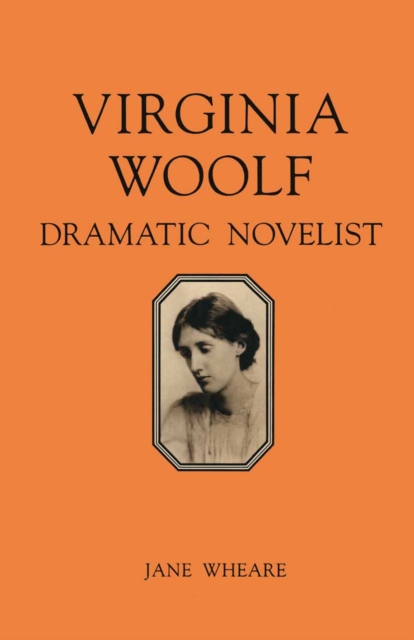
Jane Wheare concerns herself with Virginia Woolf's artistry in "e;The Voyage Out"e;, "e;Night and Day"e; and "e;The Years"e;, where Woolf exploited and developed the "e;realist"e; model, finding in it the most appropriate vehicle through which to put across obliquely her own ideas about women and society.
It is widely assumed today that heroism is obsolete as an ideal, that heroic virtue is a contradiction in terms, and that war literature must be anti-war by definition.
The author explores the impact on poetic practice in the 1970s and 1980s of recent theoretical developments, offering a criticism of the work of Seamus Heaney and of poets including Michael Hofmann, reassessing life on Mars and providing retrospective surveys of Fleur Adcock and others.
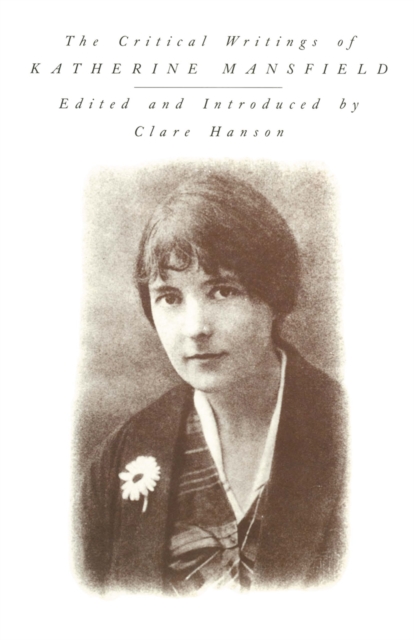
Katherine Mansfield was a formidable critic: astute, witty and something more - she had, as Middleton Murry put it, an extraordinary style and critical verve, mastery and 'sureness of touch'.
In revising this book for a second edition, Harry Blamires has updated his final chapters to give a thorough coverage to the work of dramatists, novelists and poets who have achieved prominence in the 1980s, either as new writers or rediscovered authors who have recently been brought back into print or revived by radio and television.
First published in 1974 under the title The Last Man in Europe, Alan Sandison's book took an unusual view of Orwell as a writer of paradox wherein the Protestant urge to question struggles with a longing to assent.