The influence of the women's movement has long been a scholarly priority in the study of British women's drama of the late nineteenth and early twentieth centuries, but previous scholarship has largely clustered around two events: the New Woman in the 1890s and the suffrage campaign in the years before the First World War.
The influence of the women's movement has long been a scholarly priority in the study of British women's drama of the late nineteenth and early twentieth centuries, but previous scholarship has largely clustered around two events: the New Woman in the 1890s and the suffrage campaign in the years before the First World War.
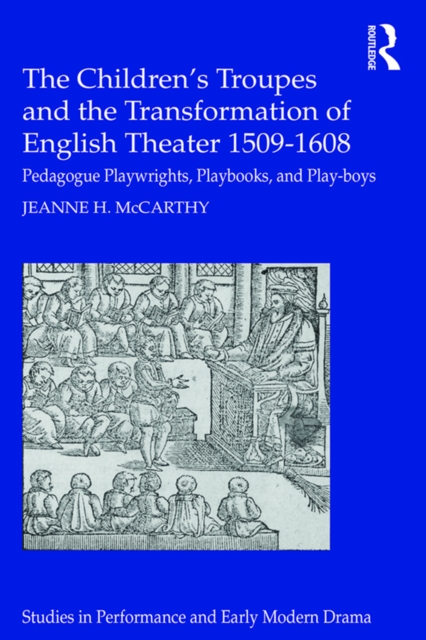
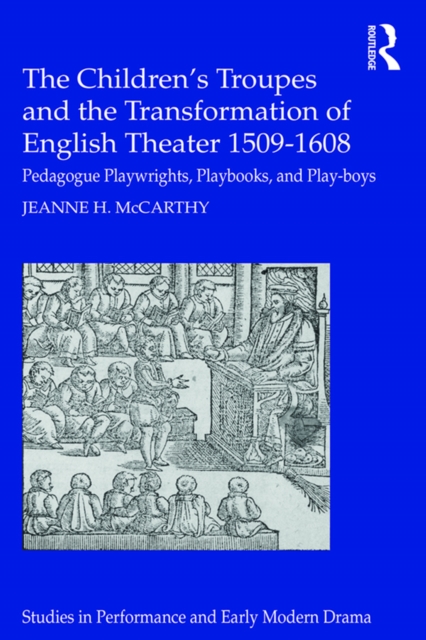
The Children's Troupes and the Transformation of English Theater 1509-1608 uncovers the role of the children's companies in transforming perceptions of authorship and publishing, performance, playing spaces, patronage, actor training, and gender politics in the sixteenth century.
The Children's Troupes and the Transformation of English Theater 1509-1608 uncovers the role of the children's companies in transforming perceptions of authorship and publishing, performance, playing spaces, patronage, actor training, and gender politics in the sixteenth century.
In the current climate of global military conflict and terrorism, Shakespeare at Peace offers new readings of Shakespeare's plays, illuminating a discourse of peace previously shadowed by war and violence.
In the current climate of global military conflict and terrorism, Shakespeare at Peace offers new readings of Shakespeare's plays, illuminating a discourse of peace previously shadowed by war and violence.
While most critical writing on Jonson concentrates on the plays, poems or masques seen in isolation, this title, first published in 1981, ranges across the genres to explore Jonson's vision as a whole.
While most critical writing on Jonson concentrates on the plays, poems or masques seen in isolation, this title, first published in 1981, ranges across the genres to explore Jonson's vision as a whole.
While most critical writing on Jonson concentrates on the plays, poems or masques seen in isolation, this title, first published in 1981, ranges across the genres to explore Jonsons vision as a whole.
The work of dramatists such as George Chapman, Thomas Heywood, Cyril Tourneur, John Webster, Thomas Middleton and John Ford can profitably be studied as attempts to construct a new moral order in response to the absence or weakening of the religious sanction.
The work of dramatists such as George Chapman, Thomas Heywood, Cyril Tourneur, John Webster, Thomas Middleton and John Ford can profitably be studied as attempts to construct a new moral order in response to the absence or weakening of the religious sanction.
While most critical writing on Jonson concentrates on the plays, poems or masques seen in isolation, this title, first published in 1981, ranges across the genres to explore Jonsons vision as a whole.
In Shakespeare's Language, Keith Johnson offers an overview of the rich and dynamic history of the reception and study of Shakespeare's language from his death right up to the present.
In Shakespeare's Language, Keith Johnson offers an overview of the rich and dynamic history of the reception and study of Shakespeare's language from his death right up to the present.
Although not much is known about the three Stuart plays in this edition, which was first published in 1987, we can ascribe them to one of the English universities, and each is indicative of a distinctly different influence on the Renaissance academic drama.
Although not much is known about the three Stuart plays in this edition, which was first published in 1987, we can ascribe them to one of the English universities, and each is indicative of a distinctly different influence on the Renaissance academic drama.
In Words for the Theatre, playwright David Cole pursues a course of dramaturgical self-questioning on the part of a playwright, centred on the act of playwriting.
In Words for the Theatre, playwright David Cole pursues a course of dramaturgical self-questioning on the part of a playwright, centred on the act of playwriting.
In this new monograph, Claire Hansen demonstrates how Shakespeare can be understood as a complex system, and how complexity theory can provide compelling and original readings of Shakespeare's plays.
One of the greatest playwrights of his time, Wilde was also a novelist, poet, essayist and celebrated wit, noted for his involvement in the art movement Aestheticism.
This book establishes the significance of actresses, female playgoers and women critics in shaping Shakespeare''s burgeoning reputation in the eighteenth century.