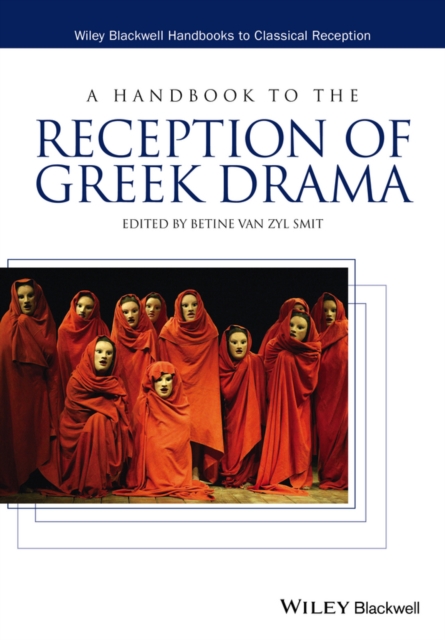
A Handbook to the Reception of Greek Drama offers a series of original essays that represent a comprehensive overview of the global reception of ancient Greek tragedies and comedies from antiquity to the present day.
A comprehensive collection of essays by leading scholars in the field that address, in a single volume, several key issues in interpreting Terence offering a detailed study of Terence s plays and situating them in their socio-historical context, as well as documenting their reception through to present day The first comprehensive collection of essays on Terence in English, by leading scholars in the field Covers a range of topics, including both traditional and modern concerns of gender, race, and reception Features a wide-ranging but interconnected series of essays that offer new perspectives in interpreting Terence Includes an introduction discussing the life of Terence, its impact on subsequent studies of the poet, and the question of his ethnicity
A comprehensive collection of essays by leading scholars in the field that address, in a single volume, several key issues in interpreting Terence offering a detailed study of Terence s plays and situating them in their socio-historical context, as well as documenting their reception through to present day The first comprehensive collection of essays on Terence in English, by leading scholars in the field Covers a range of topics, including both traditional and modern concerns of gender, race, and reception Features a wide-ranging but interconnected series of essays that offer new perspectives in interpreting Terence Includes an introduction discussing the life of Terence, its impact on subsequent studies of the poet, and the question of his ethnicity
This book studies a crucial phase in the history of Roman slavery, beginning with the transition to chattel slavery in the third century bce and ending with antiquity s first large-scale slave rebellion in the 130s bce.
This book studies a crucial phase in the history of Roman slavery, beginning with the transition to chattel slavery in the third century bce and ending with antiquity s first large-scale slave rebellion in the 130s bce.
The Life of William Shakespeare is a fascinating and wide-ranging exploration of Shakespeare's life and works focusing on oftern neglected literary and historical contexts: what Shakespeare read, who he worked with as an author and an actor, and how these various collaborations may have affected his writing.
The Life of William Shakespeare is a fascinating and wide-ranging exploration of Shakespeare's life and works focusing on oftern neglected literary and historical contexts: what Shakespeare read, who he worked with as an author and an actor, and how these various collaborations may have affected his writing.
Perry reveals Shakespeare derived modes of tragic characterization, previously seen as presciently modern, via engagement with Rome and Senecan tragedy.
Perry reveals Shakespeare derived modes of tragic characterization, previously seen as presciently modern, via engagement with Rome and Senecan tragedy.