Tracing more than two centuries of history, Shakespeare in Montana uncovers a vast array of different voices that capture the state's love affair with the world's most famous writer.
Jean Toomer (1894-1967) was a modernist writer, a member of the Harlem Renaissance, and briefly part of the literary and artistic community that grew up around Mabel Dodge Luhan in Taos, New Mexico.
Even before Harold Bloom designated Blood Meridian as the Great American Novel, Cormac McCarthy had attracted unprecedented attention as a novelist who is both serious and successful, a rare combination in recent American fiction.
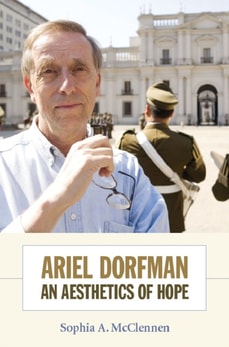
Ariel Dorfman: An Aesthetics of Hope is a critical introduction to the life and work of the internationally renowned writer, activist, and intellectual Ariel Dorfman.
National Abjection explores the vexed relationship between "e;Asian Americanness"e; and "e;Americanness"e; through a focus on drama and performance art.
Shakespeare's Dramatic Transactions uses conventions of performance criticism-staging and theatrical presentation-to analyze seven major Shakespearean tragedies: Hamlet, Othello, King Lear, Macbeth, Antony and Cleopatra, Richard II, and Richard III.
In Shakespeare, Brecht, and the Intercultural Sign renowned Brecht scholar Antony Tatlow uses drama to investigate cultural crossings and to show how intercultural readings or performances question the settled assumptions we bring to interpretations of familiar texts.
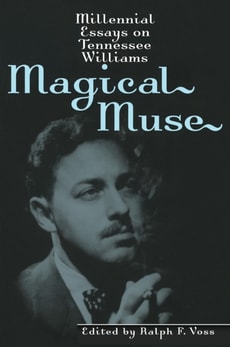
In this unique and engaging collection, twelve essays celebrate the legacy of one of America's most important playwrights and investigate Williams's enduring effect on America's cultural, theatrical, and literary heritage.
This timely collection addresses the neglected state of scholarship on southern women dramatists by bringing together the latest criticism on some of the most important playwrights of the 20th century.
Modernity, Community, and Place in Brian Friel's Drama shows how the leading Irish playwright explores a series of dynamic physical and intellectual environments, charting the impact of modernity on rural culture and on the imagined communities he strives to create between readers, and script, actors and audience.
Among the dramatists who wrote for the professional playhouses of early modern London was a small group of writers who were neither members of the commercial theater industry writing to make a living nor aristocratic amateurs dipping their toes in theatrical waters for social or political prestige.
"e;The evil that men do"e; has been chronicled for thousands of years on the European stage, and perhaps nowhere else is human fear of our own evil more detailed than in its personifications in theater.
"e;The evil that men do"e; has been chronicled for thousands of years on the European stage, and perhaps nowhere else is human fear of our own evil more detailed than in its personifications in theater.
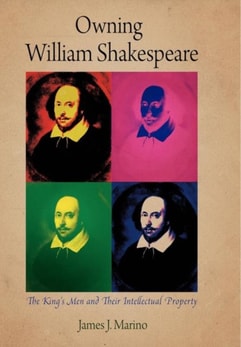
Recent studies in early modern cultural bibliography have put forth a radically new Shakespearea man of keen literary ambition who wrote for page as well as stage.
Shakespeare's Domestic Economies explores representations of female subjectivity in Shakespearean drama from a refreshingly new perspective, situating The Taming of the Shrew, The Merry Wives of Windsor, Othello, and Measure for Measure in relation to early modern England's nascent consumer culture and competing conceptions of property.
Selected by Choice magazine as an Outstanding Academic TitleThe New Historicism of the 1980s and early 1990s was preoccupied with the fashioning of early modern subjects.
Many of the world's greatest dramas have sprung not only from the creative impulses of the authors but also from the time-honored principles of structure and design that have forged those impulses into coherent and powerful insights.
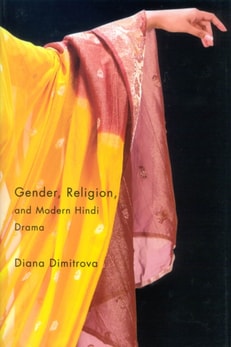
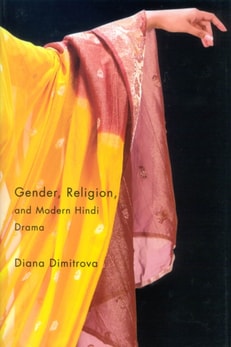
Diana Dimitrova studies the representation of gender and religion in Hindi drama from its beginnings in the second half of the nineteenth century until the 1960s - the period when urban proscenium Hindi theatre, which originated under Western influence, matured and thrived.
Diana Dimitrova studies the representation of gender and religion in Hindi drama from its beginnings in the second half of the nineteenth century until the 1960s - the period when urban proscenium Hindi theatre, which originated under Western influence, matured and thrived.
Bird argues that the playwrights, their productions, and their texts express the contradictory relations within these forms of feminism: on the one hand they represent women's social and political emancipation and, on the other, they affirm patriarchal structures and the status quo.
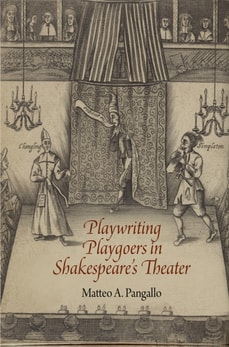
The tradition of direct address has little to do with the frequently touted notion of the "e;fluidity of the Renaissance stage"e;: the point is not that stage characters can talk to the audience but that they actually do reach out to the playgoers and in so doing import aspects of the audience world to the stage.
Chamberlin's focal point for this synthesis is the concept of ambiguity, which has played an important role in the liberal arts tradition and in medieval discourses regarding reading and preaching - discourses that are fundamental to Langland's poetic ways with words.
Potter is the first author to make clear how English libertinism changed during the eighteenth century as the violent, hypersexualized Hobbesian libertine, typified by the Earl of Rochester, was tempered by England's cultures of sentiment and sensibility.