Referencing early modern English play texts alongside contemporary records, accounts and statutes, this study offers an overdue assessment of the relationship between the dramatic efforts of the universities and early modern male identity.
Performing Pedagogy in Early Modern England: Gender, Instruction, and Performance features essays questioning the extent to which education, an activity pursued in the home, classroom, and the church, led to, mirrored, and was perhaps even transformed by moments of instruction on stage.
Focusing upon Marlowe the playwright as opposed to Marlowe the man, the essays in this collection position the dramatist's plays within the dramaturgical, ethical, and sociopolitical matrices of his own era.
Analyzing Elizabethan and Jacobean playtexts for their spatial implications, this innovative study discloses the extent to which the resources and constraints of public playhouse buildings affected the construction of the fictional worlds of early modern plays.
Crossing the disciplinary borders between political, religious, and economic history, Aaron Kitch's innovative new study demonstrates how sixteenth-century treatises and debates about trade influenced early modern English literature by shaping key formal and aesthetic concerns of authors between 1580 and 1630.
Mining a series of previously uncharted conversations springing up in 16th- and 17th-century popular medicine and culture, this study explores early modern England's significant and sustained interest in the hysterical diseases of women.
From William Langland's Piers Plowman, through the highly polemicized literary culture of fifteenth-century Lollardy, to major Reformation writers such as Simon Fish, William Tyndale and John Bale, and into the 1590s, this book argues for a vital reassessment of our understanding of the literary and cultural modes of the Reformation.
Railing, Reviling, and Invective in English Literary Culture, 1588-1617 is the first book to consider railing plays and pamphlets as participating in a coherent literary movement that dominated much of the English literary landscape during the late Elizabethan/early Jacobean period.
The first book-length examination of Jewish women in Renaissance drama, this study explores fictional representations of the female Jew in academic, private and public stage performances during Queen Elizabeth I's reign; it links lesser-known dramatic adaptations of the biblical Rebecca, Deborah, and Esther with the Jewish daughters made famous by Christopher Marlowe and William Shakespeare on the popular stage.
Recurring to the governing idea of her 2005 study Shakespeare on the Edge, Lisa Hopkins expands the parameters of her investigation beyond England to include the Continent, and beyond Shakespeare to include a number of dramatists ranging from Christopher Marlowe to John Ford.
In the first book-length study explicitly to connect the postcolonial trope of hybridity to Renaissance literature, Gary Schmidt examines how sixteenth- and seventeenth-century English authors, artists, explorers and statesmen exercised a concerted effort to frame questions of cultural and artistic heterogeneity.
Renaissance Literature and Linguistic Creativity interrogates notions of linguistic creativity as presented in English literary texts of the late sixteenth century.
Region, Religion and English Renaissance Literature brings together leading scholars of early modern literature and culture to explicate the ways in which both regional and religious contexts inform the production, circulation and interpretation of Renaissance literary texts.
Offering fuller understandings of both dramatic representations and the complexities of religious culture, this collection reveals the ways in which religion and performance were inextricably linked in early modern England.
In this study, Erin Minear explores the fascination of Shakespeare and Milton with the ability of music-heard, imagined, or remembered-to infiltrate language.
At the turn of the seventeenth century, Hristomir Stanev argues, ideas about the senses became part of a dramatic and literary tradition in England, concerned with the impact of metropolitan culture.
Courtesans - women who achieve wealth, status, or power through sexual transgression - have played both a central and contradictory role in literature: they have been admired, celebrated, feared, and vilified.
Located at the intersection of new historicism and the 'new formalism', historical formalism is one of the most rapidly growing and important movements in early modern studies: taking seriously the theoretical issues raised by both history and form, it challenges the anti-formalist orthodoxies of new historicism and expands the scope of historicist criticism.
Exploring Shakespeare's intellectual interest in placing both characters and audiences in a state of uncertainty, mystery, and doubt, this book interrogates the use of paradox in Shakespeare's plays and in performance.
Theatrical performance, suggest the contributors to this volume, can be an unpredictable, individual experience as well as a communal, institutional or cultural event.
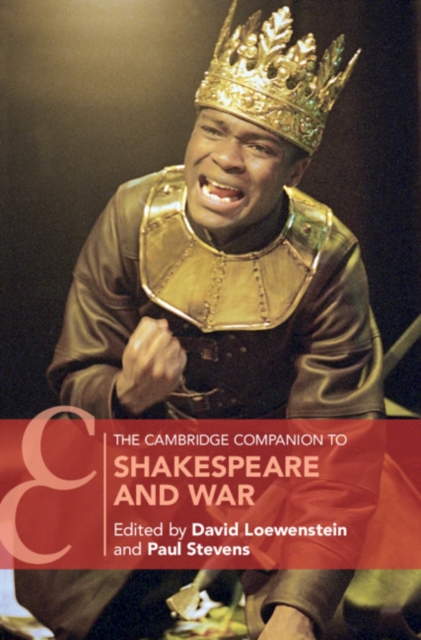
Brought to light in this study is a connection between the treatment of war in Shakespeare's plays and the issue of the 'just war', which loomed large both in religious and in lay treatises of Shakespeare's time.
Throughout his plays, Shakespeare placed an extraordinary emphasis on the power of the face to reveal or conceal moral character and emotion, repeatedly inviting the audience to attend carefully to facial features and expressions.