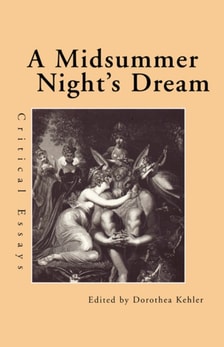
This volume is a collection of all-new original essays covering everything from feminist to postcolonial readings of the play as well as source queries and analyses of historical performances of the play.
This volume is a collection of all-new original essays covering everything from feminist to postcolonial readings of the play as well as source queries and analyses of historical performances of the play.
Using a variety of approaches, from postcolonialism and New Historicism to psychoanalysis and gender studies, the international contributors to Hamlet: New Critical Essays contribute major new interpretations on the conception and writing, editing, and cultural productions of Hamlet.
Using a variety of approaches, from postcolonialism and New Historicism to psychoanalysis and gender studies, the international contributors to Hamlet: New Critical Essays contribute major new interpretations on the conception and writing, editing, and cultural productions of Hamlet.
This book will constitute an original intervention into longstanding but insistently relevant debates around the significance of notions of 'performativity' to the critical analysis of early modern drama.
This book will constitute an original intervention into longstanding but insistently relevant debates around the significance of notions of 'performativity' to the critical analysis of early modern drama.
Focusing on plays (Richard II, Henry V, and Hamlet) which appear prominently in the writing of the Irish nationalist movement of the early twentieth century, this study explores how Irish writers such as Sean O'Casey, Samuel Beckett, W.
Focusing on plays (Richard II, Henry V, and Hamlet) which appear prominently in the writing of the Irish nationalist movement of the early twentieth century, this study explores how Irish writers such as Sean O'Casey, Samuel Beckett, W.
Based on extensive archival research, Shakespeare in the Victorian Periodicals offers an entirely new perspective on popular Shakespeare reception by focusing on articles published in Victorian periodicals.
Based on extensive archival research, Shakespeare in the Victorian Periodicals offers an entirely new perspective on popular Shakespeare reception by focusing on articles published in Victorian periodicals.
This collection recovers the continuities between three forms of romance that have often been separated from one another in critical discourse: early modern prose fiction, the dramatic romances staged in England during the 1570s and 1580s, and Shakespeare's late plays.
This collection recovers the continuities between three forms of romance that have often been separated from one another in critical discourse: early modern prose fiction, the dramatic romances staged in England during the 1570s and 1580s, and Shakespeare's late plays.
Shakespeare in Children's Literature looks at the genre of Shakespeare-for-children, considering both adaptations of his plays and children's novels in which he appears as a character.
Shakespeare in Children's Literature looks at the genre of Shakespeare-for-children, considering both adaptations of his plays and children's novels in which he appears as a character.
Complementing other volumes in the Shakespeare Criticism Series, this collection of twenty original essays will expand the critical contexts in which Antony and Cleopatra can be enjoyed as both literature and theater.
Complementing other volumes in the Shakespeare Criticism Series, this collection of twenty original essays will expand the critical contexts in which Antony and Cleopatra can be enjoyed as both literature and theater.
Described as one of Shakespeare's most intriguing plays, All's Well That Ends Well has only recently begun to receive the critical attention it deserves.
Described as one of Shakespeare's most intriguing plays, All's Well That Ends Well has only recently begun to receive the critical attention it deserves.
This volume offers a wealth of critical analysis, supported with ample historical and bibliographical information about one of Shakespeare's most enduringly popular and globally influential plays.
This volume offers a wealth of critical analysis, supported with ample historical and bibliographical information about one of Shakespeare's most enduringly popular and globally influential plays.
Idioms of Self-Interest uncovers an emerging social integration of economic self-interest in early modern England by examining literary representations of credit relationships in which individuals are both held to standards of communal trust and rewarded for risk-taking enterprise.
Idioms of Self-Interest uncovers an emerging social integration of economic self-interest in early modern England by examining literary representations of credit relationships in which individuals are both held to standards of communal trust and rewarded for risk-taking enterprise.
Acting from Shakespeare's First Folio examines a series of techniques for reading and performing Shakespeare's plays that are based on the texts of the first 'complete' volume of Shakespeare's works: the First Folio of 1623.
Acting from Shakespeare's First Folio examines a series of techniques for reading and performing Shakespeare's plays that are based on the texts of the first 'complete' volume of Shakespeare's works: the First Folio of 1623.
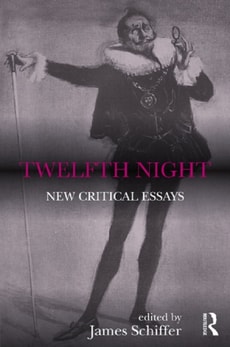
This volume in the Shakespeare Criticism series offers a range of approaches to Twelfth Night, including its critical reception, performance history, and relation to early modern culture.
This volume in the Shakespeare Criticism series offers a range of approaches to Twelfth Night, including its critical reception, performance history, and relation to early modern culture.
This is the first book on Richard III and the Tower of London, shedding new light on the King's reputation, the Castle's lore, and early modern literature's role in building associations between them.
This book explores traditional approaches to the play, which includes an examination of the play in light of current history, in the context of Renaissance England, and in relation to Shakespeare's other Roman plays as well as structural examination of plot, language, character, and source material.
This book explores traditional approaches to the play, which includes an examination of the play in light of current history, in the context of Renaissance England, and in relation to Shakespeare's other Roman plays as well as structural examination of plot, language, character, and source material.
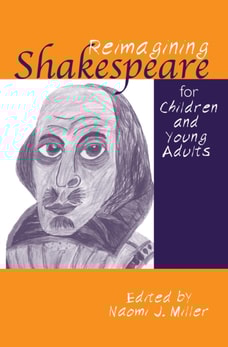
This is a collection of original essays about how Shakespeare and how his plays are increasingly being used as a means of furthering literacy, language arts, creative and dramatic learning for children in and out of the classroom.