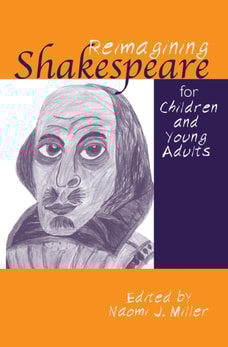
This is a collection of original essays about how Shakespeare and how his plays are increasingly being used as a means of furthering literacy, language arts, creative and dramatic learning for children in and out of the classroom.
Shakespeare, Trauma and Contemporary Performance examines how contemporary performances of Shakespeare's texts on stage and screen engage with violent events and histories.
Shakespeare, Trauma and Contemporary Performance examines how contemporary performances of Shakespeare's texts on stage and screen engage with violent events and histories.
Touching on the work of philosophers including Richardson, Kant, Hume, Wittgenstein, Nietzsche, and Dewey, this study examines the history of what philosophers have had to say about "e;Shakespeare"e; as a subject of philosophy, from the seventeenth-century to the present.
Touching on the work of philosophers including Richardson, Kant, Hume, Wittgenstein, Nietzsche, and Dewey, this study examines the history of what philosophers have had to say about "e;Shakespeare"e; as a subject of philosophy, from the seventeenth-century to the present.
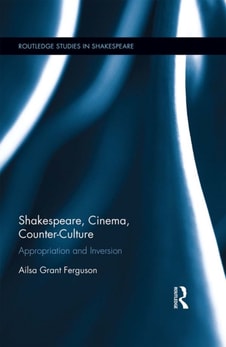
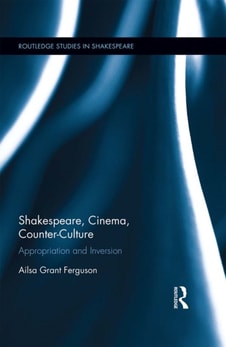
Addressing for the first time Shakespeare's place in counter-cultural cinema, this book examines and theorizes counter-hegemonic, postmodern, and post-punk Shakespeare in late 20th and early 21st century film.
Addressing for the first time Shakespeare's place in counter-cultural cinema, this book examines and theorizes counter-hegemonic, postmodern, and post-punk Shakespeare in late 20th and early 21st century film.
A collection that includes a lengthy introduction describing historical trends in critical interpretations and theatrical performances of Shakespeare's play; 20 essays on the play, including two written especially for this volume (by Maurice Hunt and David Bergeron).
A collection that includes a lengthy introduction describing historical trends in critical interpretations and theatrical performances of Shakespeare's play; 20 essays on the play, including two written especially for this volume (by Maurice Hunt and David Bergeron).
In this timely new study, Borlik reveals the surprisingly rich potential for the emergent "e;green"e; criticism to yield fresh insights into early modern English literature.
This volume reflects changing critical perceptions of Shakespeare's works from Renaissance to modern times and celebrates the power of Shakespearean tragedy.
This volume reflects changing critical perceptions of Shakespeare's works from Renaissance to modern times and celebrates the power of Shakespearean tragedy.
The theoretical ferment which has affected literary studies over the last decade has called into question traditional ways of thinking about, classifying and interpreting texts.
The theoretical ferment which has affected literary studies over the last decade has called into question traditional ways of thinking about, classifying and interpreting texts.
`Professor Mahood's book has established itself as a classic in the field, not so much because of the ingenuity with which she reads Shakespeare's quibbles, but because her elucidation of pun and wordplay is intelligently related both to textual readings and dramatic significance.
`Professor Mahood's book has established itself as a classic in the field, not so much because of the ingenuity with which she reads Shakespeare's quibbles, but because her elucidation of pun and wordplay is intelligently related both to textual readings and dramatic significance.
David Farley-Hills argues that Shakespeare did not work in splendid isolation, but responded as any other playwright to the commercial and artistic pressures of his time.
Engendering a Nation adopts a sophisticated feminist analysis to examine the place of gender in contesting representations of nationhood in early modern England.
Engendering a Nation adopts a sophisticated feminist analysis to examine the place of gender in contesting representations of nationhood in early modern England.
David Farley-Hills argues that Shakespeare did not work in splendid isolation, but responded as any other playwright to the commercial and artistic pressures of his time.
In the first full-length study of Shakespeare's Roman plays, Coppelia Kahn brings to these texts a startling, critical perspective which interrogates the gender ideologies lurking behind 'Roman virtue'.
In the first full-length study of Shakespeare's Roman plays, Coppelia Kahn brings to these texts a startling, critical perspective which interrogates the gender ideologies lurking behind 'Roman virtue'.