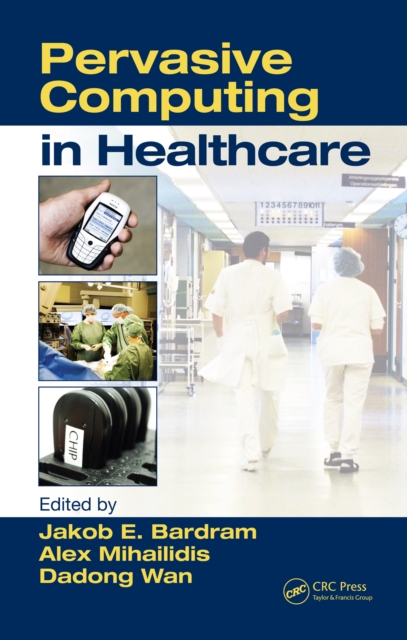
With skyrocketing costs due to the increase in the elderly population, a rapid increase in lifestyle-related and chronic diseases, demand for new medical treatments and technologies, and a shortage in the number of available clinicians, nurses, and other caregivers, the challenges facing the healthcare industry seem insurmountable.
Foundations of Human-Computer Interaction: Designing for Cognitive Alignment reframes human-computer interaction (HCI), usability, and user-centered design by focusing on the conditions under which cognition stabilizes over time.
Anthropology and AI explores the complex intersection of artificial intelligence and human society through a diverse collection of anthropological and social scientific perspectives.
Packed with illustrations and practical examples, Guide to Methodology in Ergonomics: Designing for Human Use, Second Edition provides a concise introduction to ergonomics methods in a straightforward manner that helps you conduct an ergonomics analysis of a product in development.
Data and security breaches can cost organizations millions and result in bad publicity and lost income, with humans often being regarded as the "e;weakest link"e; in cybersecurity incidents.
In diesem Buch wird erläutert, was Informationsvisualisierung und Informationsarchitektur ermöglichen und welche Grundlagen und Methodiken erforderlich sind.
Das Buch ermöglicht Designern, Projektleitern und Informatikern die interaktiven Eigenschaften und das Interface analoger und digitaler Produkte besser zu analysieren und strategisch zu planen.
Mit dem "Internet der Dinge" zeichnet sich ein fundamentaler Technik-Trend ab, dessen betriebswirtschaftliche Konsequenzen und Chancen hier erstmals erläutert werden.
Informationen braucht jeder, und viele Unternehmen und Institutionen nutzen das Web, um Informationen in der Kundenkommunikation zur Verfügung zu stellen.
Industriepraktiker, Informatiker und Soziologen berichten über ihre Konzepte und Erfahrungen bei der Entwicklung und dem Einsatz wissensbasierter Diagnosesysteme im Service-Support.
Die IT-Branche hat sich über die letzten Jahre hinweg wiederholt nach dem gleichen Muster entwickelt: Es gab eine neue Technologie - diese wurde akzeptiert oder verworfen - und anschließend verschmolz ein Teil der neuen Methoden mit etablierten Technologien.
Ziele des Buches ist es, den Roboter als lernendes System aufzufassen, es als wissensbasiertes Modellsystem zu konzeptionalisieren und dieses System durch intelligente, rechnerbasierte Technologien in funktionaler Hinsicht zu implementieren.
Wissen zu managen steht auf Grund des enormen Wissenszuwachses und der stetig sinkenden Wissenshalbwertzeit in der Fort- und Weiterbildung unverändert vor schwierigen Anforderungen.
The interaction paradigm provides a new conceptualization of computational phenomena that emphasizes interaction rather than algorithms, thus reflecting the shift in technology from number-crunching on mainframes to distributed intelligent networks with graphical user interfaces.
Contemporary man-machine interfaces are increasingly characterized by multimodality, nonintrusiveness, context-sensitivity, adaptivity, and teleoperability.
Network revolutions of the past have shaped the present and set the stage for the revolution we are experiencing todayIn an era of seemingly instant change, it's easy to think that today's revolutions in communications, business, and many areas of daily life are unprecedented.
Network revolutions of the past have shaped the present and set the stage for the revolution we are experiencing todayIn an era of seemingly instant change, it's easy to think that today's revolutions in communications, business, and many areas of daily life are unprecedented.
This unique textbook intersects traditional library science with data science principles that readers will find useful in implementing or improving data services within their libraries.
What is at stake socially, culturally, politically, and economically when we routinely use technology to gather information about our bodies and environments?
An argument that the material arrangements of information—how it is represented and interpreted—matter significantly for our experience of information and information systems.
Experts describe the latest research in a rapidly growing multidisciplinary field, the study of groups of individuals acting collectively in ways that seem intelligent.
The two great Western technological revolutions of the past, the invention of movable type in the fifteenth century and the Industrial Revolution of the eighteenth century, changed the course of economies and societies and radically altered how humans interacted with each other and their world.