This is a guidebook for landscape architects to learn the fundamental practices and use of the computational software Rhino 3D and the plugin Grasshopper for parametric modeling, landscape inventory, and performative analysis.
This is a guidebook for landscape architects to learn the fundamental practices and use of the computational software Rhino 3D and the plugin Grasshopper for parametric modeling, landscape inventory, and performative analysis.
Allegorithmic: The Company That Brought Substance to the World of 3D explores the journey of Allegorithmic, the software company behind Substance, a suite of tools that revolutionized texturing in computer graphics.
This book introduces differential geometry and cutting-edge findings from the discipline by incorporating both classical approaches and modern discrete differential geometry across all facets and applications, including graphics and imaging, physics and networks.
This book introduces differential geometry and cutting-edge findings from the discipline by incorporating both classical approaches and modern discrete differential geometry across all facets and applications, including graphics and imaging, physics and networks.
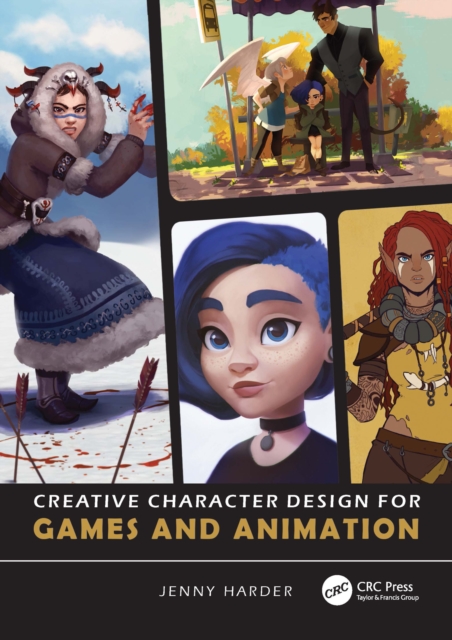
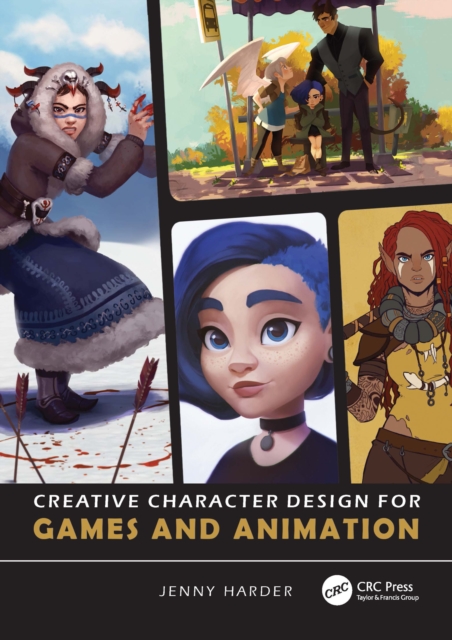
This book takes you through all the basic steps of character design for games and animation, from brainstorming and references to the development phase and final render.
This book takes you through all the basic steps of character design for games and animation, from brainstorming and references to the development phase and final render.
Discover how to build impressive 3D graphics with the next-generation graphics API-VulkanKey FeaturesGet started with the Vulkan API and its programming techniques using the easy-to-follow examples to create stunning 3D graphicsUnderstand memory management in Vulkan and implement image and buffer resourcesGet hands-on with the drawing process and synchronization, and render a 3D graphics scene with the Vulkan graphics pipelineBook DescriptionVulkan, the next generation graphics and compute API, is the latest offering by Khronos.
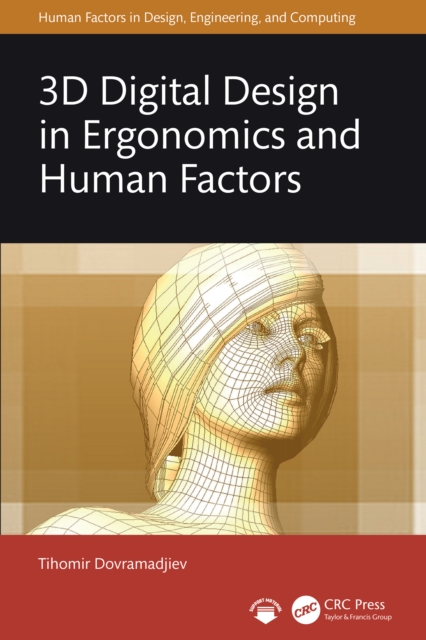
3D Digital Design in Ergonomics and Human Factors is the definitive guide to understanding how 3D software impacts the practice of ergonomics and human factors and how it can be utilized successfully in a variety of different settings.
Publisher's Note: Products purchased from Third Party sellers are not guaranteed by the publisher for quality, authenticity, or access to any online entitlements included with the product.
Physically Based Rendering: From Theory to Implementation, Third Edition, describes both the mathematical theory behind a modern photorealistic rendering system and its practical implementation.
Design Technology in Contemporary Architectural Practice lifts the curtain to unveil how eleven world-leading design studios integrate technology (such as computational design, BIM, and digital fabrication) as part of their day-to-day design exploration and delivery.
Design Technology in Contemporary Architectural Practice lifts the curtain to unveil how eleven world-leading design studios integrate technology (such as computational design, BIM, and digital fabrication) as part of their day-to-day design exploration and delivery.
BlenderTM is a free Open-Source 3D Computer Modeling and Animation Suite incorporating Character Rigging, Particles, Real World Physics Simulation, Sculpting, Video Editing with Motion Tracking and 2D Animation within the 3D Environment.
BlenderTM is a free Open-Source 3D Computer Modeling and Animation Suite incorporating Character Rigging, Particles, Real World Physics Simulation, Sculpting, Video Editing with Motion Tracking and 2D Animation within the 3D Environment.
This book is geared towards both students as well as professionals who are looking to enter the mobile (tablet/smartphone) and PC (personal computer) industry as concept artists (for both 2D and 3D production pipelines) or 2D production artists (game-ready assets).
Using a selection of archaeological cases studies from the Roman period in the Mediterranean region, Pedro Trapero Fern ndez shows how GIS technologies can be employed in the creation of spatial models to reproduce historical realities.
The purpose of the MMM series of conferences is to bring together activities related to all aspects of multimedia modeling, in its broader sense, from multimedia networking to virtual worlds.