The main intention of this book is to give an impression of the state-of-the-art in system-level memory management (data transfer and storage) related issues for complex data-dominated real-time signal and data processing applications.
Hierarchical design methods were originally introduced for the design of digital ICs, and they appeared to provide for significant advances in design productivity, Time-to-Market, and first-time right design.
Embedded systems are usually composed of several interacting components such as custom or application specific processors, ASICs, memory blocks, and the associated communication infrastructure.
Introduction to Hardware-Software Co-Design presents a number of issues of fundamental importance for the design of integrated hardware software products such as embedded, communication, and multimedia systems.
Embedded systems encompass a variety of hardware and software components which perform specific functions in host systems, for example, satellites, washing machines, hand-held telephones and automobiles.
Reasoning in Boolean Networks provides a detailed treatment of recent research advances in algorithmic techniques for logic synthesis, test generation and formal verification of digital circuits.
Logic synthesis has become a fundamental component of the ASIC design flow, and Logic Synthesis Using Synopsys(R) has been written for all those who dislike reading manuals but who still like to learn logic synthesis as practised in the real world.
On Optimal Interconnections for VLSI describes, from a geometric perspective, algorithms for high-performance, high-density interconnections during the global and detailed routing phases of circuit layout.
A Designer's Guide to VHDL Synthesis is intended for both design engineers who want to use VHDL-based logic synthesis ASICs and for managers who need to gain a practical understanding of the issues involved in using this technology.
Computer-aided synthesis of digital circuits from behavioral level specifications offers an effective means to deal with increasing complexity of digital hardware design.
The motivation for starting the work described in this book was the interest that Hewlett-Packard's microwave circuit designers had in simulation techniques that could tackle the problem of finding steady- state solutions for nonlinear circuits, particularly circuits containing distributed elements such as transmission lines.
** XVII Acknowledgments CHAPTER 1 Verilog - A Tutorial Introduction 1 Getting Started 2 A Structural Description 2 Simulating the NAND Latch 4 Module Hleral'Chy 6 The Counter 7 Components of the Counter 9 A Clock for the System 10 Tying the Whole Circuit Together 11 Using An Alternate Description of the Flip Flop 13 Behavioral Modeling 1 S A Behavioral Model of the m16 Counter 16 Mixing Structure and Behavior 18 Assignment Statements 22 Summary on Mixing Behavioral and Structural Descriptions 23 Creating a Testbench For a Module 24 Summary 2S Tutorial Guide to Formal Syntax Specification 26 Exercises 30 CHAPTER 2 Behavioral Modeling 33 Process Model 33 If-Then-Else 3S Where Does The ELSE Belong?
Over the last decade, 'parametricism' has been heralded as a new avant-garde in the industries of architecture, urban design, and industrial design, regarded by many as the next grand style in the history of architecture, heir to postmodernism and deconstruction.
Over the last decade, 'parametricism' has been heralded as a new avant-garde in the industries of architecture, urban design, and industrial design, regarded by many as the next grand style in the history of architecture, heir to postmodernism and deconstruction.
This book discusses the latest advances in manufacturing and process control, with a special emphasis on digital manufacturing and intelligent technologies for manufacturing and industrial processes control.
The development of the 'factory of the future' by major international corporations such as General Motors, IBM, Westinghouse, etc now involves many practising engineers.
Computer simulation has developed into a powerful tool for problem solving in a variety of areas, in the sciences as well as in industrial environments.
Improvement in the quality of integrated circuit designs and a designer's productivity can be achieved by a combination of two factors: Using more structured design methodologies for extensive reuse of existing components and subsystems.
Rapid increases in chip complexity, increasingly faster clocks, and the proliferation of portable devices have combined to make power dissipation an important design parameter.
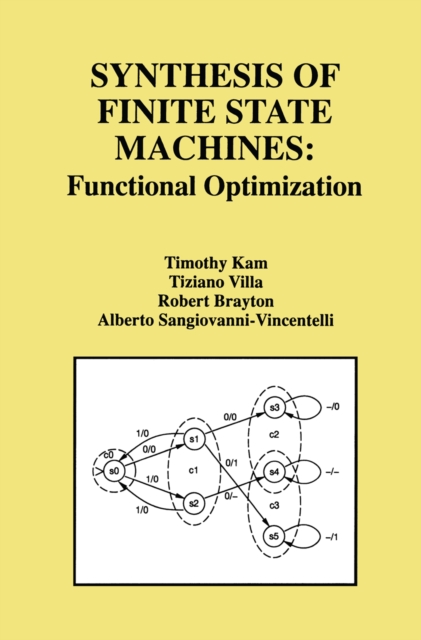
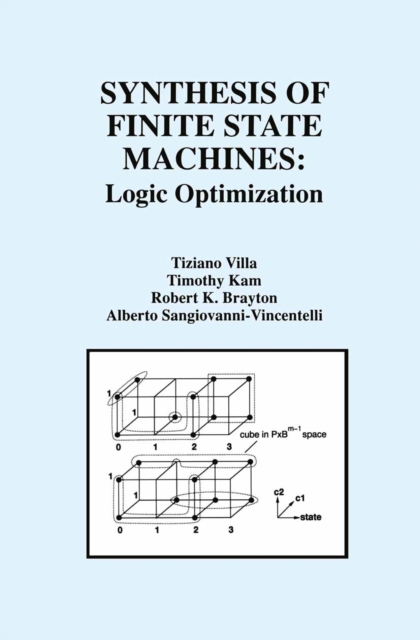
Synthesis of Finite State Machines: Logic Optimization is the second in a set of two monographs devoted to the synthesis of Finite State Machines (FSMs).
Embedded systems are informally defined as a collection of programmable parts surrounded by ASICs and other standard components, that interact continuously with an environment through sensors and actuators.
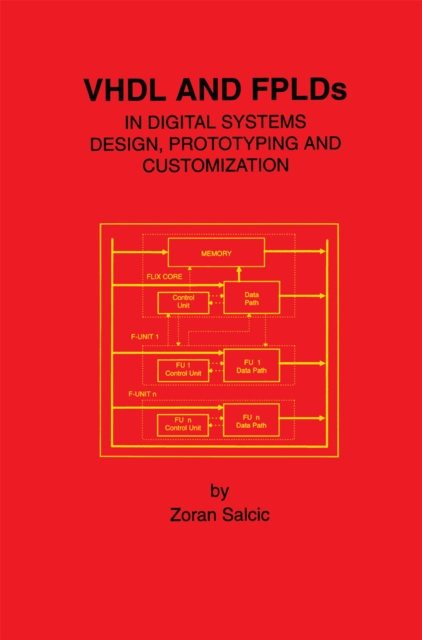
This book represents an attempt to treat three aspects of digital systems, design, prototyping and customization, in an integrated manner using two major technologies: VHSIC Hardware Description Language (VHDL) as a modeling and specification tool, and Field-Programmable Logic Devices (FPLDs) as an implementation technology.