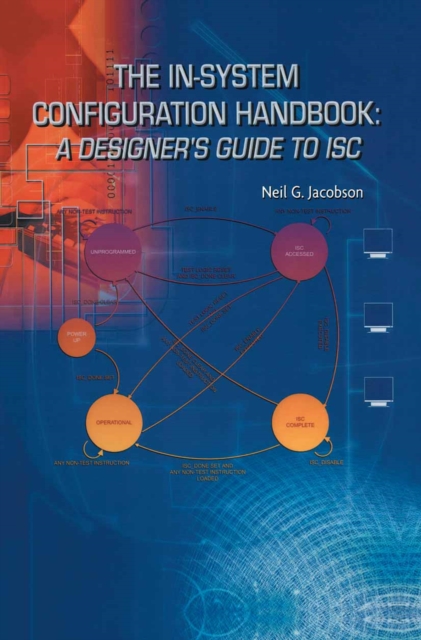
For many years, the dominant fault model in automatic test pattern gen- eration (ATPG) for digital integrated circuits has been the stuck-at fault model.
The quest for higher performance digital systems for applications such as gen- eral purpose computing, signal/image processing, and telecommunications and an increasing cost consciousness have led to a major thrust for high speed VLSI systems implemented in inexpensive and widely available technologies such as CMOS.
Moore's law [Noy77], which predicted that the number of devices in- tegrated on a chip would be doubled every two years, was accurate for a number of years.
The success of VHDL since it has been balloted in 1987 as an IEEE standard may look incomprehensible to the large population of hardware designers, who had never heared of Hardware Description Languages before (for at least 90% of them), as well as to the few hundreds of specialists who had been working on these languages for a long time (25 years for some of them).
This book presents a detailed summary of research on automatic layout of device-level analog circuits that was undertaken in the late 1980s and early 1990s at Carnegie Mellon University.
Physical Design for Multichip Modules collects together a large body of important research work that has been conducted in recent years in the area of Multichip Module (MCM) design.
Co-Synthesis of Hardware and Software for Digital Embedded Systems, with a Foreword written by Giovanni De Micheli, presents techniques that are useful in building complex embedded systems.
by Phil Moorby The Verilog Hardware Description Language has had an amazing impact on the mod- em electronics industry, considering that the essential composition of the language was developed in a surprisingly short period of time, early in 1984.
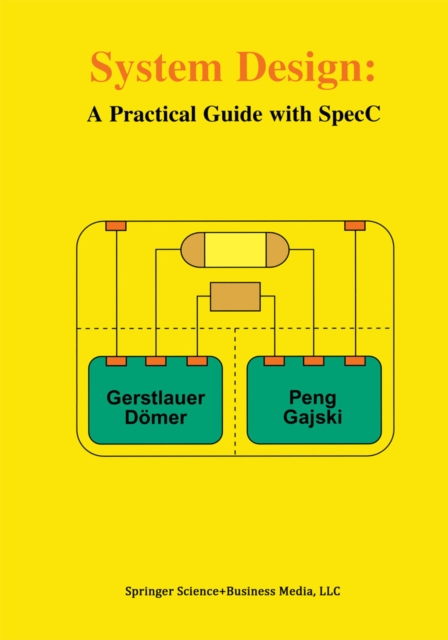
System Design: A Practical Guide with SpecC presents the system design flow following a simple example through the whole process in an easy-to-follow, step-by-step fashion.
Spectral Techniques in VLSI CAD have become a subject of renewed interest in the design automation community due to the emergence of new and efficient methods for the computation of discrete function spectra.
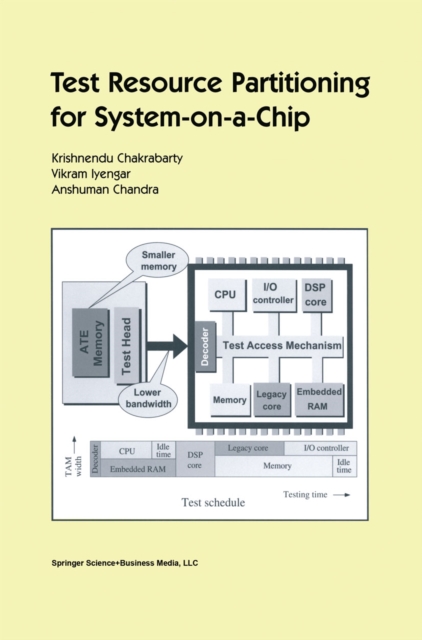
Test Resource Partitioning for System-on-a-Chip is about test resource partitioning and optimization techniques for plug-and-play system-on-a-chip (SOC) test automation.
Evolutionary Algorithms for Embedded System Design describes how Evolutionary Algorithm (EA) concepts can be applied to circuit and system design - an area where time-to-market demands are critical.
This work began in 1995 as an outgrowth of the InfoPad project which showed us that in order to reduce the energy consumption of a portable multimedia terminal that something had to be done about the consumption of the microprocessor subsystem.
Robust Modal Control covers most classical multivariable modal control design techniques that were shown to be effective in practice, and in addition proposes several new tools.