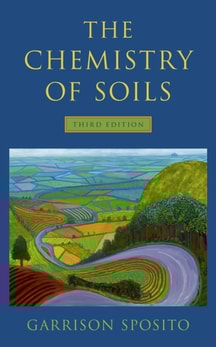
The second edition of The Chemistry of Soils, published in 2008, has been used as a main text in soil-science courses across the world, and the book is widely cited as a reference for researchers in geoscience, agriculture, and ecology.
The second edition of The Chemistry of Soils, published in 2008, has been used as a main text in soil-science courses across the world, and the book is widely cited as a reference for researchers in geoscience, agriculture, and ecology.
Principles and Standards for Measuring Net Primary Production in Long-Term Ecological Studies is the first book to establish a standardized method for measuring net primary productivity (NPP) in ecological research.
Soil Pollution: From Monitoring to Remediation provides comprehensive information on soil pollution, including causes, distribution, transport, the transformation and fate of pollutants in soil, and metabolite accumulation.
Advances in Organic Farming: Agronomic Soil Management Practices focuses on the integrated interactions between soil-plant-microbe-environment elements in a functioning ecosystem.
Soil Nematodes of Grasslands in Northern China presents research on China's temperate grasslands, providing the findings and results of a large field survey along a transect across the northern temperate grassland.
Geological Records of Tsunamis and Other Extreme Waves provides a systematic compendium with concise chapters on the concept and history of paleotsunami research, sediment types and sediment sources, field methods, sedimentary and geomorphological characteristics, as well as dating and modeling approaches.
Ecosystem Consequences of Soil Warming: Microbes, Vegetation, Fauna and Soil Biogeochemistry focuses on biotic and biogeochemical responses to warmer soils including plant and microbial evolution.
Soil Nematodes of Grasslands in Northern China presents research on China's temperate grasslands, providing the findings and results of a large field survey along a transect across the northern temperate grassland.
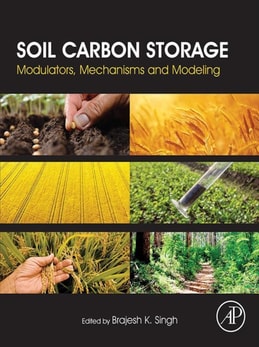
Soil Carbon Storage: Modulators, Mechanisms and Modeling takes a novel approach to the issue of soil carbon storage by considering soil C sequestration as a function of the interaction between biotic (e.
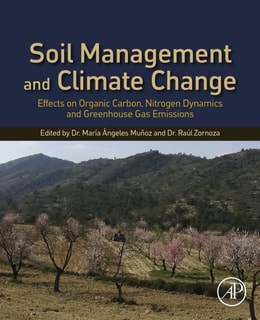
Soil Management and Climate Change: Effects on Organic Carbon, Nitrogen Dynamics, and Greenhouse Gas Emissions provides a state of the art overview of recent findings and future research challenges regarding physical, chemical and biological processes controlling soil carbon, nitrogen dynamic and greenhouse gas emissions from soils.
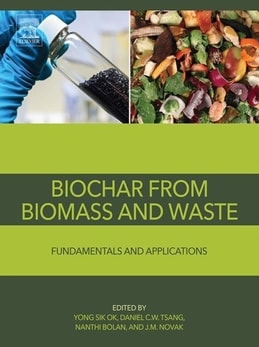
Biochar from Biomass and Waste: Fundamentals and Applications provides the fundamentals of biochar, such as its basic concepts, production technology and characterization methods, also including comprehensive examples for readers.
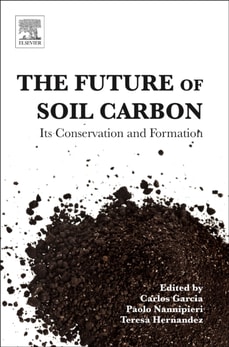
The Future of Soil Carbon: Its Conservation and Formation provides readers with an integrative approach to understanding the important role of organic carbon in soil functioning and fertility.
Advances in Organic Farming: Agronomic Soil Management Practices focuses on the integrated interactions between soil-plant-microbe-environment elements in a functioning ecosystem.
Understanding Climate Change Impacts on Crop Productivity and Water examines the greenhouse gas emissions and their warming effect, climate change projections, crop productivity and water.
Fundamentals of Soil Ecology, 3rd Edition, offers a holistic approach to soil biology and ecosystem function, providing students and ecosystem researchers with a greater understanding of the central roles that soils play in ecosystem development and function.
The Tide-Dominated Han River Delta provides a thorough analysis of a river delta in which tidal currents have reworked the river-borne sediment, generating characteristic geomorphological and sedimentological signatures in the process.
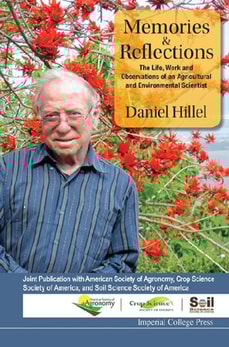
This is a series of personal recollections concerning the life and work of a leading American-Israeli environmental and agricultural scientist, whose wide-ranging personal and professional experiences span eight decades and some 40 countries around the world.
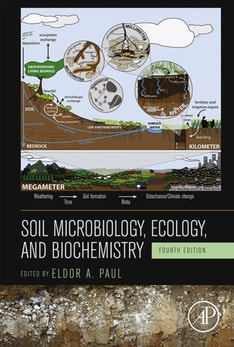
The fourth edition of Soil Microbiology, Ecology and Biochemistry updates this widely used reference as the study and understanding of soil biota, their function, and the dynamics of soil organic matter has been revolutionized by molecular and instrumental techniques, and information technology.
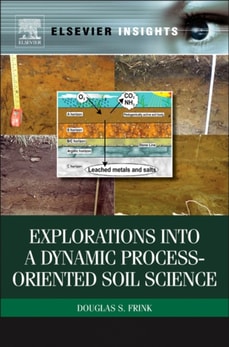
The paradigm and models of traditional soil science lack the ability to adequately address issues of soil dynamics, environmental integration, and change.
The fourth edition of Soil Microbiology, Ecology and Biochemistry updates this widely used reference as the study and understanding of soil biota, their function, and the dynamics of soil organic matter has been revolutionized by molecular and instrumental techniques, and information technology.
Geological Records of Tsunamis and Other Extreme Waves provides a systematic compendium with concise chapters on the concept and history of paleotsunami research, sediment types and sediment sources, field methods, sedimentary and geomorphological characteristics, as well as dating and modeling approaches.
Terramechanics and Off-Road Vehicle Engineering will be of great interest to any professional engineer or automotive engineering student working on off-road vehicles.
This book provides a global review of the mechanisms, incidence and control measures related to the problems of soil compaction in agriculture, forestry and other cropping systems.
This book provides an up-to-date compilation of the latest research on the petrography, facies, paleonvironmental significance and economic aspects of continental carbonates.