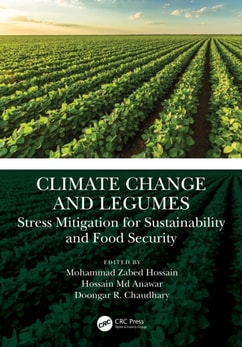
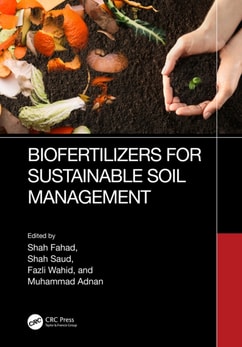
Global climate change has created unprecedented challenges for human civilization due to its widespread adverse consequences, including a reduction in crop yield and threatening food security across the globe.
Volcanic eruptions are generally viewed as agents of destruction, yet they provide the parent materials from which some of the most productive soils in the world are formed.
Advances in Agronomy increased its publication frequency to three volumes per year in 1993, and will continue this trend as advances in the field dictate.
Sediments and Ecohyraulics is comprised of papers submitted to the 6th International Conference on Cohesive Sediments (INTERCOH 2005) held in Saga, Japan, September 2005.
Global climate change has created unprecedented challenges for human civilization due to its widespread adverse consequences, including a reduction in crop yield and threatening food security across the globe.
Sediments are a natural part of aquatic systems and they are essential for the hydrological, geomorphological and ecological functioning of those systems.
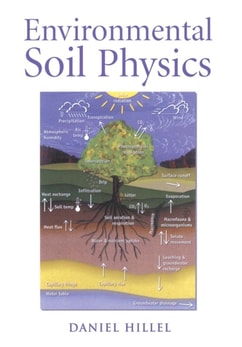
Environmental Soil Physics is a completely updated and modified edition of the Daniel Hillels previous, successful books, Introduction to Soil Physics and Fundamentals of Soil Physics.
The alkaline calcareous nature, high pH, salinity, heavy metals pollution, and low organic matter content of soils in many parts of the world have diminished the soil fertility and made essential nutrients unavailable to crops.
The disturbance of soils, like other phenomena of environmental pollution, encountered in so many areas all over the world, has become a subject of extensive concern and has led to a vast amount of literature in the field of enzymology, too.
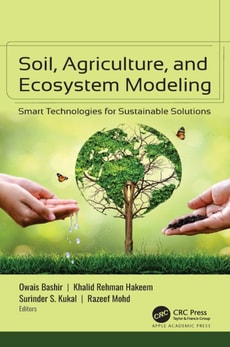
Soil and ecosystem modeling is crucial for managing and comprehending ecological processes and should be required for all studies focusing on agriculture systems, environmental management, environmental sciences, and ecology.
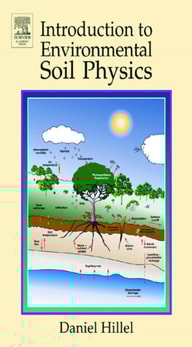
An abridged, student-oriented edition of Hillel's earlier published Environmental Soil Physics, Introduction to Environmental Soil Physics is a more succinct elucidation of the physical principles and processes governing the behavior of soil and the vital role it plays in both natural and managed ecosystems.
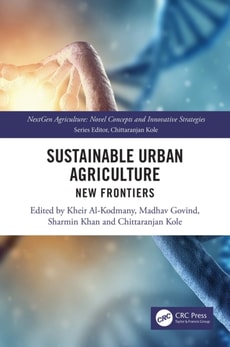
In the vibrant discourse of urbanization and climate change, Sustainable Urban Agriculture: New Frontiers investigates emerging needs, rising challenges, and opportunities to support urban agriculture.
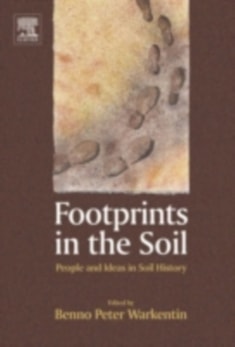
The history of science discipline is contributing valuable knowledge of the culture of soil understanding, of the conditions in society that fostered the ideas, and of why they developed in certain ways.
Principles of Sequence Stratigraphy provides an in-depth coverage and impartial assessment of all current ideas and models in the field of sequence stratigraphy.
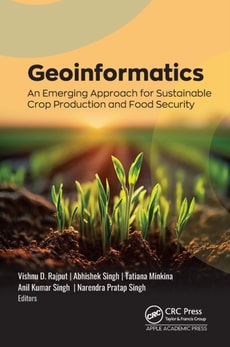
Geoinformatics is a cutting-edge tool that develops and uses information science technology that can have far-reaching implications that include boosting agricultural output, increasing food supply, and reducing hunger-related problems in poor and developing countries.
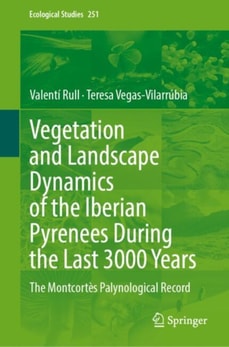
The high-resolution palynological study of the varved sediments of Lake Montcortes has provided a unique record of the regional vegetation shifts over the last 3000 years and of the natural and anthropogenic drivers of ecological change, unparalleled in the Mediterranean.
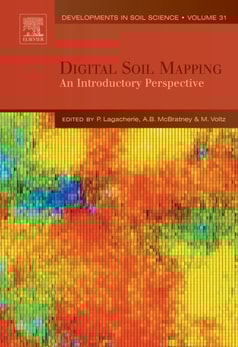
The book compiles the main ideas and methodologies that have been proposed and tested within these last fifteen years in the field of Digital Soil Mapping (DSM).
Emerging organic contaminants (EOCs) are either newly identified or newly detected contaminants that are toxic or potentially hazardous to the ecosystem.
Emerging organic contaminants (EOCs) are either newly identified or newly detected contaminants that are toxic or potentially hazardous to the ecosystem.
- The first book of its kind, providing over thirty real-life case studies of ground improvement projects selected by the worlds top experts in ground improvement from around the globe.
Evapotranspiration in Agro-Ecosystems and Forestry: Spatio-temporal Applications presents the progress and advances made in terms of science and application of evaporation, transpiration, and evapotranspiration for various vegetation surfaces, water bodies, and bare soil under different soil and crop management (including different irrigation and tillage management) conditions.