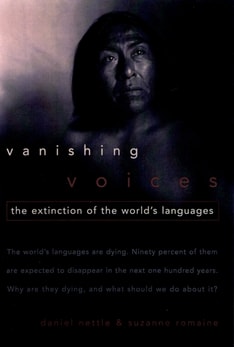
Few people know that nearly 100 native languages once spoken in what is now California are near extinction, or that most of Australia's 250 aboriginal languages have vanished.
Scores of wild species and ecosystems around the world face a variety of human-caused threats, from habitat destruction and fragmentation to rapid climate change.
Whether the fossil record should be read at face value or whether it presents a distorted view of the history of life is an argument seemingly as old as many fossils themselves.
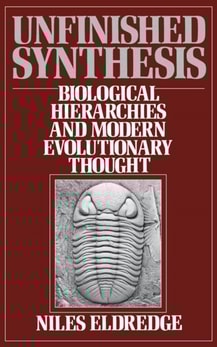
Today developmental and evolutionary biologists are focussing renewed attention on the developmental process--those genetic and cellular factors that influence variation in individual body shape or metabolism--in an attempt to better understand how evolutionary trends and patterns within individuals might be limited and controlled.
This study provides a stimulating critique of contemporary evolutionary thought, analyzing the Modern Synthesis first developed by Theodosius Dobzhansky, Ernst Mayr, and George Gaylord Simpson.
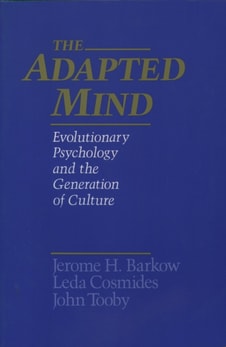
Although researchers have long been aware that the species-typical architecture of the human mind is the product of our evolutionary history, it has only been in the last three decades that advances in such fields as evolutionary biology, cognitive psychology, and paleoanthropology have made the fact of our evolution illuminating.
The Pleistocene epoch or Ice Age, an extended period of advancing and retreating ice sheets, is characterized by striking climatic oscillations and sea level fluctuations.
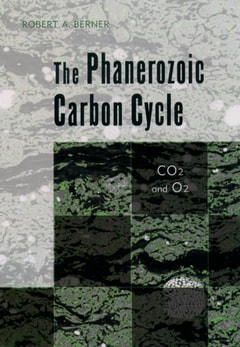
The term "e;carbon cycle"e; is normally thought to mean those processes that govern the present-day transfer of carbon between life, the atmosphere, and the oceans.
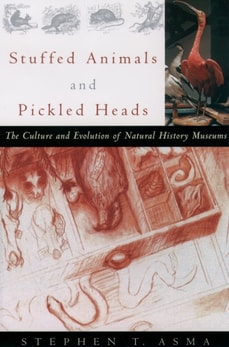
The natural history museum is a place where the line between "e;high"e; and "e;low"e; culture effectively vanishes--where our awe of nature, our taste for the bizarre, and our thirst for knowledge all blend happily together.
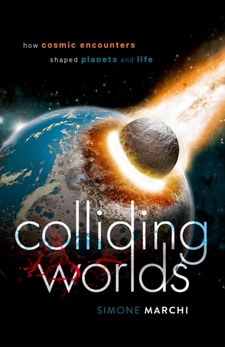
Simone Marchi presents the emerging story of how cosmic collisions shaped both the solar system and our own planet, from the creation of the Moon to influencing the evolution of life on Earth.
Simone Marchi presents the emerging story of how cosmic collisions shaped both the solar system and our own planet, from the creation of the Moon to influencing the evolution of life on Earth.
Most people are familiar with the dodo and the dinosaur, but extinction has occurred throughout the history of life, with the result that nearly all the species that have ever existed are now extinct.
Most people are familiar with the dodo and the dinosaur, but extinction has occurred throughout the history of life, with the result that nearly all the species that have ever existed are now extinct.
Dinosaurs are fascinating creatures and their popularity seems never ending, fuelled by films such as Jurassic Park and documentaries such as Walking with Dinosaurs.
Dinosaurs are fascinating creatures and their popularity seems never ending, fuelled by films such as Jurassic Park and documentaries such as Walking with Dinosaurs.
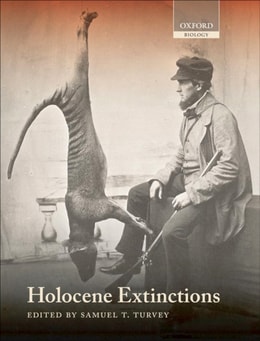
The extent to which human activity has influenced species extinctions during the recent prehistoric past remains controversial due to other factors such as climatic fluctuations and a general lack of data.
This is a book about the dramatic periods in the Earth's history called mass extinctions - short periods (by geological standards) when life nearly died out on Earth.
The editors utilize their 50 years of combined experience in professional engagement with the behaviour and ecology of wild felids to draw together a unique network of the world's most respected and knowledgeable experts.
The extent to which human activity has influenced species extinctions during the recent prehistoric past remains controversial due to other factors such as climatic fluctuations and a general lack of data.
The History of British Birds reviews our knowledge of avifaunal history over the last 15,000 years, setting it in its wider historical and European context.
The relentless exploitation and unsustainable use of wildlife, whether for food, medicine or other uses, is a key concern for conservationists worldwide.
This is a book about the dramatic periods in the Earth's history called mass extinctions - short periods (by geological standards) when life nearly died out on Earth.
The Earth that sustains us today was born out of a few remarkable, near-catastrophic revolutions, started by biological innovations and marked by global environmental consequences.
The Earth that sustains us today was born out of a few remarkable, near-catastrophic revolutions, started by biological innovations and marked by global environmental consequences.
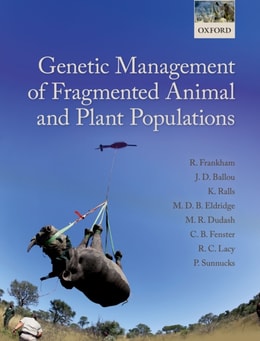
One of the greatest unmet challenges in conservation biology is the genetic management of fragmented populations of threatened animal and plant species.