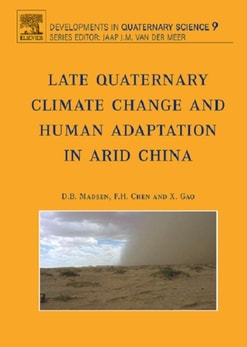
Due to political pressures, prior to the 1990s little was known about the nature of human foraging adaptations in the deserts, grasslands, and mountains of north western China during the last glacial period.
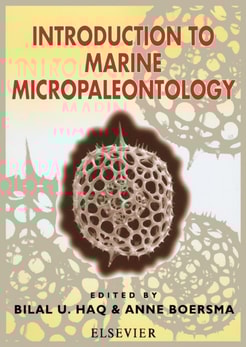
This beautifully illustrated text book, with state-of-the-art illustrations, is useful not only for an introduction to the subject, but also for the application of marine microfossils in paleoceanographic, paleoenvironmental and biostratigraphic analyses.
The geographic and stratigraphic distribution of fossil nonmarine Ostracoda in the United States are summarized in this book, followed by diagnoses of the subject species, references to literature and 34 plates of illustrations.
In Lost Wonders Tom Lathan tells ten powerful stories of species that have lived, died out and been declared extinct since the turn of the twenty-first century.
Radiogenic Isotopes Applied to Mineral Exploration: A Practical Guide assists mineral exploration geologists, students and professors in the field of metallogeny and ore deposits.
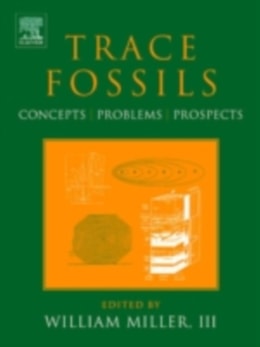
This book serves as an up-to-date introduction, as well as overview to modern trace fossil research and covers nearly all of the essential aspects of modern ichnology.
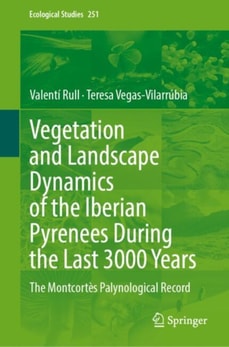
The high-resolution palynological study of the varved sediments of Lake Montcortes has provided a unique record of the regional vegetation shifts over the last 3000 years and of the natural and anthropogenic drivers of ecological change, unparalleled in the Mediterranean.
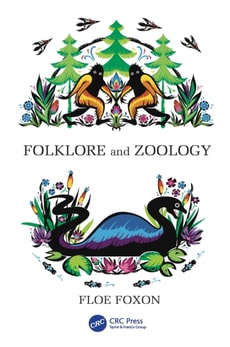
A scientific excursion into folklore, zoology, and cryptozoology, this text highlights a field, often called a pseudoscience, which seriously considers the possible existence of hidden or unknown animals not recognised in conventional zoology.
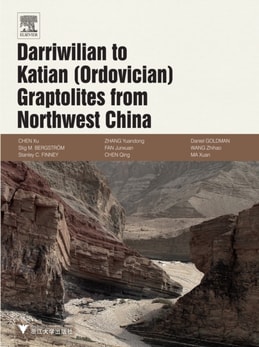
Darriwilian to Sandbian (Ordovician) Graptolites from Northwest China analyzes the significance of these exquisite, mostly pyritic, graptolites of the middle to late Ordovician period from North China and Tarim, China-locations that have developed the world's most complete successions of strata and fossil records.
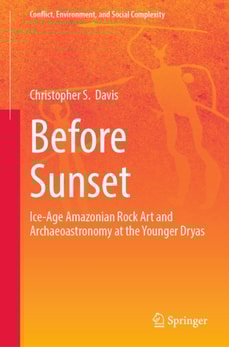
Through a presentation of the oldest rock art dated in the Americas, located in Monte Alegre, Brazil, this book analyzes an ancient ecological-astronomy strategy that theoretically made the rapid human migration in the Americas successful.
Hace millones de anos, en un paisaje africano sometido a profundas transformaciones climaticas, algunos primates comenzaron a cambiar su relacion con el entorno.