Understanding the complex relationships between humans and the natural world is essential for achieving environmental sustainability and improving human well-being, yet many studies are unable to reveal complex interactions and hidden trends.
Understanding the complex relationships between humans and the natural world is essential for achieving environmental sustainability and improving human well-being, yet many studies are unable to reveal complex interactions and hidden trends.
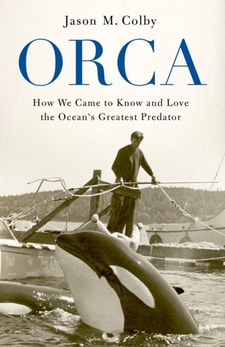
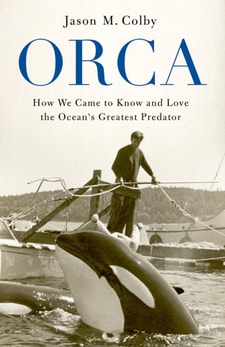
Since the release of the documentary Blackfish in 2013, millions around the world have focused on the plight of the orca, the most profitable and controversial display animal in history.
Since the release of the documentary Blackfish in 2013, millions around the world have focused on the plight of the orca, the most profitable and controversial display animal in history.
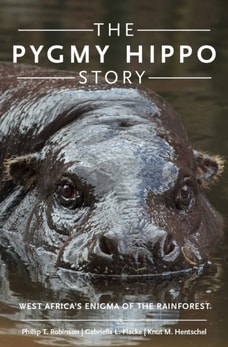
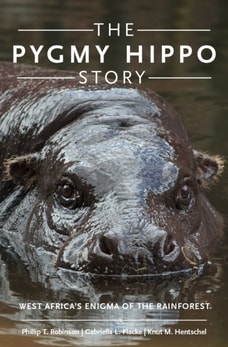
Though the pygmy hippopotamus has been designated as a flagship species of West African forests (meaning that by raising conservation efforts for a single species, an entire ecological region could benefit), very little research has been published on the animal.
Though the pygmy hippopotamus has been designated as a flagship species of West African forests (meaning that by raising conservation efforts for a single species, an entire ecological region could benefit), very little research has been published on the animal.
The term "e;carbon cycle"e; is normally thought to mean those processes that govern the present-day transfer of carbon between life, the atmosphere, and the oceans.
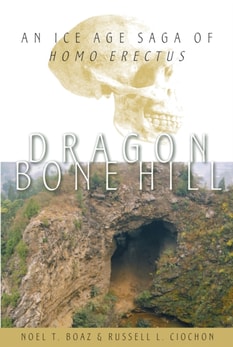
"e;Peking Man,"e; a cave man once thought a great hunter who had first tamed fire, actually was a composite of the gnawed remains of some fifty women, children, and men unfortunate enough to have been the prey of the giant cave hyena.
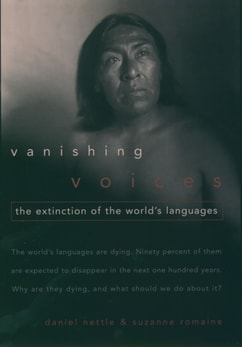
Few people know that nearly 100 native languages once spoken in what is now California are near extinction, or that most of Australia's 250 aboriginal languages have vanished.
Although researchers have long been aware that the species-typical architecture of the human mind is the product of our evolutionary history, it has only been in the last three decades that advances in such fields as evolutionary biology, cognitive psychology, and paleoanthropology have made the fact of our evolution illuminating.
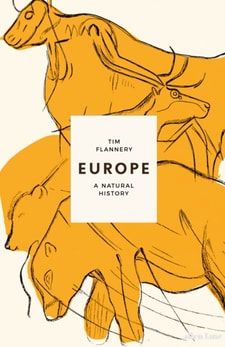
A place of exceptional diversity, rapid change, and high energy, Europe has literally been at the crossroads of the world ever since the interaction of Asia, North America and Africa formed the tropical island archipelago that would become the continent of today.
'In the gloom it came along the branches towards me, its round, hypnotic eyes blazing, its spoon-like ears turning to and fro independently like radar dishes .
Foraminiferal Micropaleontology for Understanding Earth's History incorporates new findings on taxonomy, classification and biostratigraphy of foraminifera.
This two-volume edited book highlights and reviews the potential of the fossil record to calibrate the origin and evolution of parasitism, and the techniques to understand the development of parasite-host associations and their relationships with environmental and ecological changes.
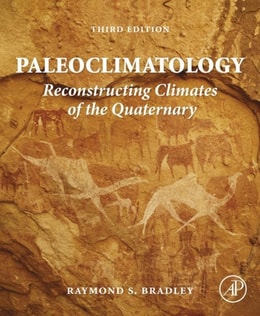
Paleoclimatology: Reconstructing Climates of the Quaternary, Third Edition-winner of a 2015 Textbook Excellence Award (Texty) from The Text and Academic Authors Association-provides a thorough overview of the methods of paleoclimatic reconstruction and of the historical changes in climate during the past three million years.
It is widely acknowledged that life has adapted to its environment, but the precise mechanism remains unknown since Natural Selection, Descent with Modification and Survival of the Fittest are metaphors that cannot be scientifically tested.
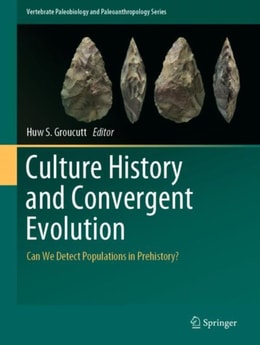
This volume brings together diverse contributions from leading archaeologists and paleoanthropologists, covering various spatial and temporal periods to distinguish convergent evolution from cultural transmission in order to see if we can discover ancient human populations.
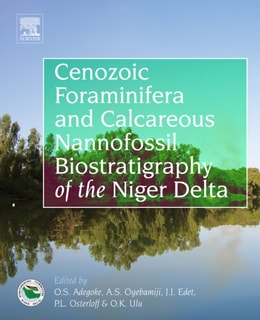
Cenozoic Foraminifera and Calcareous Nannofossil Biostratigraphy of the Niger Delta is available just as exploration and production activities are moving into the little known deep water terrain of the Niger Delta.
Foraminiferal Micropaleontology for Understanding Earth's History incorporates new findings on taxonomy, classification and biostratigraphy of foraminifera.
In this engrossing and accessible book, Doug Macdougall explores the causes and effects of ice ages that have gripped our planet throughout its history, from the earliest known glaciation-nearly three billion years ago-to the present.
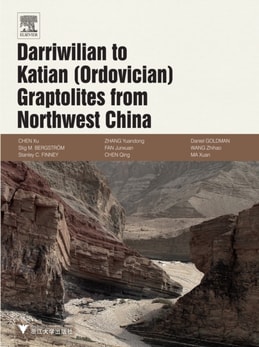
Darriwilian to Sandbian (Ordovician) Graptolites from Northwest China analyzes the significance of these exquisite, mostly pyritic, graptolites of the middle to late Ordovician period from North China and Tarim, China-locations that have developed the world's most complete successions of strata and fossil records.
As explorers and scientists have known for decades, the Neotropics harbor a fantastic array of our planet's mammalian diversity, from capybaras and capuchins to maned wolves and mouse opossums to sloths and sakis.
Dependent on a shrinking supply of bamboo, hunted mercilessly for its pelt, and hostage to profiteering schemes once in captivity, the panda is on the brink of extinction.
Paleoclimatology: Reconstructing Climates of the Quaternary, Third Edition-winner of a 2015 Textbook Excellence Award (Texty) from The Text and Academic Authors Association-provides a thorough overview of the methods of paleoclimatic reconstruction and of the historical changes in climate during the past three million years.
The book deals with the record of important Neoproterozoic to Early Palaeozoic events in southwestern Gondwana, that heralded the Cambrian explosion and the dawn of modern ecosystems.
Den Ansatz der klassischen Historischen Geologie aufgreifend, fokussieren die Autoren in diesem neukonzipierten Lehrbuch auf die biogenen und nicht-biogenen Prozesse der Erdentwicklung.
The papers in this volume provide an exhaustive inventory and description of the most complete sedimentary sequences across the Eocene-Oligocene Boundary (EOB) from all over the world, and present a synthesis of the biotic and chemico-physical events detected at the Eocene-Oligocene transition.
Through the original writings and photography of renowned geologist Harold Rollin Wanless, this book paints a thorough and engaging picture of the White River Badlands' landscape, geology, biology, pioneer settlers, and how life was lived 100 years ago in a harsh, challenging, remote setting.
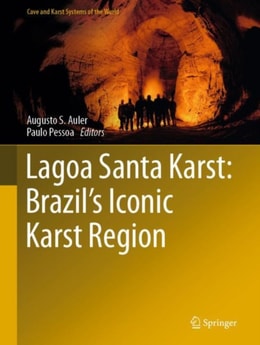
This book discusses the Lagoa Santa Karst, which has been internationally known since the pioneering studies of the Danish naturalist Peter Lund in the early 1800s.