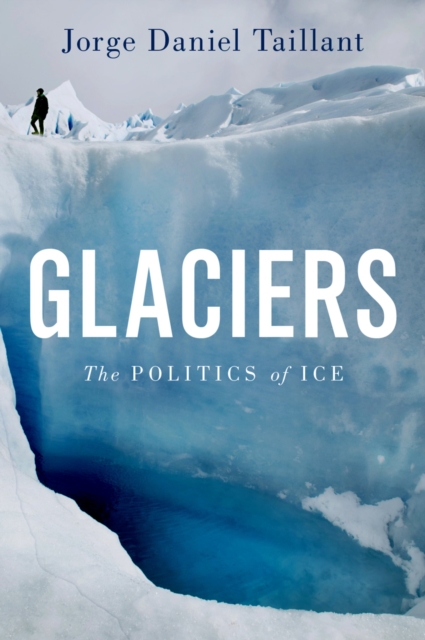
Though not traditionally thought of as strategic natural resources, glaciers are a crucial part of our global ecosystem playing a fundamental role in the sustaining of life around the world.
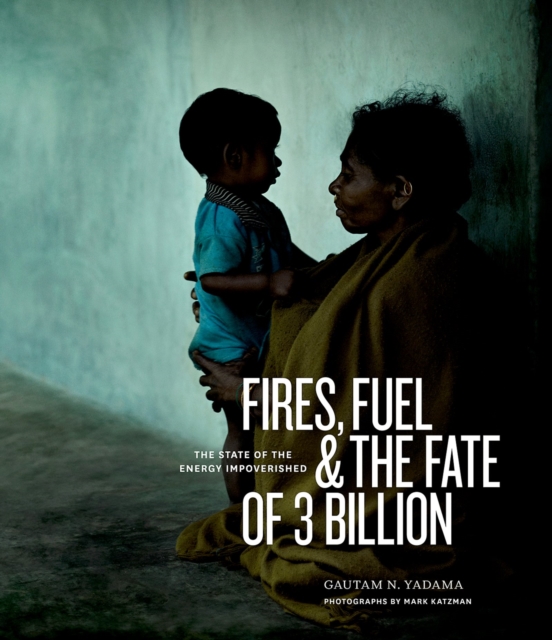
Inside small homes and huts throughout the developing world, billions of people burn fires in rudimentary stoves to prepare their meals and heat their homes.
Inside small homes and huts throughout the developing world, billions of people burn fires in rudimentary stoves to prepare their meals and heat their homes.
Megadrought and Collapse is the first book to treat in one volume the current paleoclimatic and archaeological evidence of megadrought events coincident with major prehistoric and historical examples of societal collapse.
This volume presents a set of coherent, cross-referenced perspectives on incorporating the spatial representation and analytical power of GIS with agent-based modelling of evolutionary and non-linear processes and phenomena.
Mountain Meteorology: Fundamentals and Applications offers first an introduction to the basic principles and concepts of mountain meteorology, then goes on to discuss their application in natural resources management.
To deal with the climate crisis we need a new paradigm of technological and social development aimed at the restoration of ecological systems--the bio-digital energy paradigm--and China is the world power best positioned to lead this change.
In the United States, private ownership of land is not a new idea, yet the federal government retains title to roughly a quarter of the nation's land, including national parks, forests, and wildlife refuges.
Ecology, Engineering, and the Paradox of Management is the first book that addresses and reconciles what many take to be the core paradox facing environmental decision-makers and stakeholders: How do they restore the environment while at the same time provide ever more services reliably from that environment, including clean air, water and energy for more and more people?
In Aldo Leopold and an Ecological Conscience ecologists, wildlife biologists, and other professional conservationists explore the ecological legacy of Aldo Leopold and his A Sand County Almanac and his contributions to the environmental movement, the philosophy of science, and natural resource management.
The global drug trade and its associated violence, corruption, and human suffering create global problems that include political and military conflicts, ethnic minority human rights violations, and stresses on economic development.
Over the last two decades, the scientific and popular media have been bombarded by gloom and doom stories of the future of fisheries, the status of fish stocks, and the impact of fishing on marine ecosystems.
Modern societies require energy systems to provide energy for cooking, heating, transport, and materials processing, as well as for electricity generation.
Modern societies require energy systems to provide energy for cooking, heating, transport, and materials processing, as well as for electricity generation.
This volume investigates nuclear energy policies in Western Europe over the entire post-war period, but with special attention to the two most recent decades.
This volume provides state-of-the-art information on soil-water interactions in wastewater systems, characterization of wastewater, modes of treatment, safety of wastewater use, water conservation technologies involved in recycling of sewage in fish culture, biogeochemical cycling bacteria and nutrient dynamics, ecosystem resilient driven wastewater reclamation, bioremediation, aquaponics, ecological integrity, culture practices of fish farming, microbial food web phenomena, fish diseases, environmental economics of wastewater, environmental risk assessment, environmental law and regulations.
'Systemic management' describes a holistic, objective and universally applicable form of management, providing a framework for addressing environmental challenges such as global warming, emergent diseases, deforestation, overpopulation, the extinction crisis, pollution, over-fishing, and habitat destruction.
Los usos múltiples del agua son un concepto asociado al acceso al agua por parte de las familias campesinas de las zonas rurales tanto para sus actividades humanas como productivas de subsistencia desde sistemas de abastecimiento domésticos.
From farm to fork, the conventional food chain is under enormous pressure to respond to a whole series of new challenges - food scares in rich countries, food security concerns in poor countries, and a burgeoning problem of obesity in all countries.
The work of conservation biology has grown from local studies of single species into a discipline concerned with mapping and managing biodiversity on a global scale.
Coastal zones are becoming increasingly topical (and politically sensitive) as they face relentless pressures from urban expansion, recreational development, and sea level rise due to climate change.
The relentless exploitation and unsustainable use of wildlife, whether for food, medicine or other uses, is a key concern for conservationists worldwide.
This book traces the development of the standard property rights over five kinds of natural resource - inland rivers, ocean fisheries, petroleum resources, gold and base metals and forest resources - from classical times through to the 19th century.