International Perspectives on Equality, Diversity and Inclusion examines the complex nature of equality, diversity and inclusion in the world of work through interdisciplinary, comparative and critical perspectives.
Nowhere is the study of workplace ethics more relevant today than in the context of empowering organizations to meet their goals in corporate social responsibility and sustainability (CSR/S).
In times of globalization, global labor markets and increasingly diverse workforces, Global Leadership, Global Talent Management and integrated management systems belong to the most urgent issues and challenges for the next decade.
2017 marks the silver anniversary of the Research in Organizational Change and Development series, founded in 1987 by Dick Woodman and Bill Pasmore, and currently edited by Rami Shani and Debra Noumair.
To better understand how structure, content and meaning are interrelated, there is great potential in conceptualizing mixed structure linkages, where social relations, events, actions and text-based information intersect.
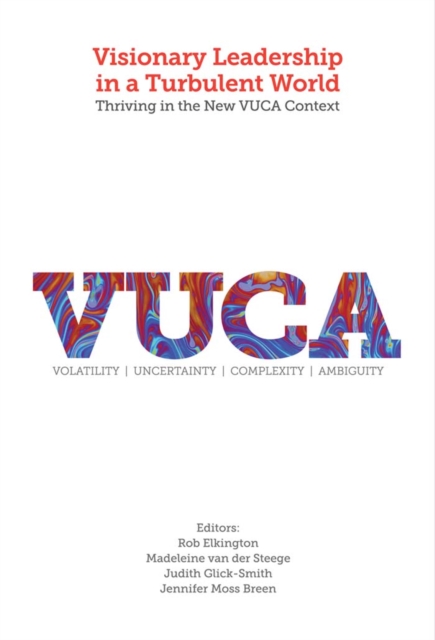
Visionary Leadership in a Turbulent World: Thriving in the New VUCA Context, is the thoughtful analysis of nine expert authors from around the globe who put VUCA under the microscope and take the reader on a journey that looks at VUCA from a number of different leadership perspectives.
Categorization pervades economic life; products, services, firms and industries are continuously being classified by rivals, clients, experts and critics.
The study of multinational companies (MNCs) has been split for many decades into two camps which hardly 'talked' to each other: a) predominantly economic and functionalist oriented International Business Researchers, and b) largely social constructivist and critical management oriented Organization Theorists.
The HRM field is entering smart businesses where the human,digital and high-tech dimensions seem to increasingly converge, and HRM needsto anticipate its own smart future.
Categorization pervades economic life; products, services, firms and industries are continuously being classified by rivals, clients, experts and critics.
The papers included in the volume explore how mobilizing Boltanski and Thevenot's EW framework helps address questions regarding the premises and dynamics of agreement and disagreement in coordinated action, both within and across organizations, and by so doing, help advance our understanding of organizational processes more generally.
To better understand how structure, content and meaning are interrelated, there is great potential in conceptualizing mixed structure linkages, where social relations, events, actions and text-based information intersect.
2017 marks the silver anniversary of the Research in Organizational Change and Development series, founded in 1987 by Dick Woodman and Bill Pasmore, and currently edited by Rami Shani and Debra Noumair.
International Perspectives on Equality, Diversity and Inclusion examines the complex nature of equality, diversity and inclusion in the world of work through interdisciplinary, comparative and critical perspectives.
International Perspectives on Equality, Diversity and Inclusion examines the complex nature of equality, diversity and inclusion in the world of work through interdisciplinary, comparative and critical perspectives.
Differences in management behavior across organizations are attributed to differences in priorities and objectives or differences in the style and preferences of the individuals involved.
The study of multinational companies (MNCs) has been split for many decades into two camps which hardly 'talked' to each other: a) predominantly economic and functionalist oriented International Business Researchers, and b) largely social constructivist and critical management oriented Organization Theorists.
Highlights include a reflection on forty years of collaboration and provides an inside perspective on collegial partnerships; the first recipients of the Pasmore-Woodman Award (AOM 2015) consider personal recollections as well as general principles about successful academic partnerships; one of the first women in the field provides a perspective on the interdependence of research and practice through a gender lens; while reflecting on the role of women in ODC across a fifty-year time period; strategies for managing changes in the research question when conducting field-based action research advances our understanding of evidence-based practice through the application of theory; Dialogic OD, a relatively new perspective in the field, is explored by discussing a case in which 'social space' serves as 'transitional space' and the ODC practitioner is provided a theoretically informed set of principles that can be applied and evaluated across contexts; the nature and role of organization identity shades new insights about the potential impact of organization development work on company culture and effectiveness; the challenges of integrating business strategy and organization development in the fast changing newspaper industry.
Around the world, small manufacturing enterprises in market-based economies are facing daily challenges posed by emerging green imperatives and opportunities.
Leading Strategy Execution demonstrates to senior executives ways in which they can successfully enthuse their employees so that they willingly implement essential company strategies.
The focus of this volume is on the role of emotions in organizational governance, which involves the complete gamut of organizational processes and procedures, including the means whereby organizations are controlled and directed.
Understanding of the history and development of organization theory has recently made new advances through new work emerging on the history of management thought as well as through the institutionalization of critical approaches to organizations and organizational knowledge.
New Perspectives in Employee Engagement in Human Resources is a unique collection of articles that represent the very highest level of scholarship in the field.
This book challenges the taken-for-granted status of organizations such as the Red Cross and Medecins Sans Frontieres by problematizing humanitarianism.
The book examines ongoing dynamics within the organizational fields of health and higher education, with a focus on collective (public universities and hospitals) and individual (professionals) actors, structures, processes and institutional logics.
The rapidly growing recognition of the importance of emotions in understanding all aspects of organizational life is facilitating the development of focused areas of scholarship.