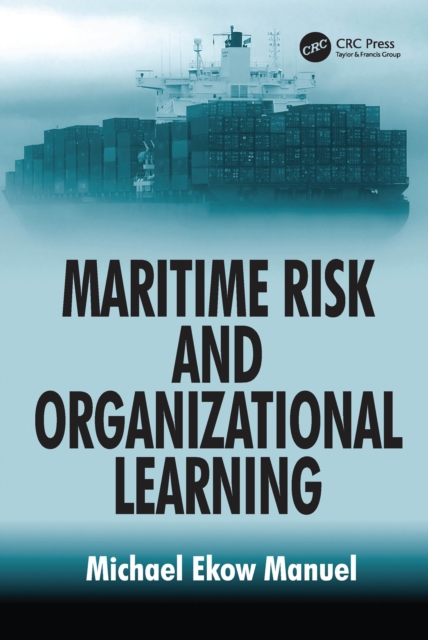
Bridging an identified gap between research and practice in the domain of risk and organizational learning with respect to human/organizational factors and organizational behaviour, this book highlights the common and recurring threads in contributory factors to accident causation.
Bridging an identified gap between research and practice in the domain of risk and organizational learning with respect to human/organizational factors and organizational behaviour, this book highlights the common and recurring threads in contributory factors to accident causation.
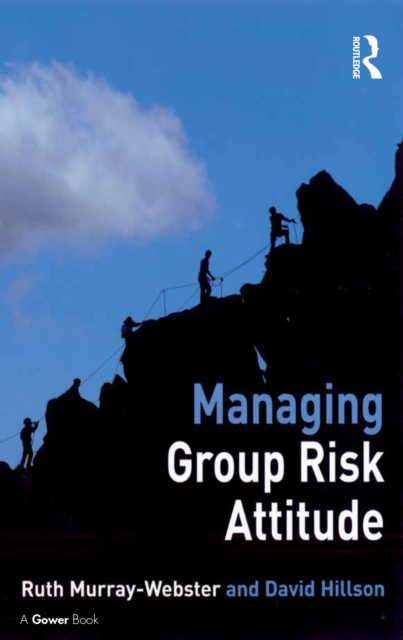
This book builds on the authors' previous title Understanding and Managing Risk Attitude but this time looks exclusively at the challenges of understanding and managing those attitudes adopted by groups of people when faced with making decisions that they perceive as risky and important.
This book builds on the authors' previous title Understanding and Managing Risk Attitude but this time looks exclusively at the challenges of understanding and managing those attitudes adopted by groups of people when faced with making decisions that they perceive as risky and important.
The 'MisLeadership' of this book's title is a description of the phenomenon the authors have uncovered through their analysis of the validity, or otherwise, of current leadership styles and achievements, in the light of the challenges leaders face, and particularly of the urgent global issues with which business leaders are now confronted.
The 'MisLeadership' of this book's title is a description of the phenomenon the authors have uncovered through their analysis of the validity, or otherwise, of current leadership styles and achievements, in the light of the challenges leaders face, and particularly of the urgent global issues with which business leaders are now confronted.
Networks as sets of autonomous organisations working together to achieve individual and shared goals are becoming increasingly important across many areas of public administration.
Networks as sets of autonomous organisations working together to achieve individual and shared goals are becoming increasingly important across many areas of public administration.
This book takes a fresh look at safety decision-making by documenting and examining stories told by front-line managers in three different high-hazard industries: a chemical plant, a nuclear power station and an air-navigation service provider.
This book takes a fresh look at safety decision-making by documenting and examining stories told by front-line managers in three different high-hazard industries: a chemical plant, a nuclear power station and an air-navigation service provider.
The public expects organizations to come together and cooperate in times of crisis, yet we know that organizations often fall short of this anticipation.
The public expects organizations to come together and cooperate in times of crisis, yet we know that organizations often fall short of this anticipation.
In Participative Transformation, Roger Klev and Morten Levin insist that participative learning and developmental processes are essential in organizational change.
In Participative Transformation, Roger Klev and Morten Levin insist that participative learning and developmental processes are essential in organizational change.
Performance Coaching for Complex Projects recognises a world of complex undertakings for which the common transactional mindsets and methodologies will not produce the required results.
Performance Coaching for Complex Projects recognises a world of complex undertakings for which the common transactional mindsets and methodologies will not produce the required results.
Individuals need to survive and grow in changing and sometimes turbulent organizational environments, while organizations and societies want individuals to have the knowledge, skills and abilities that will enable them to prosper and thrive.
Individuals need to survive and grow in changing and sometimes turbulent organizational environments, while organizations and societies want individuals to have the knowledge, skills and abilities that will enable them to prosper and thrive.
Discretion has re-emerged as an issue of central importance for welfare professionals over the last two decades in the face of an intensification of management culture across the public sector.
Discretion has re-emerged as an issue of central importance for welfare professionals over the last two decades in the face of an intensification of management culture across the public sector.
Drawn from in-depth qualitative research, Queer Company provides the first extended, academic analysis of gay men's workplace friendships, offering theoretical and empirical insights into a subject that is timely and important.
Drawn from in-depth qualitative research, Queer Company provides the first extended, academic analysis of gay men's workplace friendships, offering theoretical and empirical insights into a subject that is timely and important.
Decision makers interested in going beyond their own personal and professional interests and involving themselves in humanising their organization, community and society should read Remaking Ourselves, Enterprise and Society.
Decision makers interested in going beyond their own personal and professional interests and involving themselves in humanising their organization, community and society should read Remaking Ourselves, Enterprise and Society.
This book gathers together details of seventeen case studies of learning in practice, after having set the issue of reflective learning in a theoretical context.
This book gathers together details of seventeen case studies of learning in practice, after having set the issue of reflective learning in a theoretical context.
In this book, John Arthur and Louise Moody introduce the concept of the reasoning chain, a new approach to risk-based reasoning systems in large, complex and distributed organisations.
In this book, John Arthur and Louise Moody introduce the concept of the reasoning chain, a new approach to risk-based reasoning systems in large, complex and distributed organisations.
Intense pressures pose considerable challenges to executives striving to succeed in an environment of increasing volatility, uncertainty, complexity and ambiguity.
Intense pressures pose considerable challenges to executives striving to succeed in an environment of increasing volatility, uncertainty, complexity and ambiguity.
Security Culture starts from the premise that, even with good technical tools and security processes, an organisation is still vulnerable without a strong culture and a resilient set of behaviours in relation to people risk.