This volume is part of the ongoing collaboration between the RMC series and the Socio-Economic Institute for Firms and Organizations (ISEOR), a French intervention-research think tank co-directed by Henri Savall and Veronique Zardet.
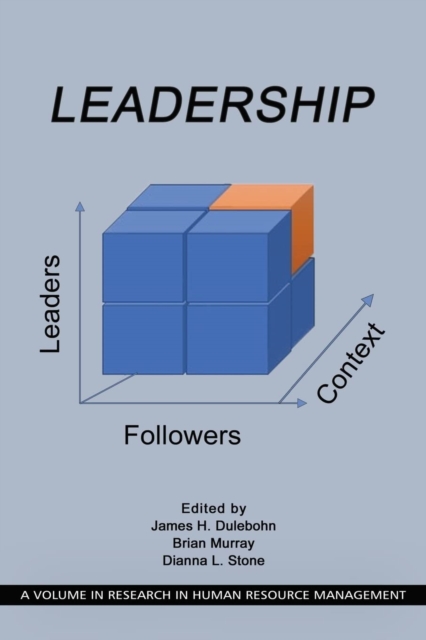
As we enter the third decade of the twenty-first century, we are seeing a renaissance of context in influencing leadership, leader-follower relations, and leader effectiveness as well as a recognition of the tripartite nature of leadership.
The "e;new"e; in new economy means a more stable and longer growth, with more jobs, lower inflation and interest rates, explosion of free markets worldwide, the unparalleled access to knowledge through the Internet and new type of organization which affects organizational change.
Managing Public-Private Strategic Alliances is a volume in the book series Research in Strategic Alliances that focuses on providing a robust and comprehensive forum for new scholarship in the field of strategic alliances.
The volume is based on the presentations and discussions from the Fifth European Conference on Management Consulting sponsored by the Management Consulting Division of the Academy of Management, which took place June, 2011 at Vrije Universiteit in Amsterdam, the Netherlands.
This volume in Research in Social Issues in Management expands our understanding of organizational justice and applies justice theories to develop models of ethical behavior in organizations.
Educating in Ethics for the Professions: A Compendium of Research, Theory, Practice, and an Agenda for the Future offers a state-of-the-art discussion on the part of applied ('professional') ethics educators who describe the teaching of ethics for their professions and who collectively represent a wide-ranging array of professions.
In this book, the chapters are designed to move us towards a complete understanding of what a great place to work is, how to develop such an organization, and how to measure whether your organization is a great place to work.
This volume of the Research in Organizational Sciences is entitled "e;Received Wisdom, Kernels of Truth, and Boundary Conditions in Organizational Studies"e;.
Managers are increasingly employing teams as a primary work unit in organizations, but they are struggling with how to effectively lead the emerging team structures.
Corporatee Social Performance: Paradoxes- Pitfalls and Pathways to the Better World is authored by a range of international experts with a diversity of backgrounds and perspectives and provides a collection of ideas, examples and solutions on CSP implementation and problems that occur in this area of consideration.
Now in a thoroughly revised fourth edition, Public Policy: Preferences and Outcomes is designed to help students better understand the ways in which public policy is grounded in normative theory, empowering them to discuss policy issues with clarity.
In a modern world in which one can observe managerial and investors' behaviors characterized by high risk, short term orientation, moral hazard and speculation, there is a need to form a new ethical paradigm to drive a more ethical oriented education and a substantial change to norms regulating markets and business behavior to sensitize investors and financial practitioners, so that humanity can evolve in a sustainable way.
Interpartner Dynamics in Strategic Alliances is a volume in the book series Research in Strategic Alliances that will focus on providing a robust and comprehensive forum for new scholarship in the field of strategic alliances.
In a modern world in which one can observe managerial and investors' behaviors characterized by high risk, short term orientation, moral hazard and speculation, there is a need to form a new ethical paradigm to drive a more ethical oriented education and a substantial change to norms regulating markets and business behavior to sensitize investors and financial practitioners, so that humanity can evolve in a sustainable way.
This volume provides up-to-date reviews of the research on a number of social and ethical issues of increasing concern confronting today's managers and organizations.
This third volume of LMX Leadership: The Series addresses the question of how leaders prepare their teams for required loosely directed, highly coordinated, and above all, flexible operations.
Over the past five years the Davis Conference on Qualitative Research has welcomed research projects by the very best qualitative, organizational researchers in the world.
This book is divided into three parts: integrating the non-work context into theories of organizational justice; non-work reactions to injustice; and commentary.
This volume is part of the ongoing collaboration between the RMC series and the Socio-Economic Institute for Firms and Organizations (ISEOR), a French intervention-research think tank co-directed by Henri Savall and Veronique Zardet.
The underlying rationale for this book is to present research that a) highlights the explosively political and deeply divisive issues involved in managing risk and b) address the empirical deficit and theoretical challenges related to managing societal risk ethically.
The senior research compliance administrator has emerged as a critically important position as universities and other research organizations face an increasingly intricate regulatory environment.
As academics, Organization Development (OD) change professionals, and leaders, many of us have faced the challenge of driving change within a traditionally resistant organization.
The volume is based on the presentations and discussions from the Fifth European Conference on Management Consulting sponsored by the Management Consulting Division of the Academy of Management, which took place June, 2011 at Vrije Universiteit in Amsterdam, the Netherlands.
Over the past ten years, the Davis Conference on Qualitative Research has become the world's leading conference for qualitative researchers in organizational studies.
The information in Organizational Performance in a Nutshell provides a comprehensive framework for understanding questions like why does one organization thrive while another struggles for survival even though both are operating in the same industry, or how can some of the largest global organizations such as GM, Ford, Chrysler, Home Depot, Sears, Kmart, Airbus, Citigroup, Gateway, and Dell perform so poorly after being such colossal leaders in their industry?
Managing the Complex is an ambitious title - and it would be an audacious one if we were not to begin with a frank admission: to date few to none of us have a skill set which includes managing the complex.
Educating in Ethics for the Professions: A Compendium of Research, Theory, Practice, and an Agenda for the Future offers a state-of-the-art discussion on the part of applied ('professional') ethics educators who describe the teaching of ethics for their professions and who collectively represent a wide-ranging array of professions.