This new and engaging core textbook offers a unique line manager perspective that presents students with HRM topics and issues that they will be confronted with once they enter the world of work in a managerial role.
Combining conceptual, pragmatic and operational approaches, this edited collection addresses the demand for knowledge and understanding of IT in the healthcare sector.
How social class determines who lands the best jobsAmericans are taught to believe that upward mobility is possible for anyone who is willing to work hard, regardless of their social status, yet it is often those from affluent backgrounds who land the best jobs.
In recent years 'the New Institutionalism' has focused more on organizations in their social and cultural environments than on societal-level institutional systems.
How honeybees make collective decisions-and what we can learn from this amazing democratic processHoneybees make decisions collectively-and democratically.
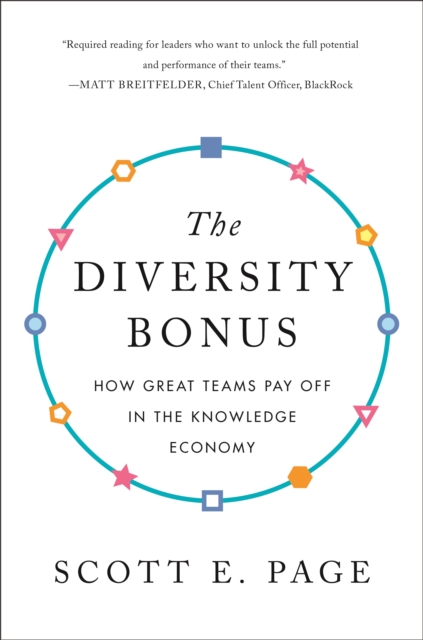
How businesses and other organizations can improve their performance by tapping the power of differences in how people thinkWhat if workforce diversity is more than simply the right thing to do?
This book describes the cognitive and interpersonal effects of group model building, and presents empirical research on what group model building achieves and how.
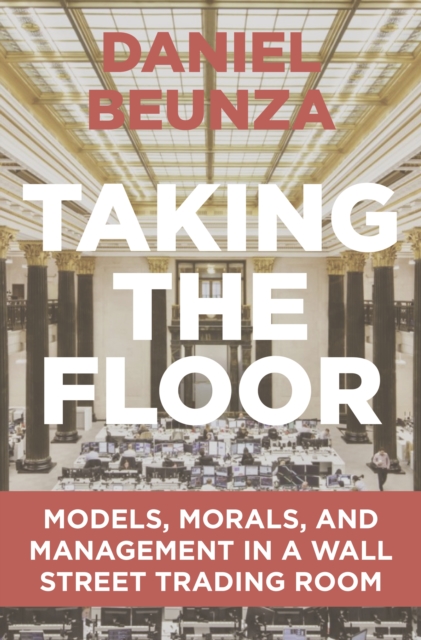
An inside look at a Wall Street trading room and what this reveals about today's financial systemDebates about financial reform have led to the recognition that a healthy financial system doesn't depend solely on how it is structured-organizational culture matters as well.
Organizational commitment (OC) is typically thought of in mainstream research as a beneficial behaviour, with employers mutually rewarding employees for their labor.
Understanding Organisation Development is essential reading for students studying Organisation Development (OD) as part of a wider HR degree or professional qualification, is the core textbook for the CIPD level 5 Unit 5UOD, and is ideal for professionals looking for a solid theoretical grounding that they can apply in practice.
Appreciative Inquiry has touched and inspired the work of thousands who apply its development principles in a wide range of settings including industry, government, spiritual and not-for-profit organizations.
Understanding of the history and development of organization theory has recently made new advances through new work emerging on the history of management thought as well as through the institutionalization of critical approaches to organizations and organizational knowledge.
This book challenges the taken-for-granted status of organizations such as the Red Cross and Medecins Sans Frontieres by problematizing humanitarianism.
The book examines ongoing dynamics within the organizational fields of health and higher education, with a focus on collective (public universities and hospitals) and individual (professionals) actors, structures, processes and institutional logics.
The rapidly growing recognition of the importance of emotions in understanding all aspects of organizational life is facilitating the development of focused areas of scholarship.
Redefining Competency-Based Education provides an expanded definition of career competence, based on actual employer hiring and promotion requirements, which enhances university curricula to better prepare students for work and life.
Increasingly today, in every age group, consumers are committing to brands that show good citizenship--from fair employment practices, to social responsibility, to charitable giving.
This book taps into both success stories and cautionary tales from others to provide you with a smart, calculated approach to knowing both: 1) when to change course and 2) how to pull it off.
To see a program successfully through to completion, a program manager must break the work down into simpler, smaller pieces and organize it into interdependent tasksand this book helps you do just that.
Whether you're the target of manipulation, intimidation, verbal abuse, or deliberate humiliation, Beating the Workplace Bully will show you how to fight back.
Products and services will change with demand, but one thing that will always be required for a company's success is having the right people working hard for you.
This volume of Research on Emotions in Organizations contributesto the ongoing study of the emotion-related forces that shape the functioning of individual, interpersonal workplace relationships and the organizationalsystem as a whole.
In Civility at Work, Lew Bayer describes the business case for civility and explains how organizations can increase employee retention, performance, and overall revenue by creating a workplace culture of human kindness and civility.
Agility: Management Principles for a Volatile World is required reading for anyone managing individuals in small to medium-sized businesses, large corporations, non-profit organizations, and government offices.
This book explores the intersections between leadership and velocity (the speed of now) to identify key leadership competencies needed for the 21st Century.
The fresh approach taught in this indispensable guide will transform passive groups of disparate people into the effective teams of leaders you didn't know was possible to have.
This book has done all the homework for you and provides a succinct, accessible overview on the training and tools available for process improvement that fills that gap of being not too rigid nor too blase.
It cannot be overemphasized how important it is for leaders to ensure the company's mission is manifested in the roles, expectations, and goals of every member of the organization.
As much as we may encourage our employees that they all have their own unique strengths that they need to embrace for the good of the business, the truth is a select few produce more, sell more, and flat-out deliver better results than anyone else.
The obstacles facing all companies today were relatively nonexistent not too long ago--increasingly rapid and disruptive innovation, economic instability as we've never experienced before, environmental degradation, increasing stakeholder power, just to name a few--yet far too many companies are still mindlessly applying the old rules of business and expecting the same stellar results that last worked successfully for them literally a millennium ago!
As a Chinese proverb says 'The fish rots from the head' and so it is with businesses and other organisations - the buck starts and stops in the boardroom.
The American Management Association, the preeminent provider of business education worldwide, trains the majority of the Fortune 500 companies in competitive business skills.