Number Ten Downing Street and the Cabinet Office are at the apex of power in British government, but relatively little is known about the day to day functioning of these great institutions of state.
The Hawaiian pineapple industry emerged in the late nineteenth century as part of an attempt to diversify the Hawaiian economy from dependence on sugar cane as its only staple industry.
The complex and hard-fought movement for political freedom in India coincided with the rise of a wealthy capitalist class of Indian industrialists who had profited under British rule.
In this original and thought-provoking book, Relli Shechter examines the emergence of 'modern' markets in the complex social environment of the Middle East.
The environmental, the economic - and indeed the political - impact of the catastrophic 2010 blowout of BP's well in the Gulf of Mexico has highlighted the central part played by oil in the modern world.
A new account of how Haiti under French colonial rule became a violent sugar plantation stateIn the early eighteenth century, France turned to its New World colonies to help rescue the monarchy from the wartime debts of Louis XIV.
In the second half of the twentieth century France played the greatest role - even greater than Germany s - in shaping what eventually became the European Union.
Focusing on organization, resistance and political culture, this collection represents some of the best examples of recent Spanish historiography in the field of modern Spanish labor movements.
Leading scholars consider Austrian economics from several perspectives such as characteristic themes of entrepreneurship and uncertainty, scientific methods such as mathematical complexity theory and experimental economics, and historical contexts such as pre-war Vienna and post-war France.
Financialization is a set of processes which has led to a financially driven and commodified economy with rising inequality, tax avoidance, and a lack of investment in the physical and social infrastructure.
Through the rise and fall of empires, ideologies, and economies, tobacco grown on the tiny island of Cuba has remained an enduring symbol of pleasure and extravagance.
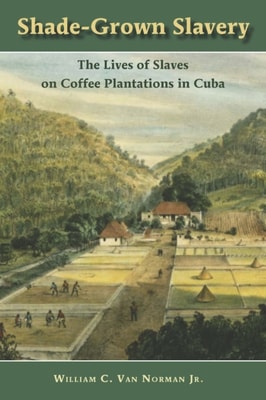
Within the world of Cuban slave-holding plantations, all enslaved people had to negotiate a life defined by forces beyond their control, and indeed beyond the control of their masters.
No one has done more to emphasise the significance of the land in early modern England that Joan Thirsk, whose writings are both an important contribution to its history and point the way for future research.
No one has done more to emphasise the significance of the land in early modern England that Joan Thirsk, whose writings are both an important contribution to its history and point the way for future research.
A Choice Reviews Editors Pick Through the rise and fall of empires, ideologies, and economies, tobacco grown on the tiny island of Cuba has remained an enduring symbol of pleasure and extravagance.
Americans' belief in their economic, political, and cultural superiority launched them on a mission to transform Latin America that has evolved into a global process of Americanization.
After the 1854 abolition of slavery in Peru, a new generation of plantation owners turned to a system of peasant tenantry to maintain cotton production through the use of cheap labor.
Making a New World is a major rethinking of the role of the Americas in early world trade, the rise of capitalism, and the conflicts that reconfigured global power around 1800.
The plebeians of Buenos Aires were crucial to the success of the revolutionary junta of May 1810, widely considered the start of the Argentine war of independence.
One of the most original and prolific economists of the twentieth century, Joan Robinson (1903-83) is widely regarded as the most important woman in the history of economic thought.
Gods in the Bazaar is a fascinating account of the printed images known in India as "e;calendar art"e; or "e;bazaar art,"e; the color-saturated, mass-produced pictures often used on calendars and in advertisements, featuring deities and other religious themes as well as nationalist leaders, alluring women, movie stars, chubby babies, and landscapes.
Demonstrating that globalization is a centuries-old phenomenon, From Silver to Cocaine examines the commodity chains that have connected producers in Latin America with consumers around the world for five hundred years.
A leading scholar of the history and philosophy of economic thought, Philip Mirowski argues that there has been a top-to-bottom transformation in how scientific research is organized and funded in Western countries over the past two decades and that these changes necessitate a reexamination of the ways that science and economics interact.
This volume revisits the Nobel Prize-winning economist Kenneth Arrow's classic 1963 essay "e;Uncertainty and the Welfare Economics of Medical Care"e; in light of the many changes in American health care since its publication.
Imagining Interest in Political Thought argues that monistic interest-or the shaping and coordination of different pursuits through imagined economies of self and public interest-constitutes the end and means of contemporary liberal government.
At the turn of the nineteenth century, when the word "e;capital"e; first found its way into the vocabulary of mid-Hudson Valley residents, the term irrevocably marked the profound change that had transformed the region from an inward-looking, rural community into a participant in an emerging market economy.
Marshall Eakin presents what may be the most detailed study ever written about the operations of a foreign business in Latin America and the first scholarly, book-length study of any foreign business enterprise in Brazil.
In preindustrial Europe, dependence on grain shaped every phase of life from economic development to spiritual expression, and the problem of subsistence dominated the everyday order of things in a merciless and unremitting way.