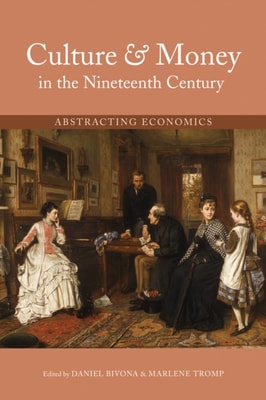
The originators of classical political economy-Adam Smith, David Ricardo, James Steuart, and others-created a discourse that explained the logic, the origin, and, in many respects, the essential rightness of capitalism.
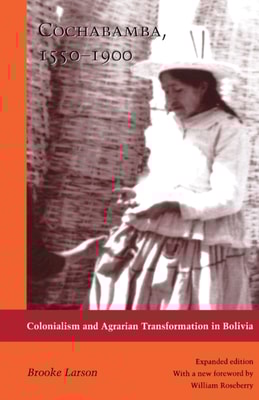
Winner of the 1990 Best Book Award from the New England Council on Latin American StudiesThis study of Bolivia uses Cochabamba as a laboratory to examine the long-term transformation of native Andean society into a vibrant Quechua-Spanish-mestizo region of haciendas and smallholdings, towns and villages, peasant markets and migratory networks caught in the web of Spanish imperial politics and economics.
Lauchlin Currie's contribution to monetary theory and policies during the New Deal and in the postwar period when he became one of the most important economic advisors to several presidents of Colombia is the subject of this biography.
The Money Doctor in the Andes is an account of the technical assistance missions to five Andean republics-Colombia, Ecuador, Chile, Bolivia, and Peru-undertaken by Princeton University economist Edwin Walter Kemmerer during the 1920s.
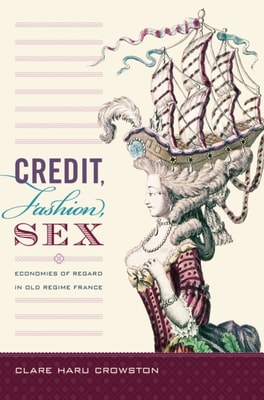
In Old Regime France credit was both a central part of economic exchange and a crucial concept for explaining dynamics of influence and power in all spheres of life.
Drawing on two decades of ethnographic research in Sulawesi, Indonesia, Tania Murray Li offers an intimate account of the emergence of capitalist relations among indigenous highlanders who privatized their common land to plant a boom crop, cacao.
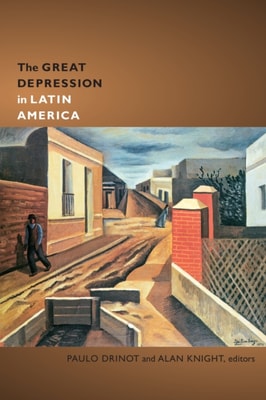
Although Latin America weathered the Great Depression better than the United States and Europe, the global economic collapse of the 1930s had a deep and lasting impact on the region.
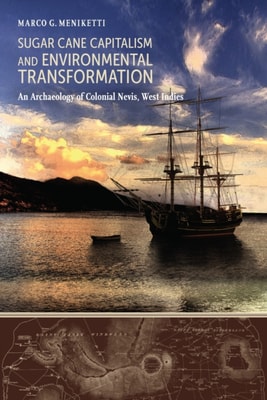
Offers a rare exploration of the substantial environmental impact of capitalist sugar agriculture, colonial settlement, and the Atlantic slave trade on the Caribbean island of Nevis In this deeply researched and multifaceted study, Marco G.
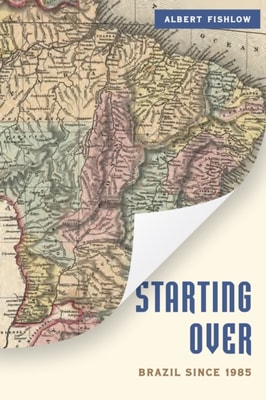
Brazil has undergone transformative change since the 1980s, from an authoritarian regime to a democratic society advancing on all frontspolitical, social, economic, and diplomatic.
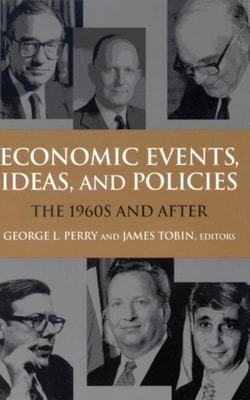
In November 1999 the Brookings Institution and Yale University jointly sponsored a conference to reconsider the national economic policies of the 1960s and the theories that influenced them, in light of subsequent events in the economy and of developments in economic theory and research.
With one side of the political aisle proposing increasingly more socialistic and anti-capitalistic ideas, the other side has been quick to defend our country's great economic model, with good reason.
This book vividly illustrates the history of business in the United States from the point of view of the enterprising men and women who made it happen.
Stoked by a series of major scandals, popular fears of corruption in the Civil War North provide a unique window into Northern culture in the Civil War era.
Becoming Bourgeois is the first study to focus on what historians have come to call the "e;middling sort,"e; the group falling between the mass of yeoman farmers and the planter class that dominated the political economy of the antebellum South.
Becoming Bourgeois is the first study to focus on what historians have come to call the "e;middling sort,"e; the group falling between the mass of yeoman farmers and the planter class that dominated the political economy of the antebellum South.
Contesting the assumption that early American economists were committed to Adam Smith’s ideas of free trade and small government, this book provides a comprehensive history of the nation’s economic thought from 1790 to 1860, tracing the development of a uniquely American understanding of capitalism.
This book delves into the intricate dynamics between economic elites and the political party system in Argentina, Chile, and Uruguay, particularly during their democratization phases in the twentieth century.
Introduction to Medieval Europe 300-1500 provides a comprehensive survey of this complex and varied formative period of European history within a global context, covering themes as diverse as barbarian migrations, the impact of Christianisation, the formation of nations and states, the emergence of an expansionist commercial economy, the growth of cities, the Crusades, the effects of plague and the intellectual and cultural dynamism of the Middle Ages.
As analysis of the revenue available to Qing garrisons in Xinjiang reveals, imperial control over the region in the eighteenth and nineteenth centuries depended upon sizeable yearly subsidies from China.
Chinese Money in Global Context: Historic Junctures Between 600 BCE and 2012 offers a groundbreaking interpretation of the Chinese monetary system, charting its evolution by examining key moments in history and placing them in international perspective.
Spectacular Speculation is a history and sociological analysis of the semantics of speculation from 1870 to 1930, when speculation began to assume enormous importance in popular culture.
Recently, a growing body of work on "e;law and finance"e; and "e;legal origins"e; has highlighted the role of formal legal institutions in shaping financial institutions.
Throughout recorded history, labor to produce goods and services has been a central concern of society, and questions surrounding the terms of labor-the arrangements under which labor is made to produce and to divide its product with others-are of great significance for understanding the past and the emergence of the modern world.
The Routledge Economic History of War presents a broad overview of the latest research on the long lasting changes and effects that collapsing security in international relations has had on the world's economies and societies.
For as long as humanity has ventured on the seas, naval warfare has been an integral part of their activities and the focal point for many histories and ideas of heritage.
THE SUNDAY TIMES BESTSELLER and RADIO 4 BOOK OF THE WEEK*An Economist, Financial Times, Times and New Statesman Book of the Year*Shortlisted for the FT Business Book of the Year Award and the British Academy Book Prize, Longlisted for the Wainwright Conservation Writing Prize'Compelling' TIM MARSHALL'Lively, rich and exciting' PETER FRANKOPAN'Vitally important' TIM HARFORD_____________Sand, salt, iron, copper, oil and lithium.
First published in 1924, this book remains a landmark in empirical economic research and in its analysis of a remarkable period in Canada's economic development.