Der spätere Nobelpreisträger, indische Wirtschaftswissenschaftler und Philosoph Amartya Sen hielt in Stanford – im Rahmen der berühmten »Tanner Lectures« – einen Vortrag, der unser Denken über Entwicklungshilfe und Verteilungsgerechtigkeit nachhaltig erschüttern sollte: Mit Bezug auf die Gerechtigkeitstheorie des Philosophen John Rawls führte er seine These aus, dass es nicht um die Verteilung von Gütern oder Geld (z.
"e;A Contribution to The Critique Of The Political Economy"e; is an analysis of capitalism and quantity theory of money, achieved by critiquing the writings of the leading theoretical exponents of capitalism at that time: these were the political economists, nowadays often referred to as the classical economists; Adam Smith and David Ricardo.
Ein augenöffnender philosophischer Beitrag zur Debatte um Umwelt und Kapitalismus: Der französische Philosoph Pierre Charbonnier gilt als »der neue philosophische Kopf einer politischen Ökologie« (so die französische Zeitschrift Libération).
Von den Körperzeichen über den Buchdruck zu Smartphone und künstlicher Intelligenz: Wenn sich die Medien verändern, ändern sich die Gesellschaft und die Art und Weise, wie wir unsere Bedürfnisse befriedigen.
Contiene tabla de contenido activa (HTML)El tratado de estrategia más influyente del mundoThe Art of War 'es un antiguo tratado militar chino que data del siglo V aC y se atribuye al antiguo estratega militar chino Sun Tzu.
Contiene tabla de contenido activa (HTML)El tratado de estrategia más influyente del mundoThe Art of War 'es un antiguo tratado militar chino que data del siglo V aC y se atribuye al antiguo estratega militar chino Sun Tzu.
La conquista de la pobreza de Henry Hazlitt es uno de los libros más valiosos para quien pretenda entender el fenómeno de la pobreza en el mundo actual.
The general assumption that social policy should be utilitarian--that society should be organized to yield the greatest level of welfare--leads inexorably to increased government interventions.
Paul Krugman, winner of the 2008 Nobel Prize in economics, shows how today's crisis parallels the events that caused the Great Depression - and explains what it will take to avoid catastrophe.
A radical new approach to economic policy that addresses the symptoms and causes of inequality in Western society todayFueled by populism and the frustrations of the disenfranchised, the past few years have witnessed the widespread rejection of the economic and political order that Western countries built up after 1945.
Marx for the twenty-first centuryThe first new English translation in fifty yearsand the only one based on the last German edition revised by Marx himselfFeaturing extensive original commentary, including a foreword by acclaimed political theorist Wendy Brown';An astounding achievement.
The strange and contested evolution of the management of banking riskBanks in America are private institutions with private shareholders, boards of directors, profit motives, customers, and competitors.
The verdict is in: Free enterprise has lifted billions of people out of abject poverty all over the world and provided a higher quality of life than has ever been thought possible.
A BREATHTAKINGLY CLEAR ANALYSIS OF TODAY'S ONGOING ECONOMIC CRISIS In this updated edition of Capitalism Hits the Fan, Professor Wolff explains why capitalism's global crisis persists, why bank bailouts and austerity policies fail, and why deepening economic inequality now generates historic social tensions and conflicts and worsens the ongoing crisis.
Research on the spatial aspects of economic activity has flourished over the past decade due to the emergence of new theory, new data, and an intense interest on the part of policymakers, especially in Europe but increasingly in North America and elsewhere as well.
Undoubtedly, what happens to the economy affects the lives of the citizens of a country, and often the lives of people in other countries around the globe.
Dieses eBook: "Die Akkumulation des Kapitals" ist mit einem detaillierten und dynamischen Inhaltsverzeichnis versehen und wurde sorgfältig korrekturgelesen.
In a series of 50 accessible essays, Ed Conway introduces and explains the essential economic concepts needed to understand booms and busts, bulls and bears, and how economics influences every aspect of our lives, whether buying a house or what you ate for breakfast this morning.
'Superb' - Tim Harford, author of How to Make the World Add Up Money is essential to the economy and how we live our lives, yet is inherently worthless.
Weber wrote that capitalism in northern Europe evolved when the Protestant (particularly Calvinist) ethic influenced large numbers of people to engage in work in the secular world, developing their own enterprises and engaging in trade and the accumulation of wealth for investment.
Protagoras - Plato - Plato is a Classical Greek philosopher, mathematician, student of Socrates, writer of philosophical dialogues, and founder of the Academy in Athens, the first institution of higher learning in the Western world.
Technology Differences over Space and Time looks at how countries use their productive resources-such as workers, skills, equipment and structures, and natural resources.
The problem of rent is at the root of vital social concerns in the twenty-first century, ranging from the climate emergency and spiralling economic inequality to the repercussions of global economic crises.
From their shadowy origins in Bitcoin to their use by multinational corporations, cryptocurrencies and blockchains are remaking the rules of digital media and society.
Throughout the Western world, governments and financial elites responded to the financial crisis of 2008 by trying to restore the conditions of business as usual, but the economic, social and human damage inflicted by the crisis has given rise to a reconsideration of the inevitability of unfettered capitalism as a fact of life.
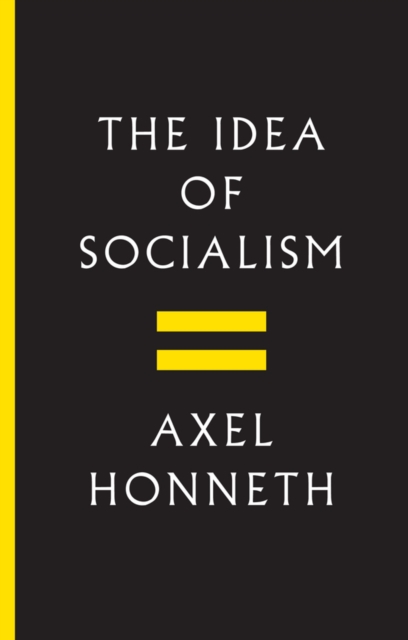
The idea of socialism has given normative grounding and orientation to the outrage over capitalism for more than 150 years, and yet today it seems to have lost much of its appeal.