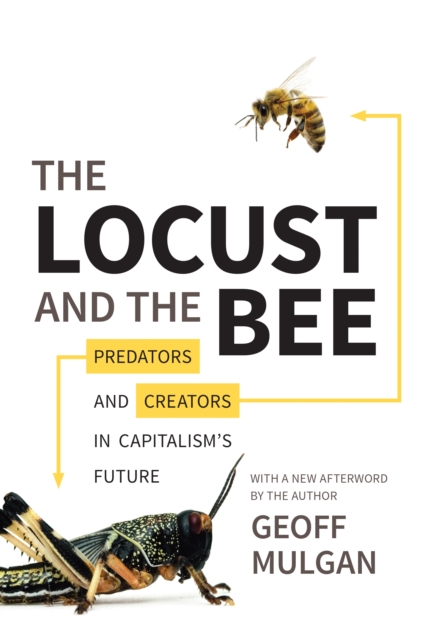
How to harness capitalism's dynamism to create an economy that promotes well-being and rewards creationThe recent economic crisis was a dramatic reminder that capitalism can both produce and destroy.
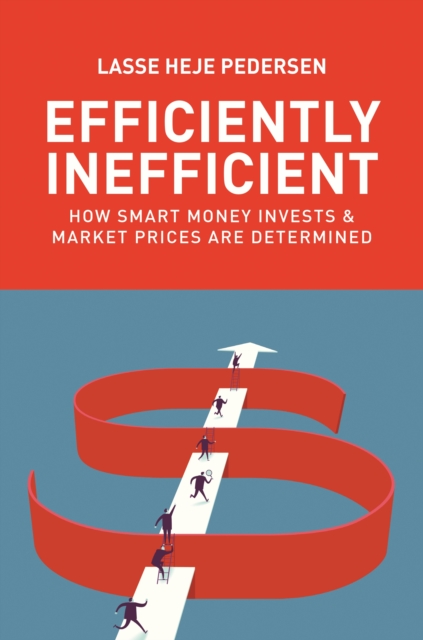
Financial market behavior and key trading strategies-illuminated by interviews with top hedge fund expertsEfficiently Inefficient describes the key trading strategies used by hedge funds and demystifies the secret world of active investing.
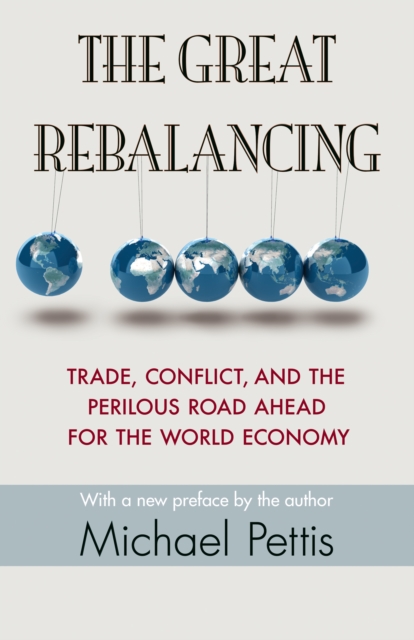
How trade imbalances spurred on the global financial crisis and why we aren't out of trouble yetChina's economic growth is sputtering, the Euro is under threat, and the United States is combating serious trade disadvantages.
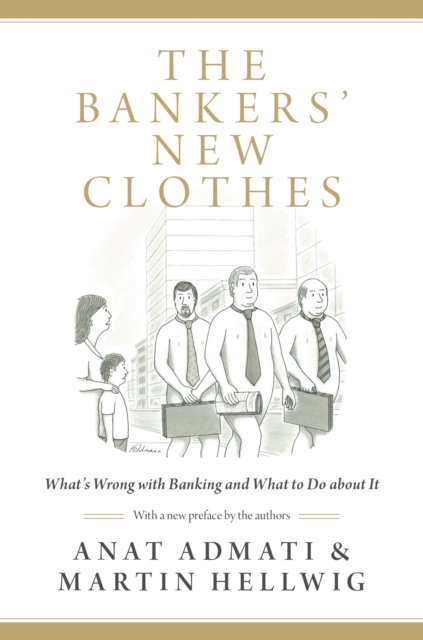
Why our banking system is broken-and what we must do to fix itAs memories of the Global Financial Crisis have faded, it has been tempting to believe that the banking system is now safe and that we will never again have to choose between havoc and massive bailouts.
The first book to use the world's most popular sport to test economic theories and document novel human behaviorA wealth of research in recent decades has seen the economic approach to human behavior extended over many areas previously considered to belong to sociology, political science, law, and other fields.
A guide to the economic modeling of household preferences, from two leaders in the fieldA common set of mathematical tools underlies dynamic optimization, dynamic estimation, and filtering.
An authoritative graduate textbook on information choice, an exciting frontier of research in economics and financeMost theories in economics and finance predict what people will do, given what they know about the world around them.
The legitimate and illegitimate use of incentives in society todayIncentives can be found everywhere-in schools, businesses, factories, and government-influencing people's choices about almost everything, from financial decisions and tobacco use to exercise and child rearing.
Why law is critical to innovation and economic growthSustained growth depends on innovation, whether it's cutting-edge software from Silicon Valley, an improved assembly line in Sichuan, or a new export market for Swaziland's leather.
How beauty leads to better jobs, better wages, and better spousesMost of us know there is a payoff to looking good, and in the quest for beauty we spend countless hours and billions of dollars on personal grooming, cosmetics, and plastic surgery.
The Theory of Taxation and Public Economics presents a unified conceptual framework for analyzing taxation--the first to be systematically developed in several decades.
The concept of general equilibrium, one of the central components of economic theory, explains the behavior of supply, demand, and prices by showing that supply and demand exist in balance through pricing mechanisms.
The general assumption that social policy should be utilitarian--that society should be organized to yield the greatest level of welfare--leads inexorably to increased government interventions.
A fascinating look at the evolutionary origins of cooperationWhy do humans, uniquely among animals, cooperate in large numbers to advance projects for the common good?
Why economics needs to focus on fairness and not just efficiencyOne of the central tenets of mainstream economics is Adam Smith's proposition that, given certain conditions, self-interested behavior by individuals leads them to the social good, almost as if orchestrated by an invisible hand.
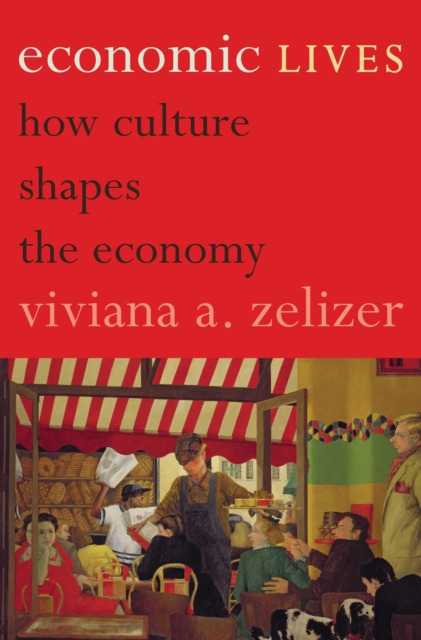
Revealing the human side of economic lifeOver the past three decades, economic sociology has been revealing how culture shapes economic life even while economic facts affect social relationships.
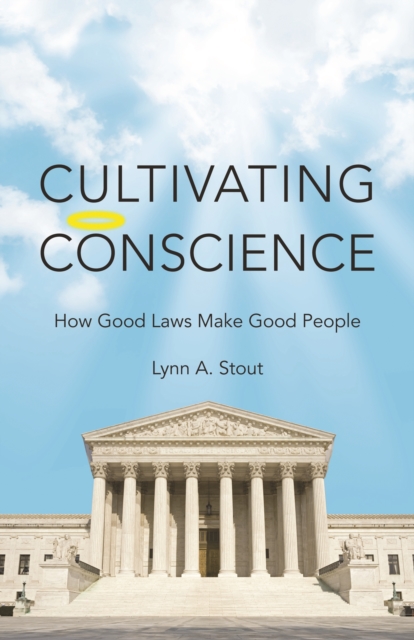
How the science of unselfish behavior can promote law, order, and prosperityContemporary law and public policy often treat human beings as selfish creatures who respond only to punishments and rewards.
From Nobel Prizewinning economist Daron Acemoglu, an incisive introduction to economic growthIntroduction to Modern Economic Growth is a groundbreaking text from one of today's leading economists.
Is the United States "e;the land of equal opportunity"e; or is the playing field tilted in favor of those whose parents are wealthy, well educated, and white?
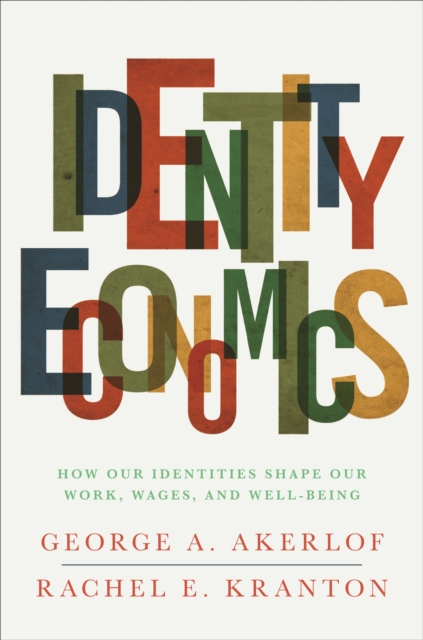
How identity influences the economic choices we makeIdentity Economics provides an important and compelling new way to understand human behavior, revealing how our identities-and not just economic incentives-influence our decisions.
In the last decade, behavioral economics, borrowing from psychology and sociology to explain decisions inconsistent with traditional economics, has revolutionized the way economists view the world.
Since the 1980s, there has been explosive growth in the use of experimental methods in economics, leading to exciting developments in economic theory and policy.
This book provides a surprising answer to two puzzling questions that relate to the very "e;soul"e; of the professional study of economics in the late twentieth century.
How writers after Adam Smith helped shape our thinking about economics and politicsFew issues are more central to our present predicaments than the relationship between economics and politics.
Since the 1980s, there has been explosive growth in the use of experimental methods in economics, leading to exciting developments in economic theory and policy.
Understanding the dynamic evolution of the yield curve is critical to many financial tasks, including pricing financial assets and their derivatives, managing financial risk, allocating portfolios, structuring fiscal debt, conducting monetary policy, and valuing capital goods.
From acclaimed economists George Akerlof and Robert Shiller, the case for why government is needed to restore confidence in the economyThe global financial crisis has made it painfully clear that powerful psychological forces are imperiling the wealth of nations today.
Ariel Rubinstein's well-known lecture notes on microeconomics-now fully revised and expandedThis book presents Ariel Rubinstein's lecture notes for the first part of his well-known graduate course in microeconomics.
An essential primer on an important yet understudied type of financial marketMany of the largest financial markets in the world do not organize trade through an exchange but rather operate within a decentralized or over-the-counter (OTC) structure.
Readable, practical and interesting, Tucker's SURVEY OF ECONOMICS, 10E provides the tools you need to understand the impact of economics in your own world.
Why Britain's attempt at small government proved unable to cope with the challenges of the modern worldIn the nineteenth century, as Britain attained a leading economic and political position in Europe, British policymakers embarked on a bold experiment with small and limited government.
Now you can truly understand and apply the latest economic models as you work directly with theoretical tools, real-world applications, and the popular new behavioral economics in this reader-friendly, market-leading book.
Learn how to think analytically and make better business decisions as a future business leader with the insights found in MANAGERIAL ECONOMICS: APPLICATIONS, STRATEGIES AND TACTICS, 14E.
A fascinating look at the evolutionary origins of cooperationWhy do humans, uniquely among animals, cooperate in large numbers to advance projects for the common good?