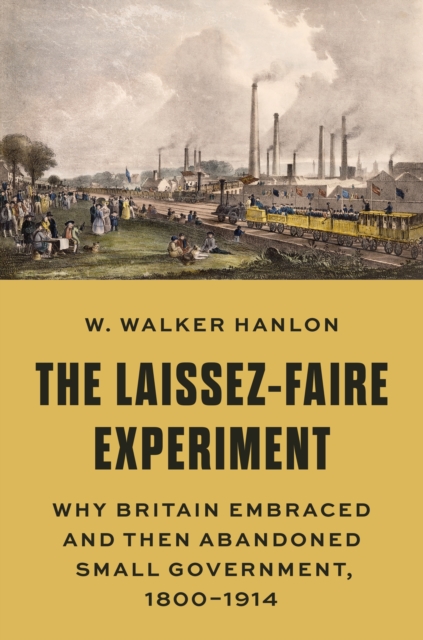
Why Britain's attempt at small government proved unable to cope with the challenges of the modern worldIn the nineteenth century, as Britain attained a leading economic and political position in Europe, British policymakers embarked on a bold experiment with small and limited government.
The Myth of Capitalism tells the story of how America has gone from an open, competitive marketplace to an economy where a few very powerful companies dominate key industries that affect our daily lives.
The Myth of Capitalism tells the story of how America has gone from an open, competitive marketplace to an economy where a few very powerful companies dominate key industries that affect our daily lives.
Offering a unique picture of recent developments in a range of non-conventional theoretical approaches in economics, this book introduces readers to the study of Analytical Political Economy and the changes within the subject.
Offering a unique picture of recent developments in a range of non-conventional theoretical approaches in economics, this book introduces readers to the study of Analytical Political Economy and the changes within the subject.
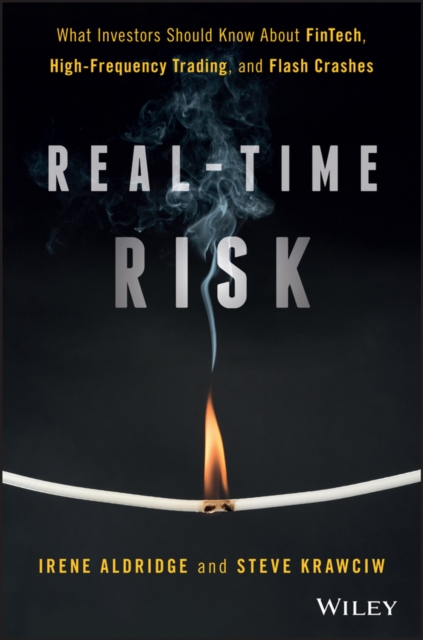
Risk management solutions for today's high-speed investing environment Real-Time Risk is the first book to show regular, institutional, and quantitative investors how to navigate intraday threats and stay on-course.
Risk management solutions for today's high-speed investing environment Real-Time Risk is the first book to show regular, institutional, and quantitative investors how to navigate intraday threats and stay on-course.
In this collection of critical surveys the reader is provided with a range of up-to-date work from some of the leading scholars in the area, writing on private and public sector aspects of savings and wealth accumulation.
In this collection of critical surveys the reader is provided with a range of up-to-date work from some of the leading scholars in the area, writing on private and public sector aspects of savings and wealth accumulation.
Provides a modern presentation that eliminates the seven limitations of past and present engineering economics texts: Contains the 12-FACTOR Calculator, an Excel spreadsheet designed by author to provide the values of the 12 factors of engineering economics for arbitrary values of i, g ( ), and N Contains the ANNUAL and PRESENT WORTH COMPARISON Calculators with Component Replacements forcomparing equipment purchase quotations Defines quasi-simple investments and presents a Step-by-Step procedure for calculating their IRRs and balances Presents a classification of the four common non-simple investments and provides Step-by-Step procedures for calculating their IRRs and balances Compares the different profitability measures for the same investment: pretax IRR, aftertax IRR, aftertax sensitivity analysis, net present value, accounting rate of return, benefit-cost ratio, and payback period
Provides a modern presentation that eliminates the seven limitations of past and present engineering economics texts: Contains the 12-FACTOR Calculator, an Excel spreadsheet designed by author to provide the values of the 12 factors of engineering economics for arbitrary values of i, g ( ), and N Contains the ANNUAL and PRESENT WORTH COMPARISON Calculators with Component Replacements forcomparing equipment purchase quotations Defines quasi-simple investments and presents a Step-by-Step procedure for calculating their IRRs and balances Presents a classification of the four common non-simple investments and provides Step-by-Step procedures for calculating their IRRs and balances Compares the different profitability measures for the same investment: pretax IRR, aftertax IRR, aftertax sensitivity analysis, net present value, accounting rate of return, benefit-cost ratio, and payback period
Presents recent developments of probabilistic assessment of systems dependability based on stochastic models, including graph theory, finite state automaton and language theory, for both dynamic and hybrid contexts.
Presents recent developments of probabilistic assessment of systems dependability based on stochastic models, including graph theory, finite state automaton and language theory, for both dynamic and hybrid contexts.
The book of financial wisdom that your future self will thank you for reading For many adults under 40, 'debt' is a four-letter word something that should be avoided but is all too often unavoidable.
The book of financial wisdom that your future self will thank you for reading For many adults under 40, 'debt' is a four-letter word something that should be avoided but is all too often unavoidable.
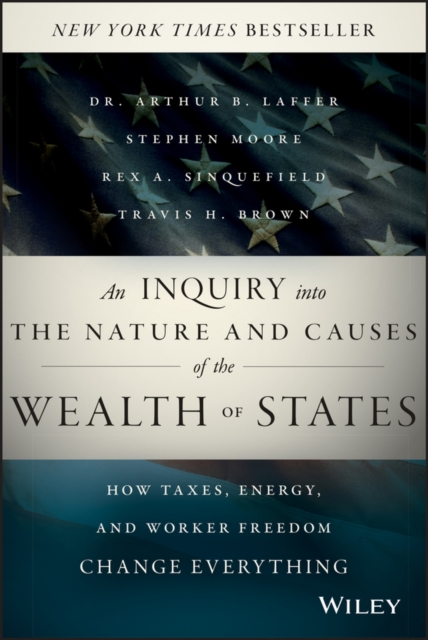
A passionate, detailed, quantified argument for state-level tax reform An Inquiry into the Nature and Causes of the Wealth of States explains why eliminating or lowering tax burdens at the state level leads to economic growth and wealth creation.
A passionate, detailed, quantified argument for state-level tax reform An Inquiry into the Nature and Causes of the Wealth of States explains why eliminating or lowering tax burdens at the state level leads to economic growth and wealth creation.
This carefully annotated selection features the main analysis of the operation of an economic system, the introductory chapter of the great attack on mercantilism, and portions of the analysis of the functions of the state-Books I, IV, and V.
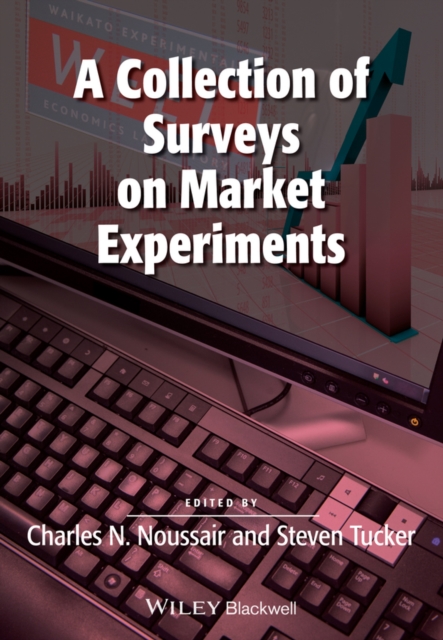
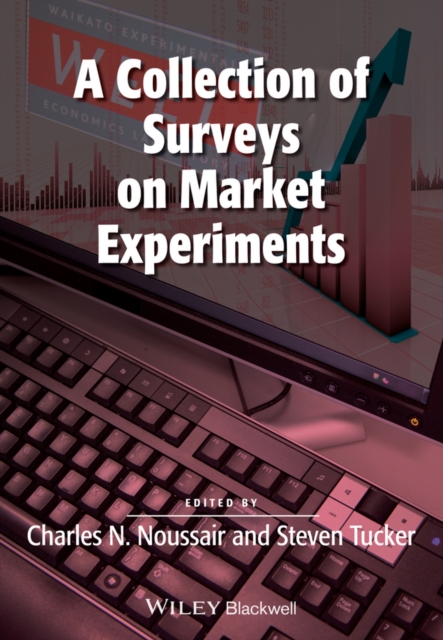
Comprised of 10 surveys by leading scholars, this collection showcases the largest and fastest growing strands of research on market behaviour in experimental economics.
Comprised of 10 surveys by leading scholars, this collection showcases the largest and fastest growing strands of research on market behaviour in experimental economics.
Economic Theory and the Ancient Mediterranean presents a comprehensive introduction to the application of contemporary economic theory to the ancient societies of the Mediterranean Sea from the period of 5000 BCE to 400 CE.
Economic Theory and the Ancient Mediterranean presents a comprehensive introduction to the application of contemporary economic theory to the ancient societies of the Mediterranean Sea from the period of 5000 BCE to 400 CE.
Phaedrus - Plato - Plato is a Classical Greek philosopher, mathematician, student of Socrates, writer of philosophical dialogues, and founder of the Academy in Athens, the first institution of higher learning in the Western world.
Este libro es un intento por revivir la economia politica anarquista individualista, incorporar los utiles desarrollos de los ultimos cien anos y hacerla relevante para los problemas del siglo XXI.
In this thought-provoking new book, Anthony Smith analyses key debates between historians and social scientists on the role of nations and nationalism in history.
The West has long defined the pursuit of happiness in economic terms but now, in the wake of the 2007-8 financial crisis, it is time to think again about what constitutes our happiness.
At a recent meeting of the World Economic Forum in Davos, it was reported that a ghost was haunting the deliberations of the assembled global elite - that of the renowned social scientist and economic historian, Karl Polanyi.
This new book by two leading economists is a far-reaching analysis of the role and organization of the financial system in the aftermath of the economic crisis.
Much orthodox economic theory is based on assumptions which are treated as self-evident: supply and demand are regarded as independent entities, the individual is assumed to be a rational agent who knows his interests and how to make decisions corresponding to them, and so on.
Karl Polanyi's The Great Transformation is generally acclaimed as being among the most influential works of economic history in the twentieth century, and remains as vital in the current historical conjuncture as it was in his own.
An invaluable primer on the role economic reasoning plays in campus debate and decision makingCampus Economics provides college and university administrators, trustees, and faculty with an essential understanding of how college finances actually work.
Economic sociology is a rapidly expanding field, applying sociology's core insight--that individuals behave according to scripts that are tied to social roles--to economic behavior.
From one of the leading policy experts of our time, an urgent rethinking of how we can better support each other to thriveWhether we realize it or not, all of us participate in the social contract every day through mutual obligations among our family, community, place of work, and fellow citizens.