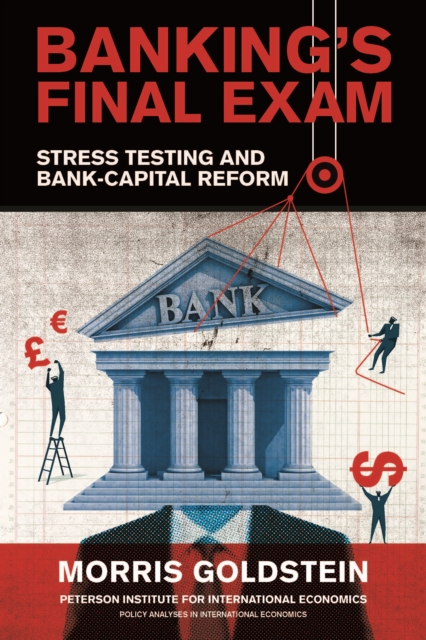
Why our banking system is broken-and what we must do to fix itAs memories of the Global Financial Crisis have faded, it has been tempting to believe that the banking system is now safe and that we will never again have to choose between havoc and massive bailouts.
Four new chapters and updates throughout help this 2e of Clearing, Settlement and Custody summarize worldwide changes in the process of concluding a financial transaction.
The second edition of An Introduction to Credit Derivatives provides a broad introduction to products and a marketplace that have changed significantly since the financial crisis of 2008.
The distinctive nature of the European pe/vc environment is on display in Stefano Caselli's presentation of its complete conceptual framework, from the volatile (its financial side) to the stable (its legal organization).
Exchange-Traded Funds in Europe provides a single point of reference on a diverse set of regional ETF markets, illuminating the roles ETFs can play in risk mitigation and speculation.
Tettered Money: Managing Digital Currency Transactions presents a comprehensive discussion of financial transactions using digital currencies, with the author, Gideon Samid, making the case for their expansion in tethered money.
Contemporary Financial Intermediation, 4th Edition by Greenbaum, Thakor, and Boot continues to offer a distinctive approach to the study of financial markets and institutions by presenting an integrated portrait that puts information and economic reasoning at the core.
In Introduction to Mortgages & Mortgage Backed Securities, author Richard Green combines current practices in real estate capital markets with financial theory so readers can make intelligent business decisions.
The Second Edition of this best-selling introduction for practitioners uses new material and updates to describe the changing environment for project finance.
Multi-Asset Risk Modeling describes, in a single volume, the latest and most advanced risk modeling techniques for equities, debt, fixed income, futures and derivatives, commodities, and foreign exchange, as well as advanced algorithmic and electronic risk management.
Algorithmic Trading Methods: Applications using Advanced Statistics, Optimization, and Machine Learning Techniques, Second Edition, is a sequel to The Science of Algorithmic Trading and Portfolio Management.
Financing Entrepreneurship and Innovation in Emerging Markets offers an original perspective on the links between macro data on innovation, data on micro-entrepreneurial processes and venture capital supply.
CVA, DVA, and FVA, which are the acronyms for credit, debit, and funding valuation adjustments, have become widely used by major banks since the financial crisis.
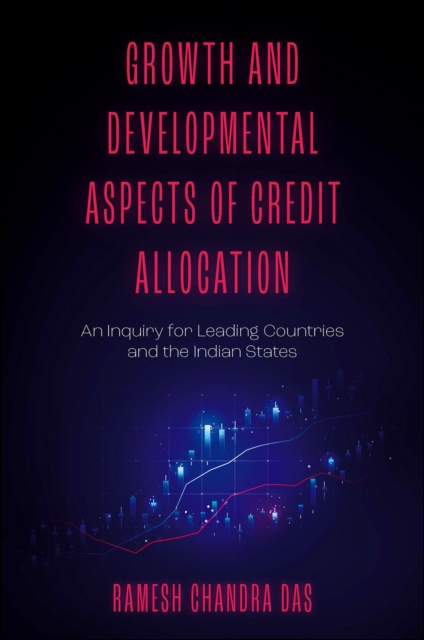
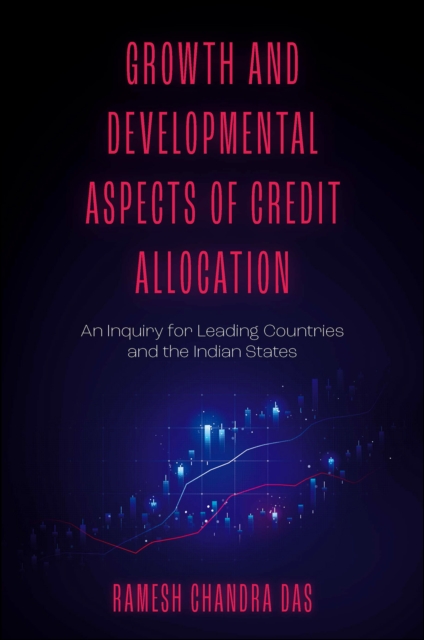
Growth and Developmental Aspects of Credit Allocation: An Inquiry for Leading Countries and the Indian States focuses on bank credit and deposit within a variety of economies and specifically examines Indian states to demonstrate how these two financial components are linked to their income growths and levels of development.
Growth and Developmental Aspects of Credit Allocation: An Inquiry for Leading Countries and the Indian States focuses on bank credit and deposit within a variety of economies and specifically examines Indian states to demonstrate how these two financial components are linked to their income growths and levels of development.
Dieses Buch wird Ihnen im Rahmen eines Vorbereitungslehrgangs auf die „Finanzanlagenfachfrau/-mann-Prüfung“ ein wichtiger Begleiter sein und gibt Ihnen wichtige Informationen über die Vermittlung von Kapitalanlagen an die Hand.
Shariah governance assumes the primary instrument through which Islamic Banking Institutions (IBIs) ensure the Islamicity of their products, services, operations, and internal environments.
The advent of digital stablecoins and the continuing decline of cash are prompting central banks across the world to explore developing their own digital currencies.
Spurred by the success of the first stress test of US banks toward the end of the global economic crisis in 2009, stress testing of large financial institutions has become the cornerstone of banking supervision worldwide.
The global financial crisis produced an important agreement among regulators in 2010-11 to raise capital requirements for banks to protect them from insolvency in the event of another emergency.
It is widely acknowledged that many financial modelling techniques failed during the financial crisis, and in our post-crisis environment many techniques are being reconsidered.
Efficiency and Competition in Chinese Banking gives a comprehensive analysis of the industry, including cost, technical, profit, and revenue efficiency.
Insider guidance to the modern world of investment banking todayIn Investment Banking Explained, Wharton professor and globalfinancier Michel Fleuriet provides a complete overview ofinvestment banking in its modern form; defines key terms; identifiesstructures, strategies, and operational aspects; and analyzesthe strategy in each of the main functional areas of aninvestment bank.
Science, Technology, Innovation, and Economic Growth in Arab Countries explores fresh approaches to STI policy formulation and implementation in the region, with applications to developing countries elsewhere.
When just a handful of economists predicted the 2008 financial crisis, people should wonder how so many well educated people with enormous datasets and computing power can be so wrong.
In Contemporary Financial Intermediation, Third Edition, Greenbaum, Thakor and Boot offer a distinctive approach to financial markets and institutions, presenting an integrated portrait that puts information at the core.
Handbook of Blockchain, Digital Finance, and Inclusion, Volume 2: ChinaTech, Mobile Security, and Distributed Ledger emphasizes technological developments that introduce the future of finance.
Environmental, Social, and Governance (ESG) Investing: A Balanced Analysis of the Theory and Practice of a Sustainable Portfolio presents a balanced, thorough analysis of ESG factors as they are incorporated into the investment process.
The dynamic environment of investment banks, hedge funds, and private equity firms comes to life in David Stowell's introduction to the ways they challenge and sustain each other.