Investment Banking: Institutions, Politics, and Law provides an economic rationale for the dominant role of investment banks in the capital markets, and uses it to explain both the historical evolution of the investment banking industry and also recent changes to its organization.
This is the first book to explore the causes of the decline of British manufacturing in the 20th century by focusing on the troubled relationship between banks and small firms in a comparative historical perspective.
The Credit Scoring Toolkit provides an all-encompassing view of the use of statistical models to assess retail credit risk and provide automated decisions.
Despite the importance of insurance in enabling individual and collective social, economic, and financial activities, discussions about the macroeconomic role and risks of insurance markets are surprisingly limited.
Despite the importance of insurance in enabling individual and collective social, economic, and financial activities, discussions about the macroeconomic role and risks of insurance markets are surprisingly limited.
The 2008 global financial crisis, together with the experience of de-industrialization across Western Europe over the last three decades, has focussed attention on financial regulation and industrial policy.
Private bankers have been defined as owner-managers of their bank, irrespective of their type of activity, which could be in any field of banking, sometimes in conjunction with another one, especially commerce in the earlier periods.
This edited collection provides the most comprehensive thematic analysis of capital flight from Africa, covering economic and institutional aspects, as well as domestic and global dimensions.
Since 2007, central banks of industrialized countries have counteracted financial instability, recession, and deflationary risks with unprecedented monetary policy operations.
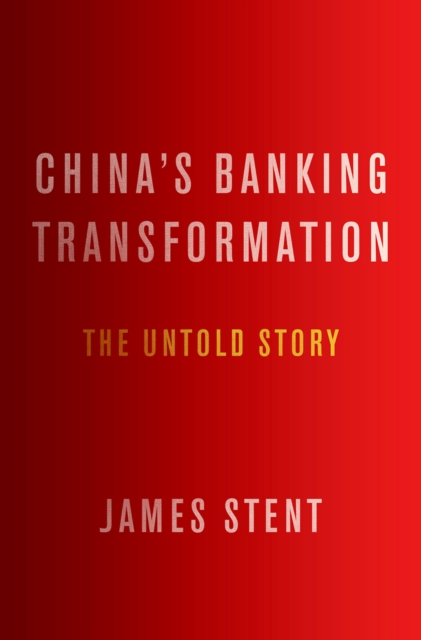
In this timely and provocative book, James Stent, a banker with decades of experience in Asian banking and fluency in Chinese language, explains how Chinese banks work, analyzes their strengths and weaknesses, and sets forth the challenges they face in a slowing economy.
In this timely and provocative book, James Stent, a banker with decades of experience in Asian banking and fluency in Chinese language, explains how Chinese banks work, analyzes their strengths and weaknesses, and sets forth the challenges they face in a slowing economy.
This book argues that focusing on the green economy and green finance is essential to counteract the catastrophic, socio-economic effects of the COVID-19 pandemic.
After the financial crisis of 2007-2008, analysts continue to question the security of banking sectors in nations in Europe, Latin America, Asia, and Africa.
After the financial crisis of 2007-2008, analysts continue to question the security of banking sectors in nations in Europe, Latin America, Asia, and Africa.
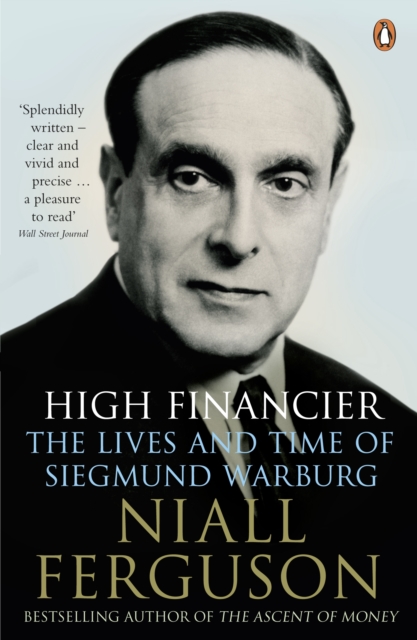
In this groundbreaking biography, based on more than 10,000 hitherto unavailable letters and diary entries, Niall Ferguson returns to his roots as a financial historian to tell the story of the extraordinary Siegmund Warburg.
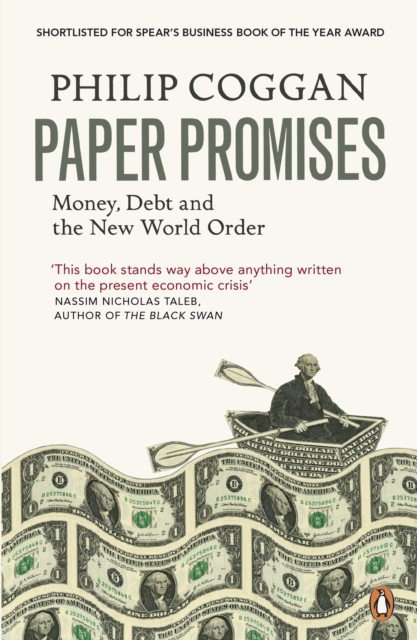
Winner of the Spears Business Book of the Year AwardLonglisted for the Financial Times Goldman Sachs Business Book of the Year AwardIn today's financial climate, we are all, naturally, obsessed by debt.