Fiduciary responsibilities and related court-imposed liabilities have forced investors to assess market conditions beyond gut level, resulting in the development of sophisticated decision-making tools.
As individuals are becoming more and more responsible for ensuring their own financial future, portfolio or fund management has taken on an increasingly important role in banks' ranges of offerings to their clients.
In a relatively short time credit derivatives have grown to become one of the largest and most important segment of the financial markets, with deal volumes now in trillions of dollars.
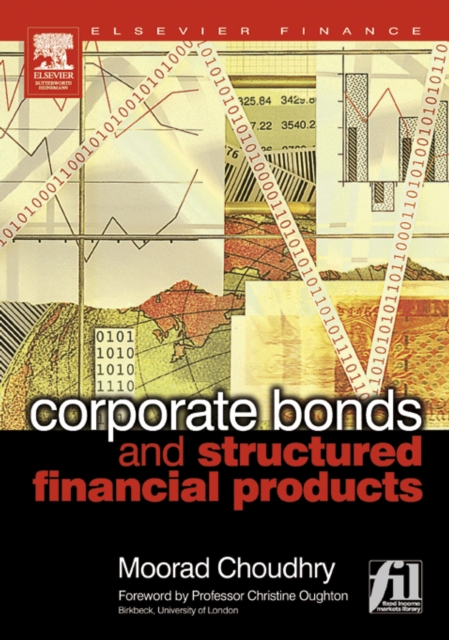
This book is a detailed account of the instruments that are used in the corporate bond markets, from conventional "e;plain vanilla"e; bonds to hybrid instruments and structured products.
The Gilt-Edged Market is specifically aimed at finance professionals and investors who need to understand the inner working of the United Kingdom gilt market.
Credit Risk: from transaction to portfolio management provides high level, focused analysis of the nature of credit risk in investment bank portfolio management.
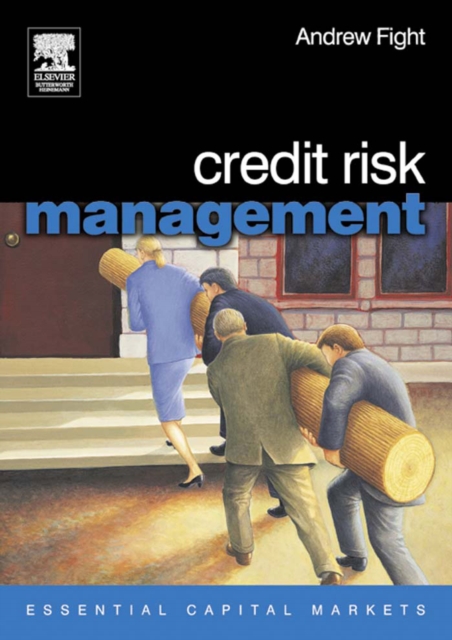
Credit Risk Management will enable general bankers, staff, and credit analyst trainees to understand the basic information and principles underlying credit risk evaluation, and to use those underlying principles to undertake an analysis of non financial and financial risks when preparing a credit proposal.
Islamic microfinance is one of the most important sectors of Islamic social finance, which plays a very important role in curbing poverty and improving the standard of living, per capita income, employment level as well as achieving Maqasid al-Shariah, profitability and sustainability.
Value at Risk and Bank Capital Management offers a unique combination of concise, expert academic analysis of the latest technical VaR measures and their applications, and the practical realities of bank decision making about capital management and capital allocation.
This book takes a fresh look at an age-old controversy in ethics and political economy that stretches right back to Aristotle: the morality and the economics of debt financing, or the charging of interest on loans.
Advances in International Accounting is a refereed, academic research annual, that is devoted to publishing articles about advancements in the development of accounting and its related disciplines from an international perspective.
Up-to-date guidance for conducting a successful M&A for banks and financial institutionsThe simmering economic climate since the financial crisis faces a front of new competition and sweeping regulatory reforms expected to drive the U.
The Management of Investments is based on an extensive research project done by the author in 2003 and 2004, in the United States, England, Germany, France, Italy and Switzerland.
The professional resource every investment banker must have-the definitive guide to complying with the brand-new Basel III requirementsAnchored in the fields of economics and finance, Bank Valuation and Value Based Management, Second Edition details asset-liability management and provides rigorous foundations to discuss the control of value creation and risk in banks.
This collection of speeches delivered by Michael Debabrata Patra, Deputy Governor of the Reserve Bank of India (RBI), captures the dilemmas and trepidations of conducting monetary policy in India.
Handbook of Blockchain, Digital Finance, and Inclusion, Volume Three: Web3, AI, Privacy and Greentech presents the latest technological developments and innovations occurring in cryptocurrency.
Advanced and emerging economies within Asia Pacific are exploring Central Bank Digital Currencies (CBDCs) as the next step towards digital public money to ensure monetary systems are appropriate, adaptive, and future-proof.
Advanced and emerging economies within Asia Pacific are exploring Central Bank Digital Currencies (CBDCs) as the next step towards digital public money to ensure monetary systems are appropriate, adaptive, and future-proof.
This book explores the development of the ecological monetary paradigm in which money is created for the restoration and improvement of the Earth's ecology in a way that simultaneously addresses environmental and human well-being issues.
This book explores the development of the ecological monetary paradigm in which money is created for the restoration and improvement of the Earth's ecology in a way that simultaneously addresses environmental and human well-being issues.