In Introduction to Mortgages & Mortgage Backed Securities, author Richard Green combines current practices in real estate capital markets with financial theory so readers can make intelligent business decisions.
Multi-Asset Risk Modeling describes, in a single volume, the latest and most advanced risk modeling techniques for equities, debt, fixed income, futures and derivatives, commodities, and foreign exchange, as well as advanced algorithmic and electronic risk management.
A former member of the American Stock Exchange introduces trading and financial markets to upper-division undergraduates and graduate students who are planning to work in the finance industry.
This comprehensive examination of short selling, which is a bet on stocks declining in value, explores the ways that this strategy drives financial markets.
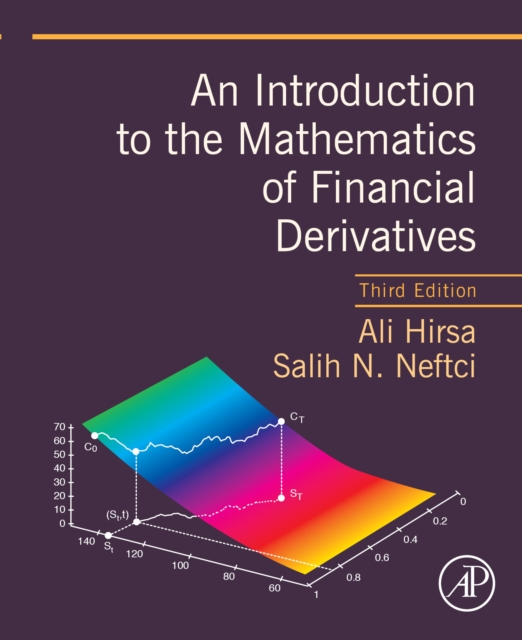
An Introduction to the Mathematics of Financial Derivatives is a popular, intuitive text that eases the transition between basic summaries of financial engineering to more advanced treatments using stochastic calculus.
Efficiency and Competition in Chinese Banking gives a comprehensive analysis of the industry, including cost, technical, profit, and revenue efficiency.
Four new chapters and updates throughout help this 2e of Clearing, Settlement and Custody summarize worldwide changes in the process of concluding a financial transaction.
The second edition of An Introduction to Credit Derivatives provides a broad introduction to products and a marketplace that have changed significantly since the financial crisis of 2008.
Financial markets are witnessing an unprecedented explosion in the availability of data, and the firms that survive will be able to leverage this information to increase their profit and expand their opportunities in a global world.
The distinctive nature of the European pe/vc environment is on display in Stefano Caselli's presentation of its complete conceptual framework, from the volatile (its financial side) to the stable (its legal organization).
The interest in improving Environmental, Social and Governance (ESG) outcomes among stakeholders of Islamic banking and finance has become front and centre in the discussions relating to Islamic sustainable finance.
Trading on the financial markets requires the mastery of many subjects, from strategies and the instruments being traded to market structures and the mechanisms that drive executions.
Shariah governance assumes the primary instrument through which Islamic Banking Institutions (IBIs) ensure the Islamicity of their products, services, operations, and internal environments.
How can managers increase their ability to calculate price and risk data for financial instruments while decreasing their dependence on a myriad of specific instrument variants?
The dynamic environment of investment banks, hedge funds, and private equity firms comes to life in David Stowell's introduction to the ways they challenge and sustain each other.
Anyone reading the business section of a newspaper lately knows that the financial exchanges--stock, bonds, FX, commodities, and so forth--are undergoing tremendous transformations.
The Banker's Handbook on Credit Risk shows you how to comply with Basel II regulations on credit risk step by step, building on the basics in credit risk up to advanced credit risk methodologies.
Research suggests that if the majority of a country's financial institutions are owned by the state, that country will experience slower financial development, less efficient financial systems, less private sector credit, and slower GDP growth.
The growth of financial intermediation research has yielded a host of questions that have pushed "e;design"e; issues to the fore even as the boundary between financial intermediation and corporate finance has blurred.
As economic and regulatory pressures drive financial institutions to seek efficiency gains by improving the quality of their trading processes and systems, firms are devoting increasing amounts of capital to maintaining their competitive edge.
The 1970s were a pivotal decade for the US economy: deindustrialization broke the power of the labor unions and made possible the redistribution of income in favor of corporate profits; globalization and offshore investments opened alternatives to domestic nonfinancial capital accumulation; domestic productivity growth declined; and labor-saving technology empowered superstar corporations to rapidly gain market share.
Discover the Future of Banking: Embrace the Digital RevolutionDive into an era where banking isnt just about brick-and-mortar branches but a seamless, digital experience that transcends traditional boundaries.
An analysis of the major securities, derivatives and money markets from an operations point of view, 'Understanding the Markets' takes the reader through the major features and characteristics of the markets and the products.
How differences in national financial regulatory systems emerged from divergent beliefs about economic order and prosperityThe global financial crisis of the late 2000s was marked by the failure of regulators to rein in risk-taking by banks.
Financial Trading and Investing, Third Edition provides a useful introduction to trading and market microstructure for advanced undergraduate as well as master's students.
Quantitative methods have revolutionized the area of trading, regulation, risk management, portfolio construction, asset pricing and treasury activities, and governmental activity such as central banking to name but some of the applications.
Real R&D options are among the earliest modelled real options, with now ten primary practical uses: general R&D planning, planning R&D in stages, evaluating test information, new product development timing, operations, abandonment, risk sharing, market funding, industry strategy and regulation.
'Relationship and Resource Management in Operations' explains in practical terms the importance of the business relationships with internal and external counterparts while demonstrating how things can go wrong and what causes the situation.
Banking and investment in Mexico have changed radically over the past decade, and the economic events that prompted these changes will have a significant impact on Mexico's role in regional and world financial markets.