This report analyzes how rising non-performing loans (NPL) pose a risk to banking sector stability in some Asia and Pacific economies and shows how electronic trading platforms can strengthen NPL markets, bolster cross-border transactions, and enhance transparency.
The resourceful patrons of a Wall Street area tavern must contend with serious issues stock scams, sexual taboos, old age, terrorists, unemployment, the Russian Mafia, cancer, murder, alcoholism, the Digital Revolution, and starting a new business in todays turbulent times.
The role of banks and banking systems in facilitating and shaping the pattern of economic growth has been much explored in an attempt to understand differing levels of economic success in industrializing and mature economies.
Theodore Dreiser's The Financier (1912), the opening volume of his Trilogy of Desire, is a searching naturalist study of ambition, capital, and moral elasticity in post-Civil War America.
Financial markets are witnessing an unprecedented explosion in the availability of data, and the firms that survive will be able to leverage this information to increase their profit and expand their opportunities in a global world.
L'accent est mis sur une analyse novatrice, une première exposition des causes véritables et une solution immédiate sensationnelle (que j'appelle à juste titre "truc") à nos problèmes économiques, monétaires et financiers, une solution qui peut non seulement être mise en œuvre dans un délai sensationnellement court, mais qui est également rendue durable et viable par des mesures d'accompagnement.
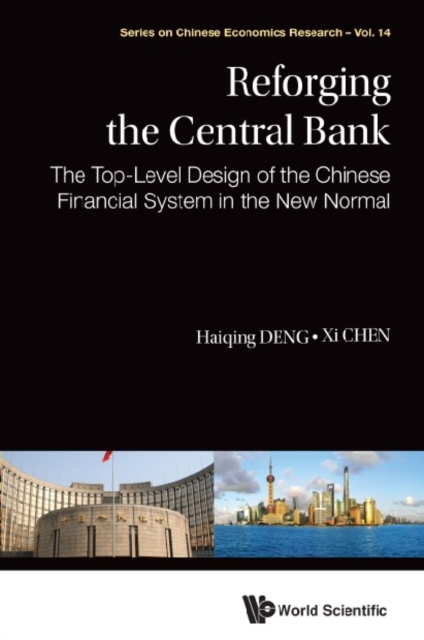
Reforging the Central Bank presents an insightful comparison between financial development in China - a rising global economic superpower - under the old and new normal and an all-encapsulating study of current monetary transmission mechanism and monetary policy instruments.
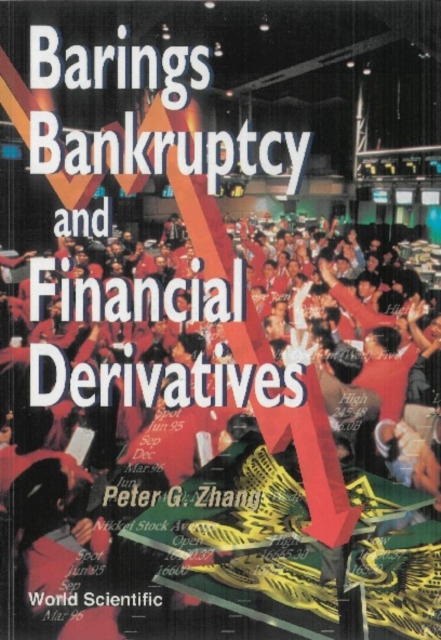
This is the first systematic source which tries to explain how and why the 233-year old and the World's oldest merchant bank went into bankruptcy in a few days.
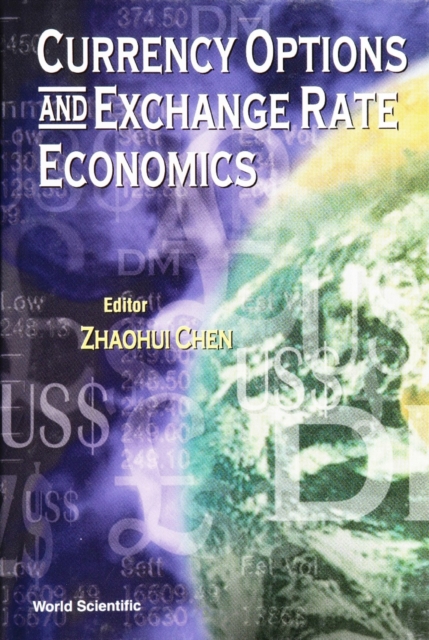
This volume is a collection of classical and recent empirical studies of currency options and their implications for issues of exchange rate economics, such as exchange rate risk premium, volatility, market expectations, and credibility of exchange rate regimes.
The widespread use of bankchecks in daily life makes the development of check-reading systems of fundamental relevance to banks and other financial institutions.
This book addresses selected practical applications and recent developments in the areas of quantitative financial modeling in derivatives instruments, some of which are from the authors' own research and practice.
Neural networks are increasingly being used in real-world business applications and, in some cases, such as fraud detection, they have already become the method of choice.
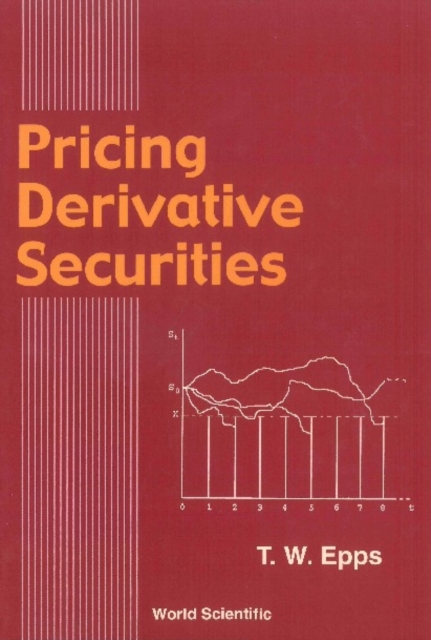
Latest Edition: Pricing Derivative Securities (2nd Edition)The development of successful techniques for valuing derivative assets is among the most influential achievements of economic science.
At the beginning of the new millennium, two unstoppable processes are taking place in the world: (1) globalization of the economy; (2) information revolution.
This book introduces an analytically tractable and computationally effective class of non-Gaussian models for shocks (regular Levy processes of the exponential type) and related analytical methods similar to the initial Merton-Black-Scholes approach, which the authors call the Merton-Black-Scholes theory.
To truly understand the current interest in the development of Islamic banking and finance in South-East Asia, and how it is different from the conventional banking system, the author believes one must firstly understand the religious relationship originating from the Qur'an, and then trace the historical geographic and political developments of Islam over recent centuries.
In recent years, the banking industry has faced significant challenges due to deregulation, globalization, financial innovation, and intensified global competition.
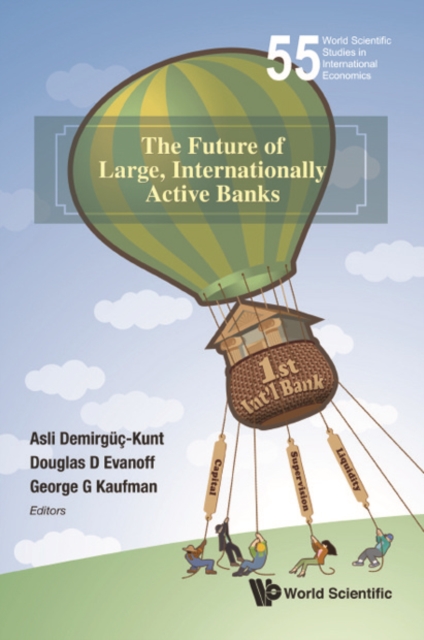
Cross-border banking, while having the potential for a more efficient financial sector, also creates potential challenges for bank supervisors and regulators.
This book explores the potential and problems of bank safety and efficiency arising from the rapidly growing area of cross-border banking in the form of branches or subsidiaries with primarily only national prudential regulation.
To truly understand the current interest in the development of Islamic banking and finance in South-East Asia and how it is different from the conventional banking system, one must first understand the religious relationship originating from the Qur'an, and then trace the historical geographic and political developments of Islam over recent centuries.
The phenomenal worldwide development over the past decade of Islamic banking and finance is drawing much attention to Southeast Asia, which, on the platform of its own economic growth success, is also proving to be the gateway for Middle Eastern petrodollar investments into the two great emerging markets of India and China.
The current financial crisis provides a valuable occasion for the world to re-examine the grand statements of wisdom which dominate the financial world for a long time.
Islamic Banking and Finance in South-East Asia by Angelo M Venardos has been a "e;must read"e; since its first edition in 2005 and has already been translated to Arabic.
This book provides a comprehensive treatment of the important aspects of investment theory, security analysis, and portfolio selection, with a quantitative emphasis not to be found in most other investment texts.
The Great Financial Crisis of 2007-2010 exposed the existence of significant imperfections in the financial regulatory framework that encouraged excessive risk-taking and increased system vulnerabilities.
CVA, DVA, and FVA, which are the acronyms for credit, debit, and funding valuation adjustments, have become widely used by major banks since the financial crisis.
The Great Financial Crisis of 2007-2010 has had a major impact on large cross-border banks, which are widely blamed for the start and severity of the crisis.