This timely volume addresses three important recent trends in the internationalization of United States equity markets: extensive market integration through foreign investment and links among stock prices around the world; increasing securitization as countries such as Japan come to rely more than ever before on markets in equities and bonds at the expense of banks; and the opening of national financial systems of newly industrializing countries to international financial flows and institutions, as governments remove capital controls and other barriers.
This book provides valuable information and analysis to managers, policymakers, and investment counselors in the rapidly expanding field of pension funding.
Over the past twenty-five years, a series of actions, omissions, and failures by Canada's lawmakers and the purported gatekeepers of investors' rights have left Canadians' investments, pensions, and retirement savings at greater risk.
Understand Up-to-Date Statistical Techniques for Financial and Actuarial ApplicationsSince the first edition was published, statistical techniques, such as reliability measurement, simulation, regression, and Markov chain modeling, have become more prominent in the financial and actuarial industries.
This book written by practicing experts in the solar renewable energy field enables readers to understand both renewable project development and the primary stumbling blocks in the process.
In Asset Management: A Systematic Approach to Factor Investing, Professor Andrew Ang presents a comprehensive, new approach to the age-old problem of where to put your money.
The term private equity typically includes investments in venture capital or growth investment, as well as late stage, mezzanine, turnaround (distressed), and buyout investments.
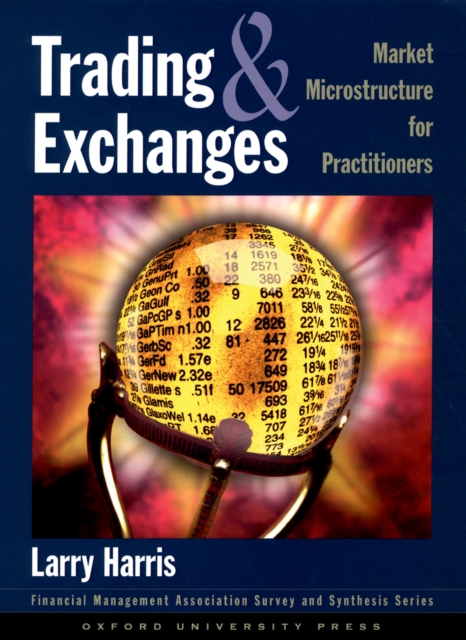
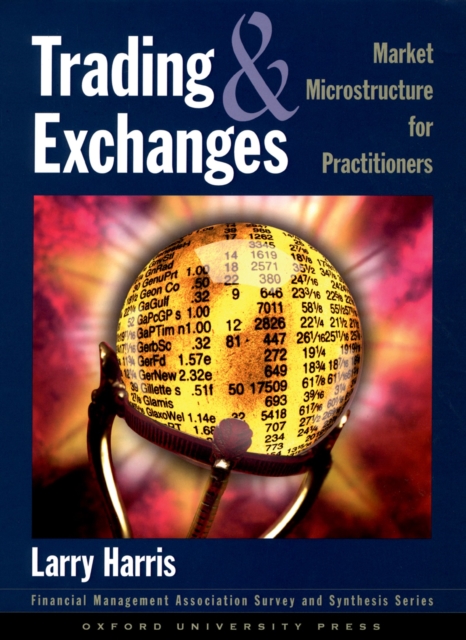
The way in which securities are traded is very different from the idealized picture of a frictionless and self-equilibrating market offered by the typical finance textbook.
The term private equity typically includes investments in venture capital or growth investment, as well as late stage, mezzanine, turnaround (distressed), and buyout investments.
The topic of Entrepreneurial Finance involves many issues, including but not limited to the risks and returns to being an entrepreneur, financial contracting, business planning, capital gaps and the availability of capital, market booms and busts, public policy and international differences in entrepreneurial finance stemming from differences in laws, institutions and culture.
The stereotype of the "e;angel investor"e; is a retired wealthy entrepreneur who sees potential, asks tough questions, takes a large stake, and in a few years makes a massive return in an IPO.
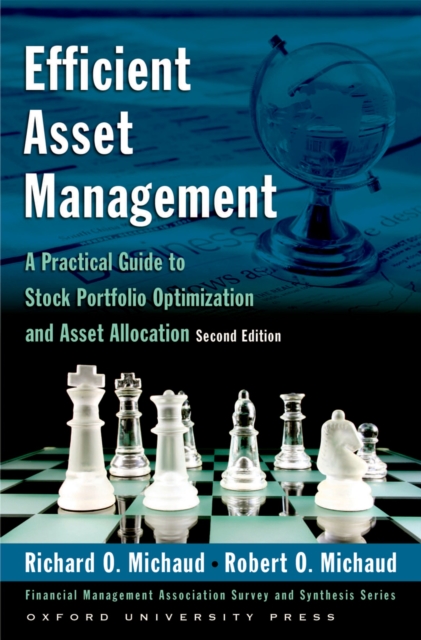
In spite of theoretical benefits, Markowitz mean-variance (MV) optimized portfolios often fail to meet practical investment goals of marketability, usability, and performance, prompting many investors to seek simpler alternatives.
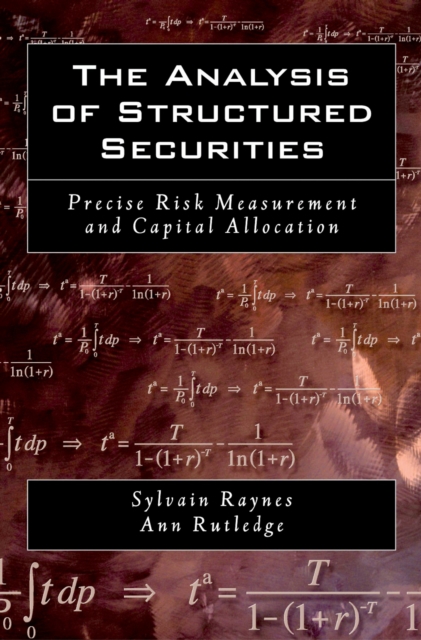
The Analysis of Structured Securities presents the first intellectually defensible framework for systematic assessment of the credit quality of structured securities.
For all but the most credit-worthy companies, it is more efficient to finance large pools of assets that have predictable behavioral characteristics through non-standard arrangements.
In spite of theoretical benefits, Markowitz mean-variance (MV) optimized portfolios often fail to meet practical investment goals of marketability, usability, and performance, prompting many investors to seek simpler alternatives.
The stereotype of the "e;angel investor"e; is a retired wealthy entrepreneur who sees potential, asks tough questions, takes a large stake, and in a few years makes a massive return in an IPO.
Today, international investment law consists of a network of multifaceted, multilayered international treaties that, in one way or another, involve virtually every country of the world.