Controlling Invertebrate Pests in Agriculture discusses the principles of pest management and relates this to historical methods as well as current and future directions.
Controlling Invertebrate Pests in Agriculture discusses the principles of pest management and relates this to historical methods as well as current and future directions.
Tourism, with its niche element of ecotourism, is one of Australia's fastest growing industries, overtaking the traditional export items of coal, wheat and wool in export earnings.
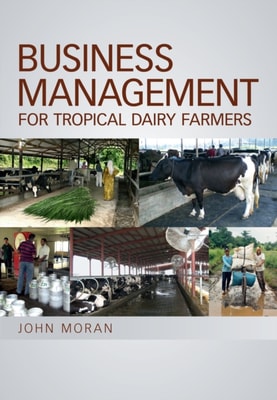
Rearing young stock for replacement heifers is probably one of the least well understood and practised aspects of herd and feeding management on dairy farms throughout the world, particularly on small holder dairy farms in the tropics.
Rearing young stock for replacement heifers is probably one of the least well understood and practised aspects of herd and feeding management on dairy farms throughout the world, particularly on small holder dairy farms in the tropics.
Dairy consumption in Asia has more than doubled over the last 25 years, and has led to more than 50% of the world's total dairy imports now entering Asian markets.
Dairy consumption in Asia has more than doubled over the last 25 years, and has led to more than 50% of the world’s total dairy imports now entering Asian markets.
Precision Agriculture (PA) is an approach to managing the variability in production agriculture in a more economic and environmentally efficient manner.
Precision Agriculture (PA) is an approach to managing the variability in production agriculture in a more economic and environmentally efficient manner.
There is a rich and extensive history of research into factors that encourage farmers to change their land management practices, or inhibit them from doing so.
This book is the first detailed and comprehensive guide to the use of feedpads in the dairy industry, from planning and construction to day-to-day management, written especially for farmers.
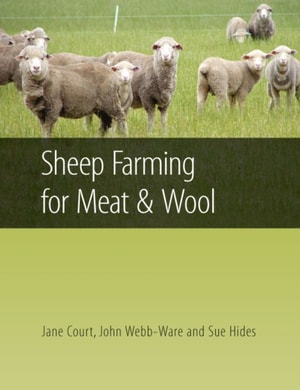
Sheep Farming for Meat and Wool contains practical, up-to-date information on sheep production and management for producers throughout temperate Australia.
Adapting Agriculture to Climate Change is a fundamental resource for primary industry professionals, land managers, policy makers, researchers and students involved in preparing Australia's primary industries for the challenges and opportunities of climate change.
There is a rich and extensive history of research into factors that encourage farmers to change their land management practices, or inhibit them from doing so.
This book is the first detailed and comprehensive guide to the use of feedpads in the dairy industry, from planning and construction to day-to-day management, written especially for farmers.
Pastoral Australia tells the story of the expansion of Australia's pastoral industry, how it drove European settlement and involved Aboriginal people in the new settler society.
Australia’s experience in community-based environmental repair is unique in the world, with no shortage of analysis by bureaucrats, academics and environmentalists.
Financial Management for Agribusiness presents a practical approach to financial decision making for all those involved in agribusiness, including farmers, horticulturists and supporting businesses, to manage invested funds, physical resources and labour.
With global revenue surpassing twenty-five billion dollars annually, organic agriculture is a highly visible and rapidly growing component of agricultural production.
Sheep Farming for Meat and Wool contains practical, up-to-date information on sheep production and management for producers throughout temperate Australia.
With global revenue surpassing twenty-five billion dollars annually, organic agriculture is a highly visible and rapidly growing component of agricultural production.
Financial Management for Agribusiness presents a practical approach to financial decision making for all those involved in agribusiness, including farmers, horticulturists and supporting businesses, to manage invested funds, physical resources and labour.
Most countries in South-East Asia have established smallholder dairy farming industries through social welfare and rural development programs to provide a regular cash flow for poorly resourced farmers.
Australian water policy and management are undergoing rapid and immense change in response to drought, technological advances, climate change and demographic and economic shifts.
Adapting Agriculture to Climate Change is a fundamental resource for primary industry professionals, land managers, policy makers, researchers and students involved in preparing Australia’s primary industries for the challenges and opportunities of climate change.
Most countries in South-East Asia have established smallholder dairy farming industries through social welfare and rural development programs to provide a regular cash flow for poorly resourced farmers.
The second volume in a series designed to keep agricultural leaders abreast of the most up-to-date information concerning global agriculture, Perspectives in World Food and Agriculture, Volume 2 brings together cutting-edge agricultural research and the latest views on agricultural policy.
By examining the fluctuations of the agriculture sector over the last 50 years, Economic Trends in US Agriculture and Food Systems Since World War II is able to give its readers a better glimpse at the future of farming.
This work is based on the Mexico 2000 meeting under the auspices of ICRISAT (International Crops Research Institute for Semi-Arid Tropics) and INTSORMIL (International Sorghum and Millet Collaborative Research Support Program).
While terrorism in agriculture takes few lives, the misinformation emerging from the rhetoric of anti-globalists, radical environmentalists, and animal welfare extremists costs Americans billions of dollars in lost income every year.
Written by a team of international researchers, scientists, and academics, Perspectives of World Food and Agriculture 2004 comprises the latest, most up-to-date information in global agricultural.
The importance of economical production of agricultural materials, especially crops and animal products serving as base materials for foodstuffs, and of their technological processing (mechanical operations, storage, handling etc.